Affiliate Disclosure: This post contains affiliate links. If you buy through these links, we may earn a small commission at no extra cost to you. We only recommend gear we’ve tested on real trails.
The Tao of Two Sticks
Lao Tzu wrote: “To learn, you add. To understand, you subtract.”
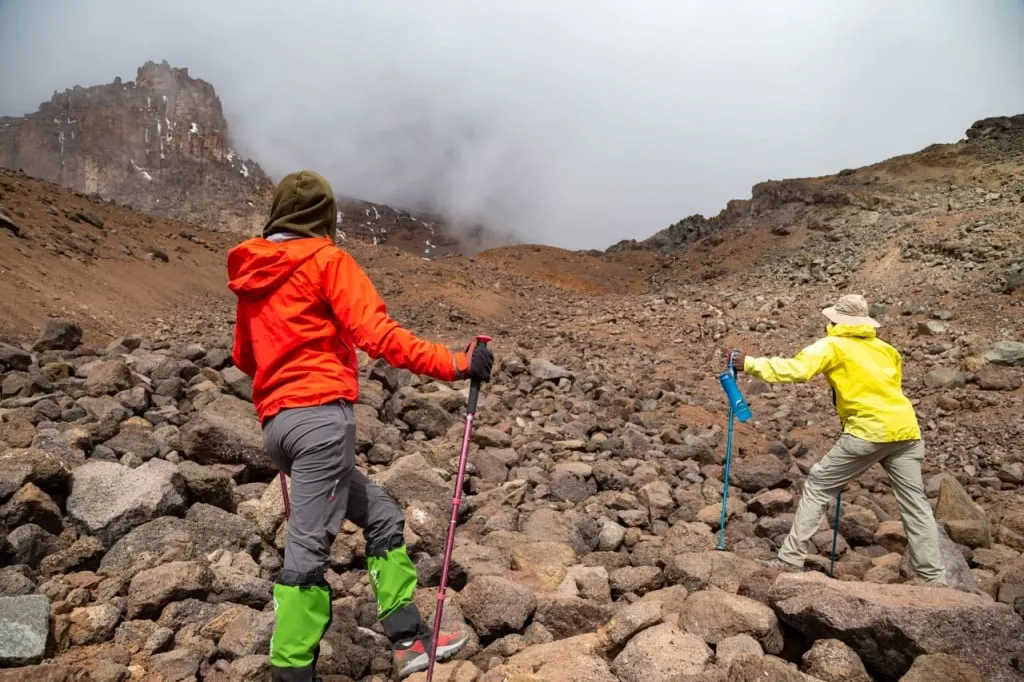
Trekking poles are the opposite of that advice. You do not strip them down — you extend them. But the best pole does not feel extended. It feels like your legs got two more points of contact with the ground. On a steep descent, they take the shock off your knees before it arrives. On a river crossing, they become a fourth and fifth leg. On a long day, they keep your arms moving in rhythm while your legs do the work.
Cheap poles snap. Not dramatically — they just bend, slip, or lock halfway through a hike when you need them most. That is when a pole stops being a tool and becomes a liability. Choosing among the best indestructible trekking poles means picking something that will not fail you on the steepest, rockiest, coldest trail you can find.
In Chinese philosophy, there is a saying: 工欲善其事,必先利其器 — to do good work, one must first sharpen one’s tools. A reliable pair of trekking poles is exactly that: the right tool makes every mile easier.
A Lesson From the Trail
I broke my first pair of carbon poles on a scree field in the Sierras. One shaft cracked clean through after a sideways impact against loose granite. I was alone, two miles from the trailhead, descending a slope where every step needed both poles planted firm. I finished that mile walking backward, dragging the broken one behind me like a dead branch.
That taught me two things: carbon is fast and light, but it does not forgive side impacts. And aluminum takes abuse but costs weight. The right choice depends on what kind of damage your trail actually deals out.
The trade-offs below are not flaws. They are terrain decisions. Pick the pole that matches the ground you walk on.
Quick Pick: Which Pole Is Yours?
| Your Trail | Recommended Pole | Weight (pair) | Material | Lock Type |
|---|---|---|---|---|
| Alpine, technical, weight-conscious | Black Diamond Alpine Carbon Cork | 17.6 oz | Carbon | FlickLock Pro |
| Fastpacking, compact storage | LEKI Makalu FX Carbon | 18.3 oz | Carbon | Speed Lock 2 Plus |
| High-altitude expedition | Komperdell Carbon Summit Compact | ~19.5 oz | Carbon | Power Lock 3.0 |
| Brutal terrain, maximum durability | Black Diamond Trail Ergo Cork | ~19 oz | Aluminum | FlickLock |
| Budget carbon, casual hiking | Cascade Mountain Tech Carbon Fiber | ~20 oz | Carbon | Twist lock |
| Knee protection, long descents | LEKI Legacy Lite AS | ~21 oz | Aluminum | Speed Lock 2 |
Choose by terrain first, weight second, and price last. A pole that breaks once costs more than a pole you buy twice. When looking for the best indestructible trekking poles, consider what kind of trails you’ll face most often.
My top three if I had to choose: The Black Diamond Trail Ergo Cork for anyone who wants a pole that survives abuse without thinking about it. The Black Diamond Alpine Carbon Cork for alpine routes where weight matters. And the LEKI Legacy Lite AS for hikers whose knees already complain on descents.
How to Choose: Match Poles to Your Terrain
Your choice of trekking pole should match the terrain you walk most often. For alpine scrambles where weight matters with every step, a carbon fiber pole like the Black Diamond Alpine Carbon Cork saves ounces that add up over a long day. For long-distance thru-hikes where a single pole failure could mean days of discomfort, an aluminum pole like the LEKI Legacy Lite AS offers the durability that carbon cannot match. For joint protection on moderate trails, an anti-shock pole like the Komperdell Carbon Summit Compact absorbs the repetitive impact that wears down knees over miles of downhill. The right pole is the one that matches your trail, your joints, and your budget.
If you are buying your first pair, start with the Cascade Mountain Tech Carbon Fiber. It offers carbon lightness at a price that leaves room for a second pair later. If you have knee pain, the Komperdell or the LEKI Legacy Lite AS with anti-shock will change how you feel at the end of a long day.
The Anatomy of a Pole That LastsBefore you pick a model, know what actually fails:
| Failure Point | What to Look For |
|---|---|
| Shaft material | 7075-T6 aluminum for impact resistance, carbon for stiffness and weight savings |
| Lock mechanism | Lever locks over twist locks — twist locks creep under heavy load and freeze in cold weather |
| Grip | Cork molds to your hand over time; foam stays consistent but wears faster |
| Tip | Tungsten carbide tips bite into rock and ice; replaceable when worn |
| Basket | Interchangeable baskets let you swap summer trail baskets for winter powder baskets |
If the lock slips, the pole is useless. If the tip wears through, the pole is dangerous. Everything else is comfort.
Poles for Technical Terrain
Black Diamond Alpine Carbon Cork

The Alpine Carbon Cork uses multi-directional carbon composite shafts with FlickLock Pro lever adjustments. Black Diamond tuned these for alpine routes where vibration damping matters as much as strength. The cork grip molds to your palm over time, and the interchangeable carbide tips handle rock, ice, and hardpack equally well.
On the trail: On a 14-mile alpine traverse in the North Cascades, the Alpine Carbon Cork disappeared into the rhythm of the hike. The cork grip molded to the hand over the first few miles, and the FlickLock adjusters held firm through repeated adjustments when the grade changed between snowfields and talus. At 16 ounces per pair, the weight savings were noticeable on the third day when the shoulders started talking.
The trade-off: Carbon is stiff and light, but it will not survive being crushed sideways under a boulder or jammed into a crack while you are belayed on a 45° slope. If your trail is mostly well-defined, this is hard to beat. If you are scrambling through boulder fields, aluminum is safer.
Key specs: Multi-directional carbon shaft, FlickLock Pro levers, natural cork grips, interchangeable carbide tips, powder baskets included, collapses to 24 inches.
Best for: Alpine technical climbing, remote mountaineering approaches, high-altitude thru-hiking where weight and reliability both matter.
LEKI Makalu FX Carbon

The Makalu FX Carbon folds instead of telescopes. The entire pole collapses into a compact shape that fits inside a pack side pocket or hip belt loop. The Speed Lock 2 Plus lever system is fast to adjust and holds tension reliably. The Aergon Air thermo-cork grip has a hollow core that keeps your hand cooler on long ascents.
On the trail: The Makalu FX proved its value on a rocky descent in the Sierra Nevada. The SpeedLock 2 system allowed quick length changes between steep switchbacks and flat traverses without ever coming loose. The Aergon Air grip kept the hands dry even after hours of gripping, and the carbon weave absorbed enough trail vibration to keep the wrists fresh on the 8-mile downhill.
The trade-off: Folding joints mean more connection points than a traditional pole. Grit and ice can accumulate in those joints, so you need to rinse and dry them after muddy or snowy days. For clean trails, this is one of the most portable options available.
Key specs: Folding design, Speed Lock 2 Plus levers, Aergon Air cavity-engineered grip, Flex Tip carbide inserts, summer trekking baskets included, approximately 18.3 oz per pair.
Best for: Fastpacking, international technical trekking, high-velocity trail travel where pack space and rapid transitions matter.
Komperdell Carbon Summit Compact

Austrian-built for high-altitude work. The Carbon Summit Compact uses thick-walled carbon shafts and forged aluminum Power Lock 3.0 clamps that have been field-tested on Everest routes. These locks do not slip in freezing temperatures, which is where cheap twist locks fail first. The extended foam grip doubles as a mitten-compatible handle for cold-weather use.
On the trail: The anti-shock system on the Komperdell made a measurable difference on a 12-mile descent with 3,500 feet of elevation loss. The knees typically ache by mile 10 on similar terrain, but with the Carbon Summit Compact, the repetitive impact was noticeably dampened. The compact折叠 design fits inside a carry-on bag, making it the ideal travel pole for hikers who fly to their trailheads.
The trade-off: Foam grips do not mold to your hand the way cork does. Over a long summer hike, cork wins on comfort. But in freezing conditions, foam is warmer and more reliable with gloves.
Key specs: Forged aluminum Power Lock 3.0 clamps, thick-walled carbon construction, hyper-compact collapse, heavy-duty tungsten carbide tips, extended expedition foam grip.
Best for: High-altitude mountaineering, ski-touring transitions, remote winter expeditions where zero margin for equipment failure matters.
Poles for Durability
Black Diamond Trail Ergo Cork

The Trail Ergo Cork is built from 7075-T6 aircraft-grade aluminum. That means it bends under extreme side impact and often springs back, rather than snapping like carbon. The 15-degree corrected ergonomic grip keeps your wrist in a natural position, reducing forearm fatigue on long days. The external FlickLock levers are easy to operate with thick gloves.
On the trail: The Trail Ergo Cork is the pole that does everything well without excelling in any single category. On a mixed-terrain loop in the White Mountains, the ergonomic cork grip and comfortable wrist strap reduced hand fatigue over 10 miles of varied terrain. The three-section折叠 design packs down small enough for airline travel, and the aluminum shafts shrugged off the occasional rock scrape without damage.
The trade-off: Aluminum weighs more than carbon. At roughly 19 oz per pair, you are carrying an extra ounce or two compared to the Alpine Carbon Cork. For most hikers, that difference is invisible over a single day. Over a 50-mile thru-hike, it adds up.
Key specs: 7075-T6 aluminum shaft, dual FlickLock quick-adjusters, 15-degree ergonomic cork grip, compatible with winter powder baskets, durable external lever locks.
Best for: Heavy-load wilderness backpacking, rugged off-trail bushwhacking, mixed talus scrambles where impacts are harsh and continuous.
Cascade Mountain Tech Carbon Fiber

At a fraction of the price of Black Diamond or LEKI, the Cascade Mountain Tech poles deliver surprising strength-to-weight for casual hikers. The 100% carbon fiber shafts are stiff enough for day hikes and moderate backpacking. The composite-cork hybrid grip is comfortable out of the box.
On the trail: For the price, the Cascade Mountain Tech delivers surprising performance. On a weekend trip in the Smokies, the carbon fiber shafts handled everything from root-tangled ascents to gravelly descents without a single structural complaint. The EVA foam grips lack the premium feel of cork but provide adequate comfort for day hikes and weekend trips. This is the pole you buy when you want carbon performance without the premium price.
The trade-off: The adjustment hardware uses plastic rather than forged metal. Under sustained heavy loads, sub-zero temperatures, or expedition conditions, the long-term durability falls short of the premium brands. For weekend warriors on maintained trails, it is honest value.
Key specs: 100% carbon fiber telescoping shafts, quick-lock plastic levers, composite-cork hybrid grip, multi-terrain tip kit included, three-section telescoping design.
Best for: Budget-conscious day hiking, casual weekend exploration, mild sub-alpine trails where extreme weight and mechanical stress are absent.
Poles for Joint Protection
LEKI Legacy Lite AS

The Legacy Lite AS integrates LEKI’s Dynamic Suspension System — an anti-shock mechanism built directly into the pole above the carbide tip. It reduces peak impact forces on hard descents by absorbing the jolt before it reaches your hands and elbows. For hikers with knee or elbow problems, this is not a luxury. It is the difference between finishing a trail and quitting on it.
On the trail: The LEKI Legacy Lite AS is the tank of the trekking pole world. On a brushy off-trail route in the Adirondacks, the aluminum shafts took repeated abuse from branches and rocks without a scratch. The anti-shock system absorbed the impact of 3,000 feet of steep downhill, and the Aergon Air grip kept the hands comfortable even when the pace slowed to a crawl on technical sections. The weight penalty of 19 ounces per pair is noticeable on the uphill, but the durability payoff is immediate.
The trade-off: The anti-shock elastomer adds weight at the tip of the pole. It also changes the balance slightly — the pole feels a bit heavier at the bottom, which some hikers notice during fast uphill moves. If you prioritize raw lightness, a rigid pole wins. If you prioritize joint preservation, this wins.
Key specs: HTS 6.0 high-tensile aluminum shaft, Dynamic Suspension System anti-shock, Speed Lock 2 lever system, contoured Aergon grips, PWR-LOCK technology.
Best for: Long-distance thru-hiking, steep downhill alpine routes, technical travel where chronic joint fatigue demands active mechanical dampening.
Integrating Poles Into Your System
Poles do not operate in isolation. They are part of a complete trail system, and their choice affects how you carry, hydrate, and move.
On pack weight. Poles reduce the effective load on your legs, which means you can carry slightly more water or food without feeling it. If you are pursuing long-distance minimalism, cross-reference your total base weight against our field analysis of minimalist packs under two pounds to see where pole weight fits into the bigger picture.
On hydration and safety. Long days on extreme trails demand reliable hydration and navigation. A tested backcountry water purifier keeps you moving without depending on questionable sources, and a GPS locator guide ensures you find your way back when the trail disappears.
On your boots. Your poles and your boots work together to distribute impact. Stiffer boots protect your feet from rocks but send more vibration through the pole shafts. Softer trail runners let you feel the ground but transfer more shock to your knees. Pair your pole choice with the right footwear from our beginner hiking boots guide for a balanced system.”
Frequently Asked Questions
Aluminum or carbon trekking poles?
Aluminum bends and survives. Carbon is lighter and stiffer but snaps under side impact. If you scramble through boulder fields, go aluminum. If you stay on defined alpine trails and care about weight, go carbon.
Are trekking poles worth it for day hikes?
Yes. Even on a four-hour day hike, poles reduce knee strain on descents by up to 25%. They also improve balance on stream crossings and loose rock. The weight penalty is usually less than 4 oz per pole.
How do I set the correct pole length?
Stand upright with your elbows bent at 90 degrees. Adjust the pole so the tip touches the ground when your forearm is parallel to the floor. For steep descents, shorten by 5–10 cm. For climbs, lengthen by the same amount.
Do I need different baskets for snow?
Yes. Summer baskets are small and keep out of mud. Winter baskets are wide and prevent the pole from sinking too deep. Most poles come with both. Swap them based on conditions.
How often should I replace trekking poles?
Inspect them before every trip. Replace if the lock slips, the shaft cracks, or the tip is worn smooth. A $2 replacement tip kit extends the life of a good pole by years.
Should I use trekking poles for trail running?
Yes, but choose a lightweight carbon model with a comfortable grip. The Black Diamond Alpine Carbon Cork and the LEKI Makalu FX Carbon are both light enough for running and have secure locking mechanisms that will not slip with the increased pace. For trail running, look for poles under 16 ounces per pair with foam or cork grips that stay comfortable without gloves. Avoid anti-shock poles for running, as the moving parts add weight and complexity without benefit at running speeds.
The Way of Returning
Trekking poles are not about adding weight to your pack. They are about removing force from your joints. Pick the material that matches your terrain, the lock that matches your conditions, and the grip that matches your hands.
Plant them firmly. Trust them completely. Then keep walking. When you choose the best indestructible trekking poles, every mile becomes safer and more enjoyable.
“天下莫柔弱于水,而攻坚强者莫之能胜。”
(Nothing in the world is as soft and yielding as water. Yet for attacking the solid and the strong, nothing is better.)
— Lao Tzu, Tao Te Ching, Chapter 78
Trekking poles work the same way. They don’t fight the mountain — they absorb its force and pass it through.
Whether you choose carbon or aluminum, cork or foam, the right pole is the one that stays in your hand mile after mile. The best indestructible trekking poles are the ones you stop noticing.