
I have a story I tell people sometimes about a weekend trip where I overpacked. Backup stove, backup water filter, a dry bag inside another dry bag. I stood at the trailhead watching a guy walk out with a thirty-pound pack and a grin, and I still feel a little embarrassed remembering how heavy my own bag felt by mile two.
The thing is, I probably made up the part about the grin. It is a useful image, and I keep putting it in the story, but I have been hiking long enough to know that the moments that actually change how you move through the woods rarely look like that. They do not arrive on a clear morning with a single clean realization. They accumulate slowly, and they often do not make sense until years later, if at all.
What actually happened, as far as I can tell, was less dramatic. I had been carrying too much for a while, and I had not noticed. I had been reading about the ultralight movement and I admired the math of it — how much you can shave off, how much you can lose without losing safety. But I had never asked whether shaving an ounce off my pack was also shaving an ounce off my stress, or whether the two had anything to do with each other at all.
I asked that question, or something close to it, on a Saturday morning at a trailhead in the Pacific Northwest, standing in the rain. Another hiker walked out before me. I do not know if he was smiling. I do not know if he had a philosophy. I only know that when he passed, my pack felt heavier than it had three minutes ago, and I did not know why.
It took me years to figure that out.
This question — what is lighter, and what am I actually carrying — is the question at the heart of everything I write about effortless exploration. It is also the question that drew me, eventually, to Daoist simplicity.
The idea is older than the ultralight movement by about two thousand years. It was written down in a small book in ancient China, then forgotten by most of the world, then quietly absorbed into the language of people who spent a lot of time alone in the woods and wanted a word for what they were doing. It turns out it has been asking the same question all along.
The Cultural Barrier

Before we talk about what Daoist simplicity asks of you, we need to talk about why a Western hiker might never find the answer to their own question without coming across a Chinese book two thousand years old.
The Western outdoor tradition — the tradition of Thoreau, Muir, and the Sierra Club — is deeply individualistic and deeply Protestant. Nature is a place you go to discover yourself. You walk into the woods, you confront your own soul, you come out transformed. The trail is a mirror. The wilderness is a teacher. The journey inward is a journey upward, toward self-realization.
This is a beautiful tradition. It has given us some of the most moving writing ever put to paper. But it is a particular kind of beauty, and it comes with a particular kind of burden: the burden of having to discover something. To go to nature and not come back changed would be a waste. To sit by a stream and not feel inspired would be a failure. Even Thoreau’s quiet life at Walden Pond had a destination: he went there to “front only the essential facts of life” and to “see if I could not learn what it taught me, and not be when I came to die discover that I had not lived.” There is a goal there. There is work to do.
Daoism, by contrast, begins from the opposite premise. You do not go to nature to discover yourself. You go to nature because you are already there, and everything you have learned about how to be separate from it is what needs to be unlearned. The wilderness is not a teacher. It is the ground on which you forget that you ever thought you were apart from it.
This difference is not subtle, and it is easy to miss. Most Western writing about the outdoors, even the most introspective of it, still assumes that the self is something to be developed, refined, or completed. Daoist writing assumes that the self, as you understand it, is the problem.
This is why the Western reader who approaches Daoism as a self-help system almost always gets the wrong end of it. The point is not to become a better hiker, a better version of yourself, or a more enlightened version of the person you already are. The point is to stop trying to be a version of anything at all.
This is the cultural barrier that makes Daoist simplicity so difficult to write about for a Western audience. Every time I try to explain it in the language of achievement, discipline, or transformation, I am already saying the wrong thing. And every time I try to say nothing at all, I am saying nothing useful. So I keep trying, and I keep failing, and the failing is part of the point.
What Daoist Simplicity Actually Asks
Daoism is often reduced to a single word: wu wei. It has been translated as “effortless action,” “non-action,” “natural action,” or “going with the grain.” None of these captures it entirely, but the common thread is the same — not forcing what does not need to be forced, acting in harmony with the shape of things rather than against it. A farmer who waters his rice paddies is practicing it. A musician who plays a piece so well it seems to come from nowhere is practicing it. A hiker who moves through the woods without thinking about their feet is practicing it.
The Western term for something close to this is “flow” — the state described by Mihaly Csikszentmihalyi in which skill and challenge are balanced, the mind goes quiet, and the body moves without conscious effort. Flow is a moment of wu wei. But wu wei is not a moment. It is a way of being, and it extends beyond activities where skill is required into the whole shape of a life.
The term “wu wei” appears in the Tao Te Ching, a text of about eight thousand characters attributed to an old man named Laozi who, according to tradition, rode west on a water buffalo through the gates of Han and was never seen again. The book was written down somewhere around the fourth or third century BCE, during a time in Chinese history that was violent, chaotic, and exhausting — a period called the Warring States, when seven kingdoms fought each other for supremacy and the people of China had not lived through anything quite so terrible in centuries. Laozi wrote his book in this time, and it is a book written from inside exhaustion, from inside a recognition that force begets force and that the people who win by force lose something they cannot get back.
In the Tao Te Ching, Laozi writes a line that functions like a diagnostic test for anyone who feels overwhelmed by the pursuit of simplicity itself:
为学日益,为道日损。
In learning, every day something is gained. In the Dao, every day something is dropped.
The first half describes how we grow technically proficient. We learn fabric technology, navigation, first aid, layering strategies, how to read a map, how to read the weather. We accumulate gear, skills, credentials, photos, followers, stories we tell ourselves about who we are. The second half describes the slower, harder, almost invisible work: letting go of what we have learned that is no longer serving us. Dropping the weight that does not belong in the pack of attention.
Most hikers do the first half. Many do it beautifully. A very few do the second half. Almost none do both well.
This is the gap between “minimalist” and “Daoist.” Minimalism asks what you can take out of your pack. Daoist simplicity asks what you can take out of your attention. The two overlap, and they are not the same. You can carry a two-pound pack and still be carrying a great deal of unnecessary mental weight. You can carry a heavy pack and still move through the woods with full presence. You can be the most minimal person in the group and still be entirely absent from your own life.
The weight you feel is not always the weight you are holding.
The Four Burdens That Outweigh Any Pack
I have noticed a pattern over the years. When people complain that the trail is exhausting, they are rarely complaining about their muscles. They are complaining about what they brought along in their head. There are four burdens that show up almost every time, and they are all older than the trail itself.
Attachment to the Goal
This is the most common, and the hardest to see because it wears the clothes of preparation and good planning. It is the summit. It is the mileage target. It is the sunrise you planned your whole trip around, waking at four a.m. to reach a ridge by dawn, only to find the sky covered in cloud and your mood ruined before the first step. It is the photo you promised your friends you would post. It is the route you have been training for for months and cannot imagine coming home without completing, even when your body is telling you to turn back.
I once turned around a ridge climb at the two-thousand-foot mark because I was not having it. The trail was muddy. I was tired. The forecast said the clouds would not burn off. I had hiked in this range for years and I was not willing to spend another eight hours for a view I had already seen in better light. The person behind me looked disappointed and asked if I was “sure.” I said I was. He kept going. I did not.
That day I walked out with more clarity than I had brought in. The goal had felt like a test I was failing. Once I stopped trying to pass it, I could finally pay attention to where I actually was. The trail I was on was not a failure. It was a trail. The weather I was in was not a disappointment. It was weather. The people I was with were not witnesses to my accomplishment. They were people I was walking with.
Attachment to a goal is not wrong. Goals give us structure, direction, and reasons to wake up in the morning. The problem is when the goal becomes the point of the trip, and the walking becomes the obstacle. The walking itself is not an obstacle to the destination. It is a destination in its own right. If you stop noticing it, you have already missed the trip, and no view at the top will bring it back.
The Ego of Being Seen
Social media did not invent this one. It just made it much easier to carry into the woods.
I have seen hikers weigh themselves at trailheads like they are about to enter a competition. I have heard people argue in backcountry campsites about which jacket has the better fabric, which pack is lighter, which stove boils faster. I have watched someone photograph a meadow for twenty minutes and not once look at the meadow itself — only at their screen. I have seen people climb a peak and immediately start planning the next post before they have climbed down.
This is not about being fake. You are split. When you are performing for an audience that is not there, you are not fully present where you are. You are half on the trail and half in a timeline you will never actually see. You are carrying a second self with you, and that second self is heavier than any pack.
The Daoist response is simple: hike for yourself. The wilderness does not need your profile picture. It does not need your story. It does not need you to describe it to other people who are not there. It needs your attention. If you leave it empty, nothing has been gained. The trees and the stream and the sky do not care what you post. They were here before you, and they will be here after. They ask nothing of you except presence.
There is a deeper layer to this one, and it has nothing to do with phones. It is the need to be a certain kind of hiker — experienced, prepared, capable, impressive — and the exhaustion that comes from performing that identity for people who will never know you were there at all. This is the ego that survives even when you leave your phone at home. It is the ego that says “I am the kind of person who does this” and then cannot stop doing it, even when doing it is no longer serving anything but itself.
Anxiety About Doing It Right
This is the softest burden and the heaviest, because it is the one you do not notice you are carrying. It is the constant background noise: is this the right route? Should I have packed more? Am I moving fast enough? Am I doing this the way I should be doing it? Is this how real hikers do this?
I used to carry this every time I left the car. It was not conscious — more like a vibration, a low-grade alarm that never quite turned off. I was always two decisions away from making a mistake, and the mistake was always hypothetical, which meant it was always with me. Every trailhead was a possible failure. Every piece of gear was a possible omission. Every conversation with a fellow hiker was a chance to find out how much more prepared they were than I was.
I stopped carrying it when I realized it was not protecting me from anything. It was not making me safer. It was not making me a better hiker. It was just making me tense. The trails I have enjoyed most are the ones where I gave myself permission to be imperfect — to take the wrong turn, to stop too often, to eat a bad dinner, to sit on a rock when I “should” have kept moving. The trails I have enjoyed least are the ones where I was trying to do everything right and ended up doing nothing at all.
Mindful hiking is not a practice you add to your day. What remains when you stop adding noise is what you are left with. It is not a technique. It is not a posture you strike for the camera. It is simply the act of noticing that you are here, on a trail, in this moment, and that is enough. The anxiety about doing it right is the noise that covers over that noticing, and the only way to hear it again is to stop.
Fear of Losing Control
I have a friend who carries two GPS units, a paper map, a compass, a satellite messenger, and a backup battery for the backup battery. He has also gotten lost, twice. Both times on routes he had planned for days, mapped in detail, rehearsed in his head, and still found himself standing in front of a trail junction that looked nothing like the map and had no idea where he was.
The problem with planning is not the planning itself. It is what happens when planning turns into control, and control turns into an identity. When I tell myself “I am the kind of hiker who is always prepared,” I have stopped preparing for the trail and started defending a self-image. The trail does not care about my self-image. It has weather, it has terrain, it has animals, it has things I did not expect and cannot control. Nothing I plan will ever fully match what is actually there.
Letting go of control is respect for the trail, not recklessness. The trail is not yours. It was here before you and it will be here after you. Your job is to walk it, not to manage it. The more you try to manage it, the more you will fight it, and the more exhausted you will be at the end of the day.
When you stop trying to control the experience, the experience finally becomes yours. This is what Daoist simplicity means in the most practical sense — you are not the one who owns the trail, you are the one who walks it. Not because you have made it into what you wanted. Because you have stopped pretending you could.
The Useless Tree and the Hiker Who Does Nothing
Zhuangzi, the Daoist philosopher who lived and wrote about two hundred years after Laozi, was a different kind of thinker. Where Laozi wrote in dense, cryptic lines that have been interpreted for two thousand years, Zhuangzi wrote in stories. He was a storyteller, a joke-teller, a man who could make a philosophical point by describing a butcher who cut oxen so efficiently that his blade never dulled, or a man who learned to walk on a single foot, or a carpenter who walked past a tree that could shade a thousand chariots and said nothing about it.
One of his most famous parables centers on that tree, and its message is one that speaks directly to Western readers, who are often trapped in a culture of productivity that conflicts with any meaningful understanding of what it means to be in nature.
A carpenter and his apprentice were traveling together when they came upon an oak tree of staggering proportions. Its branches were large enough to shade a thousand chariots. The apprentice was awestruck. “Master,” he cried, “why did you not stop? This is the greatest timber I have ever seen.” The carpenter barely glanced at the tree and kept walking. “It is useless,” he said. “Fashion it into a boat and it will sink. Carve it into a coffin and it will rot. Turn it into tools and it will break. Its wood is gnarled and knotty. It is useless timber. That is why it has lived so long.”
That night, the tree appeared to the carpenter in a dream and said: “If I had been useful like the cinnamon tree or the fruit tree, I would have been cut down long ago. It is precisely because I am useless to your world that I have grown to this size. My uselessness is my greatest utility.”
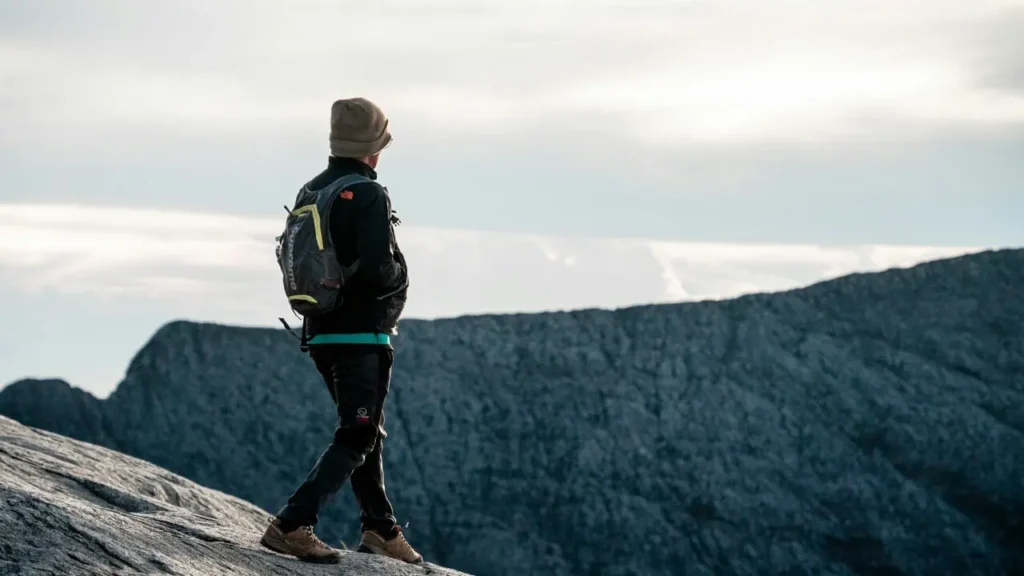
I first read this story ten years ago, when I was in my late twenties and trying to figure out what I was doing with my life. I thought it was about accepting failure. I thought it was telling me that it was all right not to be productive, not to be successful, not to be the person other people expected me to be. That was a useful reading at the time. It was not the right one.
The story is not about failure as consolation. It is about something harder: usefulness is a category someone else invented, and refusing to play by their rules is the only way to grow large enough to matter.
In Western hiking culture, every activity must be productive. We do not just “hike.” We “train.” We do not just “camp.” We “test gear.” We feel guilty sitting by a stream for an afternoon because an afternoon with no output is an afternoon we have lost. The Useful Tree would not survive that culture. It would be cut down on day one.
This is the paradox of modern outdoor life. We spend years learning how to move lighter, how to carry less, how to optimize every ounce, how to make every activity more efficient, more effective, more productive — and we rarely pause to ask whether we are learning the right things. We are learning everything except the one thing the trail actually asks of us: the ability to be present without a purpose. Effortless exploration is not the absence of preparation. It is the presence of something preparation alone cannot produce: a mind light enough to actually arrive.
Zhuangzi’s point is that the tree survived precisely because it refused to be useful. The hiker who refuses to be productive survives the same way. Not because productivity is bad. Because productivity is not the whole story. There are things that matter that cannot be measured, things that are gained by being still, things that are lost the moment you try to capture them.
A day on the trail where you sit for three hours, read a book, nap, and do not reach your planned destination — that is not a bad day. It is the only kind of day where you are fully alive to where you are. Every other day is spent trying to get somewhere else. On a bad day, you arrive somewhere and realize you were not there at all. On a good day, you never arrive anywhere, and that is exactly where you need to be.
You do not need to earn your time in the wilderness. You just need to spend it.
The Uncarved Block and the End of the Performance
There is another concept in Daoism that Western readers often encounter before they understand it: pu, the uncarved block. The term appears in the Tao Te Ching, and it describes a state of being before it has been shaped into anything useful. A block of wood before it is carved into a bowl, a tool, a piece of furniture. It has not been defined. It has not been made into something. It is, in the fullest sense, unfinished, and therefore free.
For a Western hiker, this is almost impossible to want. Our culture tells us that the point of life is to become something — a professional, an expert, a master of some skill or discipline. We learn, we practice, we improve, we refine. We carve ourselves into shape. The uncarved block is a state of becoming that we are taught to see as failure, and that is why it is so hard to accept it as freedom.
But the uncarved block is not a failure. It is the only state in which you are not being used by anything or anyone. It is the state of being in which you are not performing, not proving, not earning. It is the state of the hiker who walks without counting miles, who camps without optimizing the site, who eats without photographing the meal. It is the state that social media makes impossible, because social media is, by definition, a performance of the self for an audience that is not there.
When I hike alone, I have learned over the years to stop performing even for myself. I do not keep track of my pace. I do not record my route. I do not think about how the day looks from the outside. I just walk. The trail does not ask me who I am. It asks me where I am, and I answer by being there.
This is the hardest thing to do on the trail, and the easiest. It requires nothing from you except that you stop doing everything else.
What Gear Has to Do With Any of This
Gear matters. I do not want to pretend it does not. A zipper that catches on your sleeve, a boot that blisters you after three miles, a tent that collapses in wind, a stove that will not light when the temperature drops — these things tear your attention apart one small tear at a time, and by the end of the day you are not on the trail anymore. You are managing your gear. You are thinking about your gear. You are paying attention to the wrong thing.
But gear is a means to presence, not the destination. The right piece of equipment is the one you forget about. The wrong piece is the one that never stops reminding you it exists. A jacket that you reach for without thinking. A pack that disappears into your body. A stove that lights on the first try and is so reliable that you never think about it at all. These are the things that serve you. The things you think about are the things that do not.
This is where Daoist simplicity and minimalist hiking meet. The goal is not to carry less. The goal is to carry what lets you be where you are, fully, without distraction. A lighter pack is good only when it makes you lighter. A heavier pack is fine when it makes you present. The number on the scale does not tell you whether you are doing this right. The feeling in your mind does.
The wu wei philosophy that Laozi described two thousand years ago applies as much to your pack as it does to your mind. This is the heart of daoist simplicity: carry only what the trail asks of you, and let go of what it does not. Not because less is more. Because whatever is in the way of your presence is too much, and whatever is in service of your presence is enough.
The Two Thousand-Year Question
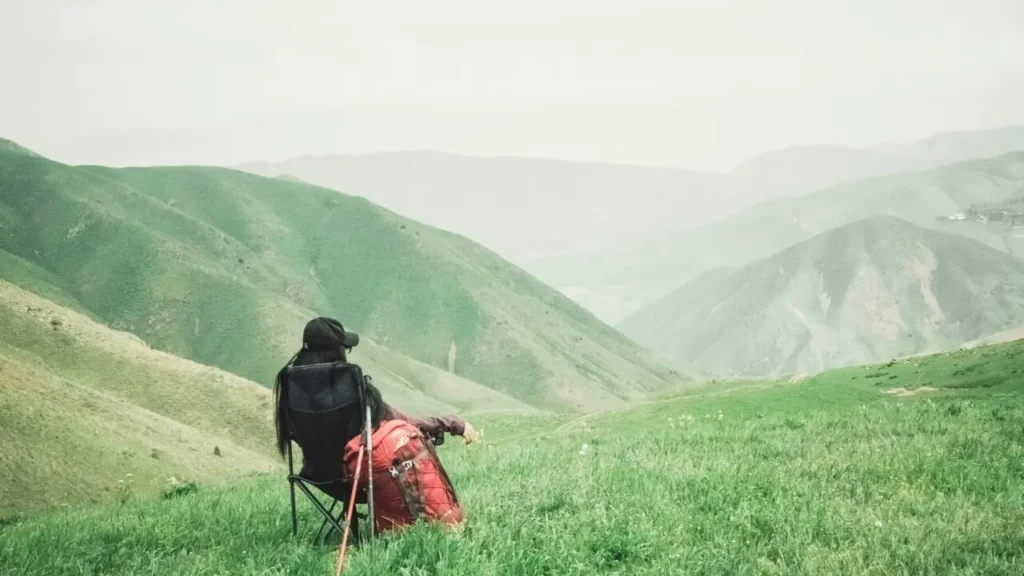
Laozi wrote his book in a time of war, when the people of China were exhausted and the rulers were cruel and the sky had not looked down in mercy for a long time. He was not writing for philosophers. He was writing for people who were tired of being told what to do, tired of being forced, tired of living in a world that seemed to run on violence and control.
The line he wrote — “In the Dao, every day something is dropped” — was not an abstract principle. It was a survival strategy for people who had nothing left to give. If you keep adding to what you are carrying, you will eventually collapse under the weight. If you keep dropping what you no longer need, you will be able to walk further than you thought you could.
Two thousand years later, hikers who have read nothing about Daoism still discover this principle on their own. They discover it the day they stop weighing their pack and start paying attention to their mood. They discover it the day they leave their phone at home and realize the trail does not change when nobody is watching. They discover it the day they sit on a rock for an hour without doing anything at all and realize that doing nothing was not empty, it was full.
The question Laozi was asking is the same question I asked myself on that rainy trailhead in the Pacific Northwest: what am I making lighter, and what am I leaving behind? The answer, two thousand years on, has not changed. The weight is not in the bag. The weight is in the mind. The freedom is not in the gear. The freedom is in the willingness to let go of what you do not need, including the need to be a certain kind of person, to carry a certain amount of stuff, to do everything right.
A Different Kind of Gear Check
Next time you pack for a trip, do the standard check. Weigh your bag. Lay out your list. Minimize what you can. Then do one more check, quieter and harder.
What are you bringing with you that you are not holding in your hands?
What expectations are you clutching so tightly that you cannot notice the trail at your feet? What identities — “good hiker,” “prepared hiker,” “fast hiker,” “the person who never gets lost” — are you carrying like gear, weighing you down with every step? What stories about who you are, and who you need to be, are you packing into your backpack without knowing you are doing it?
Leave them at the car. Not because they are wrong, but because they are not necessary for this trip. You will still know who you are on the other side. The trail will not ask. The mountains do not keep track. The trees have been waiting for you for a long time, and they do not care what you call yourself.
Walk lighter. But first, let go.
Further Reading
On Daoist Philosophy The Tao Te Ching and Zhuangzi’s writings are the foundation of the ideas in this essay. For a scholarly introduction to wu wei and the Daoist concept of action, see the Wikipedia entry on Wu Wei.
On Daoist Simplicity in Practice For a broader look at how Daoist principles shape minimalist outdoor living, read the essay on wu wei flow hiking.
On Gear That Disappears For a practical exploration of equipment that supports presence rather than distracting from it, see the essay on the Art of Effortless Exploration.