We are a species obsessed with maps. Not just the paper and digital kinds that guide our cars and hikes, but the intricate mental maps we construct for our lives — the five-year plans, the career trajectories, the meticulously scheduled holiday itineraries. We find comfort in the known, in the straight line between Point A and Point B. We believe that a good plan is our best shield against the chaos of the unknown.
There is something about this belief that feels almost religious. The map is not just a tool. It is a promise that the world will behave the way we expect it to, and that if we plan well enough, we will not be surprised. The plan is the thing that stands between us and the experience of being caught off guard, and we have convinced ourselves that being caught off guard is something to avoid.
I used to believe this. I still believe it, in some parts of my life. I plan my trips. I mark my routes. I carry a map. But I have also learned that the belief that the map protects you from surprise is itself the thing that guarantees you will miss what surprise has to offer.
This is the art of flow. It is a core belief I hold on this site, a principle I call “flow, don’t force.” It is the understanding that true mastery lies not in rigid control, but in responsive, effortless action — an extension of the mindful simplicity I have been exploring on this journey, and the very heart of wu wei flow hiking.
In the essay on effortless exploration, I wrote about moving with the grace of a guest — of shedding the weight of musts and shoulds to meet the wilderness on its own terms. And in the essay on Daoist simplicity, I went deeper into the truth that real freedom comes not from lightening our packs, but from lightening our minds — from releasing the internal clutter that keeps us disconnected from the present moment.
The principle of flow is the river that connects these two shores. It is the practice of applying that inner freedom to our outer movements — turning exploration into a dance with the world, not a battle against it.
The Tyranny of the Itinerary
Think of your last well-planned vacation. How much of it was spent looking at the world, and how much was spent looking at your watch? How many moments of wonder were quietly lost to the low hum of anxiety — the pressure of keeping up?
The itinerary, our modern-day map, has a way of becoming a tyrant. It whispers in our ear: you are running late. You are missing the next point of interest. You must see this. You must do that. It reduces the wild, unscripted beauty of travel to a checklist — a series of boxes to tick, rather than a journey to truly inhabit.
We hike faster to meet a mileage goal, and in doing so we miss the way afternoon light filters through the canopy, dappling the trail with gold. We rush from one viewpoint to the next, collecting images for our screens but not moments for our souls. We become so consumed by executing the plan that we suffocate the very spontaneity it was meant to unlock.
This is the opposite of flow. This is forcing — the friction we create when our rigid expectations collide with the fluid, unhurried reality of the world. It is the same friction that severs us from the Dao, from the quiet harmony I try to write about on this site, and from the true peace of mindful flow hiking.
We forget, again and again, that the wilderness does not adhere to our schedules. A storm may roll in. A trail may be washed out. A deer may cross our path and lead us somewhere we never intended to go. And these so-called disruptions are not failures of planning. They are invitations — invitations to stop forcing, and to begin flowing.
I have a personal story about this. I want to tell it because I have heard variations of this story from almost every hiker I have ever talked to, and because I think the shape of the story itself is more interesting than the details.
My Own Detour: The Gift of a Wrong Turn
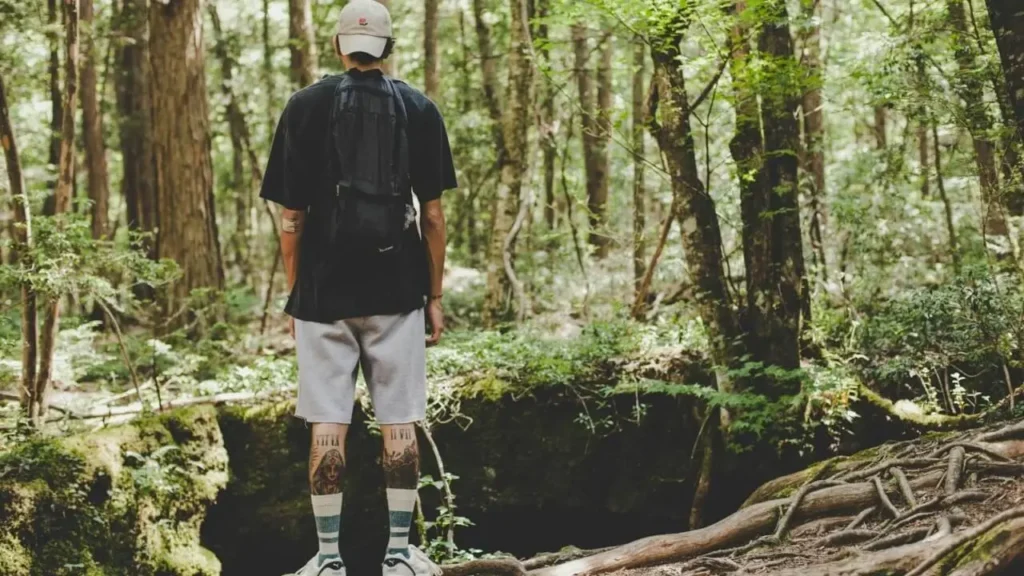
I learned this lesson not in a moment of triumph, but in a moment of complete, frustrated failure. It happened in the Appalachians, on a crisp autumn morning, on a trail I had mapped, researched, and planned for weeks. My goal was precise: reach the summit by noon, capture the perfect photograph of the valley below, and be back at the trailhead before dusk. The plan was my anchor. My guarantee of success.
Somewhere along the way, I took a wrong turn. Not a slight detour, but a sharp, unmarked fork that led me away from the summit and into a thicket of oak and maple I did not recognize at all. The plan, which had been my source of comfort, was suddenly useless. Panic arrived fast — cold, tight, overwhelming. I checked my phone. No signal. I stared at my map. Irrelevant. I felt a surge of anger at my own carelessness. I had a destination to reach. A schedule to keep. I was wasting time.
But as the sun dipped lower and the shadows lengthened through the trees, I had no choice but to surrender. I sat down on a moss-covered log, pulled out my thermos, and brewed a cup of tea. And then I simply stopped.
In that unplanned pause, the forest came alive in a way I had never experienced before. I noticed the intricate geometry of a beetle’s back, iridescent and impossibly perfect. I heard a subtle conversation between two distant birds — one high in the canopy, one low in the underbrush — their calls weaving together into a melody I would have walked right past. I felt the cool evening air settle on my skin, carrying the scent of pine and fallen leaves, of earth and endings and everything quietly continuing.
I had been on this trail for hours. But this was the first moment I was truly on it — unhurried, present, and completely free from the weight of my plan.
When I finally found my way back to the main trail, the summit was long out of reach. I did not get my photograph. I did not meet my schedule. But I left the woods carrying something far more valuable: a deep, settled sense of peace. I had achieved nothing I set out to do. And yet I had gained everything.
There is a part of me that wants to tell this story as if it were a revelation. It would be easier to write that I had a moment of clarity, that I understood suddenly and completely what wu wei meant, that the forest spoke to me in a voice I had not heard before. But that is not what happened. What happened was that I stopped trying to get somewhere else, and in the absence of that effort, I noticed something I had been too busy to notice before. That is not a revelation. That is just what happens when you stop.
The real lesson was not dramatic. It was this: the best plan is sometimes to have a plan — and then be fully willing to let it go. Flow is not about abandoning intention. It is about abandoning attachment to outcome. It is about trusting that the path, even when it is unplanned, will lead you exactly where you need to be. This is the core lesson of wu wei flow hiking.
Wu Wei: Not Laziness, But Attunement
This idea of letting go — of moving with rather than against the world — has a name in Daoist philosophy. Wu wei is often mistranslated as doing nothing. It is not about passivity. It is not about sitting idle and letting life wash over you without participation. Wu wei is about attunement — aligning your actions with the natural current of things, so that effort becomes effortless. It is the art of working with the Dao, not against it.
The term appears in the Tao Te Ching, attributed to an old man named Laozi who, according to tradition, rode west on a water buffalo through the gates of Han and was never seen again. The book was written down somewhere around the fourth or third century BCE, during a time in Chinese history that was violent, chaotic, and exhausting — a period called the Warring States, when seven kingdoms fought each other for supremacy. Laozi wrote his book in this time, and it is a book written from inside exhaustion, from inside a recognition that force begets force and that the people who win by force lose something they cannot get back.
In the Tao Te Ching, Laozi writes a line that captures the paradox at the center of wu wei (Chapter 33):
知人者智,自知者明。
To know others is wisdom. To know yourself is clarity.
The line points to the same truth wu wei is trying to express: the effort of controlling the world comes from the same place as the effort of controlling yourself. Letting go of both at the same time is not easy, but it is the only way the action becomes natural. For those who want to read more on the Daoist concept of wu wei, the Wikipedia entry on Wu Wei is a good starting point.
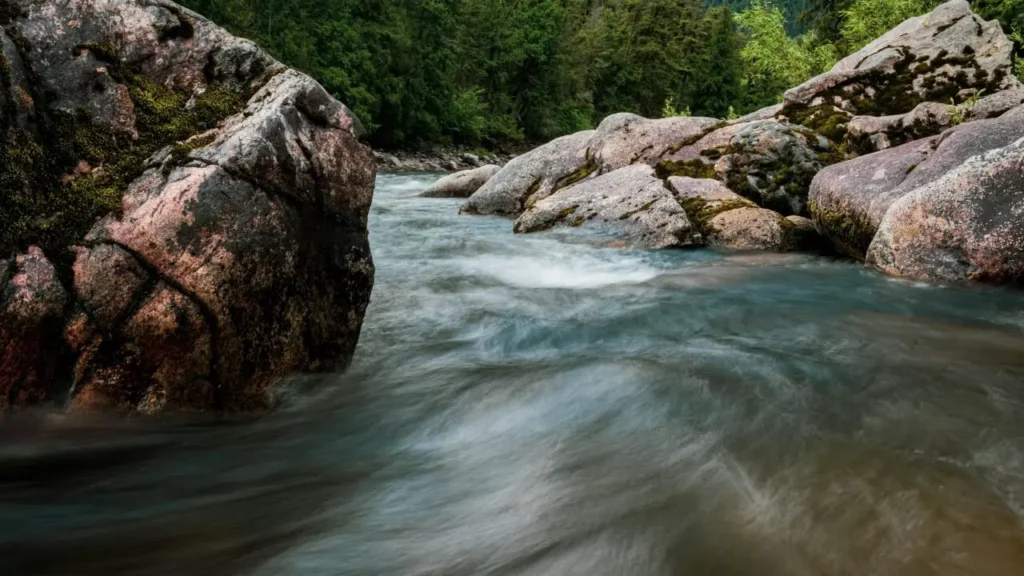
This is the paradox at the center of wu wei. Action is not abandoned. It is refined. It becomes as natural, as inevitable, as water finding its way downhill. The effort is not eliminated. It is simply redirected toward harmony rather than conquest.
Zhuangzi, one of the great teachers of the Daoist tradition, illustrated wu wei through the image of a master butcher whose knife never dulls — not because of force, but because he has learned to move through the spaces that already exist. He does not cut against the grain of things. He finds the natural openings and moves through them with ease. The effort is not eliminated. It is simply redirected toward harmony rather than conquest.
Consider what this looks like in practice, if you are willing to let the examples stand without translating them into rules.
A skilled surfer does not fight the wave. She studies its rhythm, feels its energy, and makes subtle adjustments to ride its power. She does not demand that the wave change for her. She changes with the wave.
A master gardener does not force a plant to grow. He tends the soil, offers water and light, and then steps back to let nature do its work. He does not control the plant. He collaborates with it.
A hiker who has learned to walk in flow does not force the journey to conform to a plan. They cultivate a state of open awareness — noticing the way the wind shifts, the way a trail bends, the way their own body speaks in the moment. They do not cling to a destination. They respond to the path.
None of these examples is a technique. They are descriptions of a state of being that most people never reach, because reaching it requires the kind of attention most people do not have the patience to give.
This is the quiet confidence that comes from trusting that the world is not something to be subdued, but something to be met. This is the foundation of effortless outdoor exploration through flow.
How to Practice Flow
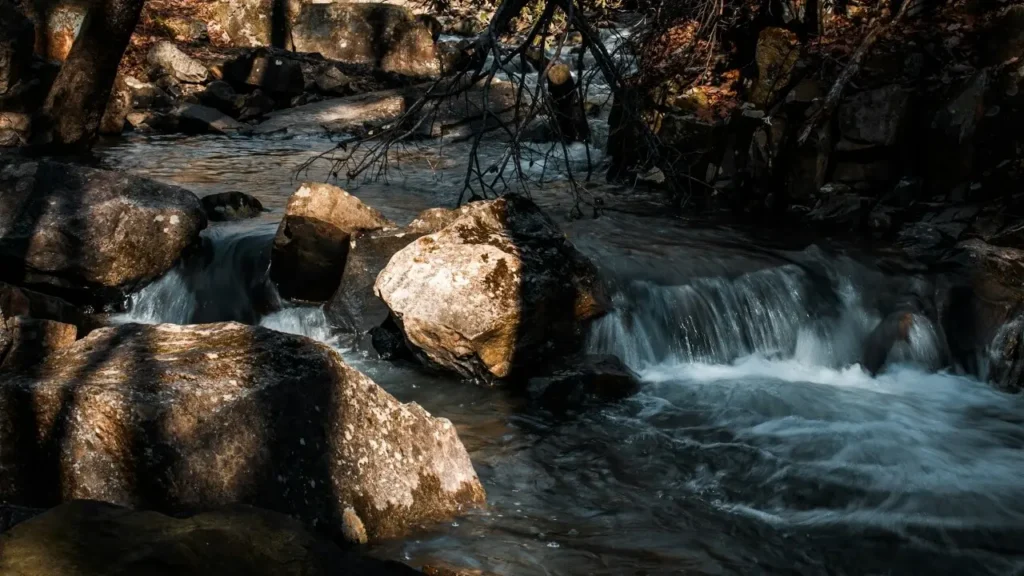
You do not need to get lost in the Appalachians to discover flow. You do not need to abandon all plans entirely. Flow is a practice, not a destination — and it is one you can begin today, whether you are on a mountain trail, a park path, or simply walking between meetings.
There is no rule for how to cultivate it. But there are some things you can try.
Leave the Watch Home, or Turn It Off
Try a single walk with no time limit. Let your body — not the clock — decide when to slow down, stop, or turn around. Notice what changes when you release the pressure of being on time. How does the air smell? How does the ground feel beneath your feet? How does your breath steady itself when there is nowhere urgent to be?
Time, it turns out, is far more generous when we stop fighting it.
Follow an Interest, Not a Path
An unusual bird. A strange-shaped tree. A patch of wildflowers that catches your eye along the edge of the trail. Allow yourself to leave the designated route and investigate. Let curiosity be your compass, not a pre-drawn map.
Zhuangzi’s cooks, painters, and woodcarvers all found their mastery not by following instructions, but by becoming so attuned to the materials before them that the right action arose naturally. The wilderness asks the same of us. It does not need us to follow a path. It needs us to notice where we are.
Embrace the Pause — The Daoist Empty Space
When you feel the urge to check your phone, rehearse tomorrow’s to-do list, or push ahead to the next viewpoint, stop. Take three slow breaths — in through your nose, out through your mouth. Listen. What do you hear now that you could not hear a moment ago? A stream? Wind in the canopy? The rustle of something unseen moving through the underbrush?
In Daoist thought, the empty space is not wasted space. It is where everything becomes possible. The hollow of a bowl is what makes it useful. The silence between notes is what makes music. The pause is where flow lives.
The Map and the Territory
There is an old saying in philosophy: the map is not the territory. The phrase was made famous by the mathematician Alfred Korzybski in the early twentieth century, but the insight is older than him. A map is a simplification of the ground. It leaves things out. It cannot contain everything that is there, because if it could, it would be the same size as the territory itself and therefore useless as a map.
This applies to hiking. It applies to every plan you make, every route you mark, every itinerary you study before you leave the house. The plan is a map. The trail is a territory. They will never match.
Most hikers spend the first half of their trip trying to make the territory match the map, and the second half wondering why it did not. They feel lost when the trail does not look like the map said it would. They feel failed when they do not reach the destination at the time they calculated. They feel angry when the weather does not behave.
I once spent two days on a trail that was ten miles shorter than the map said it was, because someone who had maintained the route had shortened it a year before I printed my map, and no one had updated the paper I was carrying. I walked the whole ten miles feeling like I was being played a joke, and when I finally reached the end and found the trail simply did not exist anymore, I sat down on a rock and laughed. I had been arguing with a map for two days, and the map had been right the whole time — it was just not talking to me anymore.
This is what it means to hike in flow. You accept that the map is not the territory. You walk the trail as it is, not as you expected it to be. You are not trying to make the world conform to your plan. You are letting the world be what it is, and you are walking it anyway.
What to Drop Before You Walk
If you want to hike in flow, there is nothing you need to add to your pack. There is something you need to leave at the car, and it is not physical.
It is the itinerary. You can carry it if you want. I do. But do not let it tell you how the day will go. Read it at the trailhead if it comforts you, and then put it away. The trail will not follow it. Neither will you.
It is the pace. Most hikers carry a pace in their head, a number of miles per hour that defines whether they are doing it right. That pace is not real. It is a number someone else calculated, or a number you read online, or a number you have been using for so long that you have mistaken it for a fact about yourself. The trail does not care about your pace. The trail only cares whether you are paying attention.
It is the summit. I am not saying you should never try to reach a summit. I am saying you should not make the summit the reason for the hike. If the summit is the reason, you are not hiking. You are climbing to a destination, and the walking is just the inconvenience of getting there. A hike in flow does not have a summit. It has a trail, and the trail is where you are.
It is the story. Every hiker tells themselves a story about who they are on the trail. The fast hiker. The prepared hiker. The minimalist. The ultralighter. The expert. The beginner who is trying to be good at this. All of these stories are heavy. They are not wrong. They are just not necessary for this trip. Leave them at the car. You will still know who you are when you get home.
The Quiet Courage of Not Knowing
Wu wei flow hiking requires a kind of courage that most people do not recognize as courage. It is not the courage of facing danger or pushing past your limits. It is the courage of not knowing what will happen next and not needing to.
This is hard for most Western hikers, because Western hiking culture is built on control. You plan. You prepare. You execute. You conquer. The trail is a challenge, and you are the one who meets it. The language of the tradition — bag a peak, complete the trail, conquer the route — is the language of war, and it is not accidental. It reflects a worldview in which nature is an opponent to be defeated, and the hiker is the soldier who wins.
Daoist tradition does not see the trail as an opponent. It sees the trail as something you are part of, and the act of hiking as a way of remembering that. You are not fighting the trail. You are not trying to beat it. You are walking it, and the walking is enough.
This is not a rejection of planning or preparation. It is a rejection of the belief that planning and preparation are the point. They are means. The point is the walking itself, and the point is reached the moment you stop trying to reach it.
The Art of Not Arriving
There is a moment, on most hikes, when you realize you have been thinking about the destination for the entire walk. You have not been walking. You have been traveling toward something, and the walking was just the vehicle. This happens to almost everyone, and it is the moment most people do not notice, because it is the moment they have been avoiding.
If you notice it, you can do something about it. You can stop thinking about the destination. You can look at the trail in front of you and notice it, for the first time in hours, as something that is actually there. You can feel the ground under your feet and the air in your lungs and the weight of your pack and the sound of your own breathing, and you can realize that you are not on a journey to somewhere else. You are here, and the here is real, and it does not need a destination to make it matter.
This is the art of wu wei flow hiking. It is not the art of arriving. It is the art of not arriving, and finding that the not-arriving was exactly where you needed to be all along.
The Body Knows Before the Mind
There is a difference between knowing a trail with your mind and knowing it with your body. The mind knows it by reference: the map, the GPS, the waypoints, the elevation profile. The body knows it by feel: the slope under your foot, the temperature of the air, the sound of the water in the next valley, the way the light falls through the trees at four in the afternoon.
The mind can tell you where you are going. The body can tell you whether you are arriving there in a way that feels right.
I learned this on a long hike in the desert, when the map I had printed showed a route that looked clear on paper but was a wash of loose sand and dead brush in reality. I was tired, and the sun was high, and I had about three hours of daylight left to cover four miles of ground that the map said was flat. My mind was telling me to keep going — I had come this far, I was almost there, turning back would waste the whole trip. My body was telling me something different: this is not the trail the map described, and if I keep going the way I am going, I will not be here tomorrow.
I turned back. I camped in a slot canyon I had not planned to see, and I watched the stars through a gap in the rocks for an hour before I went to sleep. The next morning, I found the route the map had described by walking along a dry creek bed that had not shown up on any satellite image. It took me three hours instead of six, and I arrived at the destination feeling lighter than I had felt at any point in the previous two days.
The map was right. The trail was real. But the map did not know what the body knew, and the body knew better.
This is what wu wei flow hiking is about. It is not about ignoring the map. It is about trusting the body when the map and the body disagree.
The River Was Always There
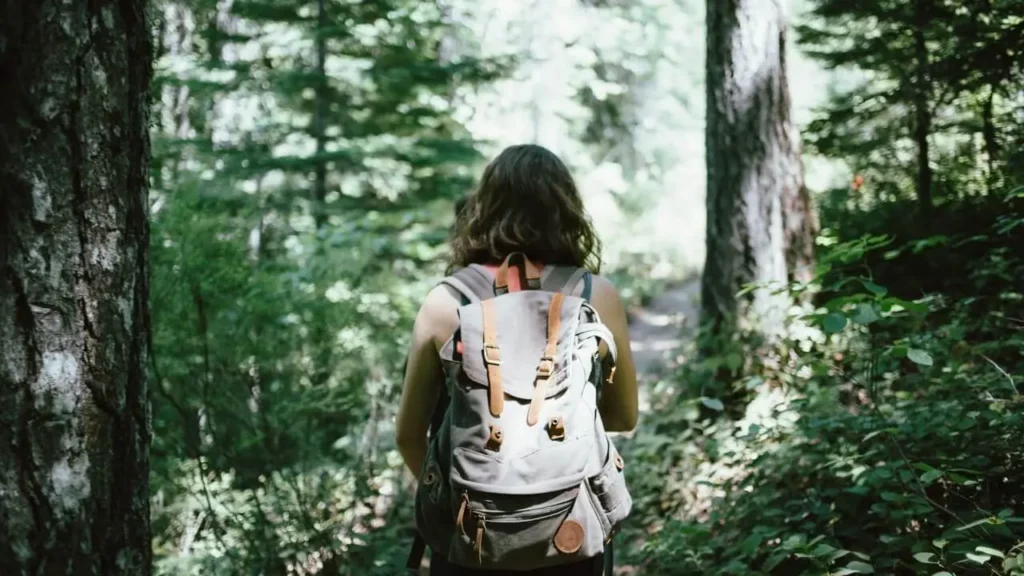
Flow is a muscle. The more you use it, the stronger it becomes, and the quieter the voice grows that insists you are falling behind.
It is the practice of loosening your grip on outcomes, of trusting the path even when it curves away from where you thought you were going, of discovering that the trail you are on is not the trail you planned but is the trail you are actually walking, and that the difference between them is not a failure but a fact.
It is a form of courage — quiet, unhurried, entirely your own — to fold the map away and step into the territory.
The Dao De Jing says, in Chapter 43:
天下之至柔,驰骋天下之至坚。无有入无间。
The softest thing in the world overcomes the hardest. That which has no substance enters where there is no room.
This is the heart of flow. Not accumulation. Not conquest. But a gradual, willing release — of urgency, of certainty, of the belief that we know better than the path itself.
By embracing flow, we do not just change how we travel. We change how we live.
We begin to understand that life is not a series of destinations to be conquered, but a river that was always there, waiting for us to step into it — and that the map we have been consulting this whole time was never the point.
The river was always there.
We were just too busy consulting the map to step into it.
This is the flow of this site. This is the art of moving through the world with an open heart, an open mind, and the courage — quiet, unhurried, entirely your own — to fold the map away. This is the true freedom of mindful flow hiking.