
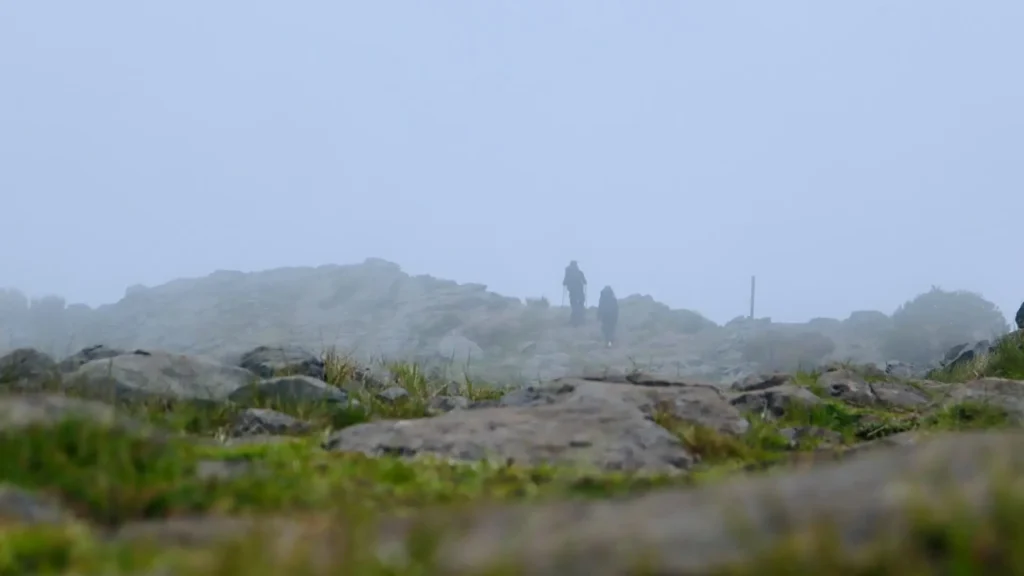
We live in a world that counts every ounce, measures every millimeter, and celebrates every technical specification. Walk into any outdoor gear shop, scroll through a backpacking forum, or open a hiking brand’s catalog, and you will be drowned in a sea of numbers: 20D silnylon fabric, 10,000mm hydrostatic head waterproof rating, 7000-series aluminum tent poles, titanium stakes lighter than a feather. We debate the merits of double-wall versus single-wall designs, argue over the optimal number of guylines, and fixate on how many grams we can shave from a shelter’s total weight.
We have become connoisseurs of the material. When we hand over our credit cards for new minimalist backpacking tents, we tell ourselves we are buying the sum of its parts: the ripstop fabric that will keep the rain out, the poles that will withstand the wind, the craftsmanship that promises years of use in the wild. We believe that more technical innovation, more robust materials, more impressive specs equal more safety, more comfort, more legitimacy as outdoor explorers. This is the material fog: a cloud of numbers and features that blinds us to the true purpose of the shelter we carry on our backs.
Nearly 2,500 years ago, Laozi wrote a line in the Dao De Jing that cuts through this fog with effortless clarity:
三十辐共一毂,当其无,有车之用。埏埴以为器,当其无,有器之用。凿户牖以为室,当其无,有室之用。故有之以为利,无之以为用。
Thirty spokes share one hub; when it is empty, the wheel is useful. Shape clay into a vessel; when it is empty, the vessel is useful. Cut doors and windows for a room; when it is empty, the room is useful. Therefore, what is gives benefit; what is not gives utility.
For those who want to read more on Laozi’s life and the historical context of the Dao De Jing, the Stanford Encyclopedia of Philosophy entry on Laozi is a reliable starting point.
This is the radical truth we have forgotten in our obsession with gear specs. We spend hours poring over the fabric, the poles, the hardware of a tent — the “what is” — and we almost never stop to ask the question that matters most: when we purchase a tent, are we really paying for the coated nylon that wraps around us? Or are we paying for the empty space inside it? The quiet, protected void that the fabric creates? The nothingness that lets our bodies rest and our minds breathe, deep in the wilderness?
This is the gift of emptiness. It is the invisible heart of every shelter we carry into the wild. It is the quiet truth that the most valuable part of your tent is not something you can touch, weigh, or measure on a spec sheet. And it is the lesson that transforms a simple nylon shelter from a piece of gear into a sacred space of peace, presence, and reconnection — the spirit of mindful wandering.
Benefit from What Is, Utility from What Is Not: The Utility of the Void

To understand the true magic of our wilderness shelters, we must first unpack Laozi’s timeless wisdom, for it holds the key to breaking free from the material fog of modern outdoor culture. His three simple metaphors are not just ancient philosophy. They are a blueprint for how we show up in the wild, and in our lives.
Start with the wheel. Thirty spokes radiate from a central hub, each one strong, carefully crafted, essential to the wheel’s structure. But the wheel cannot do its job, cannot carry a wagon forward, cannot turn with ease, if not for the empty hole at its very center. That hollow void is what lets the wheel mount to the axle. It is what allows movement, purpose, utility. The spokes are the “what is” — the material benefit that holds the shape. The empty hub is the “what is not” — the emptiness that gives the wheel its reason for existing.
Next, the clay vessel. A potter kneads and shapes the clay, firing it into a bowl, a cup, a jar. The strength of the ceramic, the smoothness of the glaze, the craftsmanship of the form — these are the material “what is.” But the bowl cannot hold water, the cup cannot hold tea, the jar cannot hold grain, if not for the empty space inside it. The utility of the vessel does not come from the clay itself. It comes from the nothingness the clay contains.
Finally, the room. You cut doors and windows into four walls, you build a roof overhead, you lay a floor beneath your feet. The wood, the stone, the mortar — these are the material “what is,” the structure that keeps out the cold and the rain. But a house is not a home, a room is not a place to live, without the empty space between the walls. That void is where you sleep, where you eat, where you laugh, where you breathe. The walls give you safety, but the emptiness gives you life.
This is the core of Laozi’s teaching: “What is gives benefit; what is not gives utility.” The material parts create the shape, but the empty space creates the purpose.
Now, turn this wisdom to your tent. A tent is nothing more than a mobile room, a temporary home you carry on your back into the wilderness. Its “what is” is the silnylon fabric, the aluminum poles, the titanium stakes, the waterproof coating. These things give you benefit: they keep the rain off your face, they block the wind, they hold their shape through a storm, they create a boundary between you and the untamed wild. Without this material structure, the void cannot exist. This is the tangible benefit, the practical advantage that makes the shelter possible.
But the tent’s true utility does not live in the fabric. It lives in the empty space that the fabric wraps around. It is the air you breathe inside it. It is the room to lay out your sleeping pad, to sit cross-legged with a warm cup of tea, to curl up and rest after a long day on the trail. It is the protected bubble of stillness in the middle of a vast, chaotic wilderness. Without this void, the tent is nothing more than a pile of nylon and metal on the forest floor. It has no purpose, no utility, no reason to exist.
This is the radical shift in perspective we invite you to make. We have been taught to judge a shelter by the quality of its material parts, by the impressiveness of its specs. But the truth is this: the fabric’s only job is to create and protect the emptiness inside. The gear’s “benefit” is its ability to shield you from the elements. But the gear’s true “utility” is the quiet, uncluttered void it creates for your mind and body. The best minimalist backpacking tents in the world are not the ones with the most impressive specs. They are the ones that create the purest, most peaceful space for you to simply be.
The Mental Shelter: From Physical Void to Mind Cleansing
I learned this lesson on a cold, rain-soaked night in the Blue Ridge Mountains, a night that redefined everything I thought I knew about what a shelter is for. The forecast had called for light drizzle; what we got was a relentless downpour, paired with 30 mph winds that whipped through the trees and shook the forest around us. My hiking partner and I had hiked for hours in the rain, our boots soaked through, our layers heavy with water, every muscle aching and every bit of energy drained by the unrelenting storm.
When we finally reached our campsite, we fumbled in the fading light to pitch our shelter. Our hands were numb with cold, our vision blurred by rain, but we drove the stakes in tight, locked the poles in place, and secured the rainfly against the wind. Then we ducked inside, zipped the door shut, and in an instant, the chaos vanished.
Outside, the wind howled, the rain hammered against the rainfly, and the trees creaked as if they would break. But inside that small nylon bubble, there was only stillness. Warmth. Safety.
In that moment, I did not think about the 20D fabric, the 10,000mm waterproof rating, or the lightweight titanium stakes. I did not care about the specs that convinced me to choose this tent months earlier. All I felt was the quiet void wrapping around me: a tiny, protected space carved from the storm, where I could breathe, dry off, and let go of every ounce of stress and exhaustion from the hike.
When dawn broke the next morning, I understood this truth in a way words cannot fully describe. The storm had passed, and soft early morning light filtered through the tent’s thin silnylon fabric, turning the entire empty space into a gentle golden glow. Outside, the wind stirred maple branches, and their shadows danced across the tent walls — slow, flowing, quiet, like ink wash painting moving across a blank scroll. In that moment, the tent’s emptiness was not just empty space. It was a living canvas.
The wilderness was not outside, pressing against the walls. It was inside, painting its quiet poetry across the void I held. This is the quiet magic of Daoist philosophy made real: the line between inside and outside melts away, and the empty space becomes a bridge between your mind and the wild world around you.
That is the true power of the tent’s void: it is not just a physical space. It is a shelter for your mind. The safety you feel inside a tent does not come from strong poles or waterproof fabric. It comes from this: in the middle of the endless, wild unknown, it gives you a small, defined “empty space” where you do not have to fight, perform, or push forward. A space where you can simply rest.
This quiet practice of emptying the mind has a name in Daoist thought: Xin Zhai. For Western explorers, we can call it mind cleansing — a simple, gentle practice of clearing away mental clutter, not emptying your mind completely, but letting go of stress, to-do lists, expectations, and the noise of modern life. It is not about ignoring thoughts, but releasing the mental weight that keeps you from being fully present. It is about creating an inner empty space, so peace and clarity can flow through you. It is the mental mirror of the simplicity we practice with our gear — the same idea explored in the essay on Daoist simplicity — and it is the quiet companion to the Daoist simplicity we have explored on the trail.
And your tent’s physical empty space is the perfect place to do it.
In daily life, our minds are flooded with noise: work emails, social media, deadlines, the pressure to achieve and keep up. Even on the trail, we carry that noise: mileage goals, summit deadlines, perfect photos for social media. But when you zip up your tent and step into that small, quiet void, everything shifts. The outside world is held back. The noise fades. The pressure disappears.
The tent becomes a quiet, soundproof room for your deepest conversation with nature and with yourself. The rain on the rainfly is not an annoyance — it is soft white noise that drowns out mental chatter. The wind shaking the poles is not a threat — it is a reminder of the wild outside, and the safety of the space inside. The small size of the void is not a limit; it is a gift. It forces you to slow down, be present, and sit quietly with yourself.
This is the true gift of the tent’s emptiness. It does not just protect your body from the storm. It protects your mind from the chaos of modern life. It is a physical space that invites you to cleanse your mind, let go of clutter, and reconnect with the quiet stillness inside you. The fabric makes the walls, but the emptiness makes the sanctuary.
The Inner Wall: Emptiness as a Mirror
There is a part of the Daoist teaching that most gear-minded people miss, because it asks something uncomfortable of them. Laozi’s metaphors do not end with the tent. They point inward. The bowl is useful because it is empty. The wheel is useful because it is empty. The room is useful because it is empty. And you — in the same way — are useful, in the deepest sense, because you are capable of being empty.
This is not a spiritual platitude. It is a practical observation about how attention works. A mind that is full — full of plans, judgments, comparisons, and the need to be right — cannot receive anything new. It cannot listen. It cannot notice. It cannot be surprised by the way the morning light falls through the tent wall, or by the sound of rain on the rainfly, or by the feeling of being alive and not in control of everything. A full mind is a mind that has already decided what the experience will be before it has begun.
The tent gives you a physical model of what an empty mind feels like. When you step inside it, the physical boundaries tell your nervous system that you are safe. The small space tells you that you do not need to do anything right now. The silence — or the rain, or the wind — tells you that the world is continuing without your input, and that is okay. The void inside the tent is not just space. It is permission. Permission to stop. Permission to be still. Permission to let the day end without having to extract anything more from it.
This is why so many people describe the first night in a minimalist tent as “strange” or “uncomfortable,” even when they have all the right gear. The discomfort is not in the cold or the noise or the fabric. The discomfort is in the fact that the tent’s emptiness reveals the noise already inside them. They cannot hear the rain because they are still listening to their own plans. They cannot feel the stillness because they are still filling the space with thoughts about tomorrow.
The practice of mind cleansing inside a tent is not a passive experience. It is a quiet, deliberate act of unlearning — the same kind of unlearning Laozi described when he wrote about the Daoist simplicity of releasing what we have accumulated. It is not about achieving a state of permanent calm. It is about learning, one shelter at a time, that calm is already there, underneath the noise, and that the only thing standing between you and it is the effort you are making to fill the space.
Designing for Emptiness: A Curator’s Guide to Shelters That Honor the Void
If the true utility of a shelter lives in its emptiness, then the best minimalist backpacking tents are the ones that honor that void — rather than fighting against it. And this is where so much of modern outdoor gear design fails us.
Walk through any outdoor trade show, and you will see it everywhere: shelters that are overloaded with features, crammed with gimmicks, designed to scream for your attention rather than fade into the background. Tents with a dozen internal pockets, built-in LED light strips, dedicated gear garages, removable room dividers, even built-in speaker mounts. Bright, neon colorways that clash with the natural landscape. Bulky, overcomplicated pole systems that require an engineering degree to set up. Designs that fill every inch of the shelter with “functionality,” leaving no room for the void to breathe.
These shelters are not designed to serve the emptiness. They are designed to fill your senses, to sell you on more features, more specs, more “benefit.” They are loud, obtrusive, and in the end, they defeat their own purpose. They are the definition of forcing — the rigid, material-focused mindset we reject. They take the sacred void of the shelter, and fill it with noise. They become the center of attention, rather than the invisible container for your peace. A shelter that dominates your awareness, that demands you notice its design, its features, its cleverness, has failed at its core job. It has become the master, not the servant. It has stolen the spotlight from the void that gives it purpose.
At QuietRoam, we believe in curating gear that honors the void. We are not here to sell you the most feature-packed shelter, or the one with the most impressive specs. We are here to help you find the quiet companions that serve your peace, your presence, and your connection to the wild. Our curation standard for shelters is built entirely around honoring the emptiness, rooted in Daoist wisdom. Best Minimalist Backpacking Tents applies this standard to nine real shelters — not by counting specs, but by asking which ones let the void breathe.
Invisibility: The Greatest Skill Looks Like Clumsiness
Laozi wrote of a universal truth in Chapter 45 of the Dao De Jing:
大直若屈,大巧若拙。
The greatest integrity looks like compromise. The greatest skill looks like clumsiness.
The most masterful design is the design you do not notice. A great shelter should disappear once it is pitched. You should not be constantly aware of its walls, its features, its presence. It should fade into the background, becoming a seamless part of the void it creates, rather than a distraction from it.
This radical minimalism is not a compromise on quality, nor does it equate to cheap, underengineered gear. In fact, the opposite is true: true mastery of this “great skill that looks like clumsiness” demands the highest levels of material innovation and engineering precision — all in service of invisibility, not spectacle. It means using ultra-lightweight, ultra-strong Dyneema Composite Fabric to create a shelter that weighs mere ounces, yet withstands alpine storms, without the bulk or rigidity of heavy, overbuilt fabrics. It means using precision-machined titanium alloy hardware that is stronger than steel, yet so light and unobtrusive you never notice it.
Every technical advancement, every premium material, is deployed with one singular goal: to eliminate the shelter’s presence in your awareness, so that the void — and the peace it holds — can take center stage. This is not gear for gear’s sake; this is gear that serves your experience of the wild.
A shelter that honors invisibility is one that you set up, and then forget about. It does its job quietly, reliably, without fanfare, so that you can focus on what matters: the stillness inside the void, the beauty of the wild outside, the peace of your own mind.
Harmony With Nature’s Rhythm
A shelter that honors the void does not fight against the natural world — it becomes a part of it. Its color palette should blend with the landscape, not clash with it: earthy tones, muted greens, soft browns, deep grays that fade into the forest, the mountains, the desert. Its lines should be simple, organic, flowing with the wind rather than fighting against it. It should not be a bright, obtrusive blight on the wilderness, but a quiet, humble presence that respects the land it sits on.
This harmony is not just about aesthetics. It is about protecting the void. A shelter that blends into the landscape does not pull your eye outward, toward its bright colors and bold design. It lets your gaze soften, lets your mind rest, lets you sink into the stillness of the space inside. It becomes part of the “nothingness,” rather than adding to the “somethingness” that fills our lives.
This is the standard we will bring to every piece of gear we curate. We will never celebrate a shelter for its flashy features or impressive specs alone. We will only lift up the quiet companions that honor the void, that serve your peace, that disappear into the background so that you can step fully into the present moment. These are the shelters that understand the true utility of emptiness.
The Material Fog: When Specs Become the Point
There is a moment in almost every gear purchase that deserves attention. It is the moment when the spec sheet stops being a tool and starts being a story. You read the weight, and you tell yourself: this tent is light. You read the waterproof rating, and you tell yourself: this tent is safe. You read the fabric denier, and you tell yourself: this tent is durable. Each number gives you a feeling, and that feeling is not really about the tent. It is about the person you think you are when you own it.
This is the material fog in action. It is not that specs are useless. They are useful for what they are: data. They tell you whether a tent will fit in your pack, whether it will keep you dry in a storm, whether it will last five years or one. But they do not tell you whether the tent will create a space inside you. They do not tell you whether the void inside it will hold your mind the way a bowl holds water. And that is the question a spec sheet can never answer, because it is not a question about the tent. It is a question about you.
The Western outdoor industry has built an entire culture around the idea that more data equals better decisions. It has given us gear reviews that read like engineering reports, buying guides that rank products by weight-per-dollar ratios, and social media feeds full of people comparing base weights like they are comparing scores in a game. None of this is wrong, in itself. Data is useful. Comparison is useful. But when data becomes the point — when the purpose of buying a tent is to have the best numbers rather than to have the best experience — something has gone wrong.
This is the same pattern we see in every area of modern life. We accumulate credentials to feel legitimate. We accumulate possessions to feel secure. We accumulate knowledge to feel competent. And in every case, what we are accumulating is not the thing we actually need. We need to feel legitimate, secure, competent — and we have mistaken the accumulation for the feeling itself. The tent is not the feeling. The numbers on the spec sheet are not the feeling. The void inside the tent is the feeling. And you cannot measure it, but you can feel it the moment you step inside, if you are quiet enough to notice.
Practicing the Void: How to Receive the Gift of Emptiness in Your Shelter
Understanding the philosophy of the void is powerful. But the true magic comes from practicing it — from learning to step into your shelter’s emptiness, and let it nourish your mind and body. You do not need a remote wilderness campsite, a high-end minimalist backpacking tent, or weeks of free time to receive this gift. All you need is a shelter, a few minutes of quiet, and the willingness to let go of the material fog.
Here are three simple, actionable practices to help you embrace the gift of emptiness on your next outdoor adventure.
The Seated Observation: Listen to the Boundary Between Void and Wild
The moment you step into your tent after a long day on the trail, there is an urge to fill the space with activity: to pull out your phone, to unpack your entire pack, to cook dinner immediately. We are so uncomfortable with stillness that we will do anything to fill the quiet void.
This practice invites you to pause first. After you pitch your tent, zip the door shut, and set down your pack, do nothing else. Sit cross-legged on your sleeping pad, close your eyes, and sit in silence for ten full minutes. Do not touch your phone. Do not unpack your gear. Do not make plans. Just breathe, and listen. Notice how the mental chatter of the day — the hike, the plans, the worries — begins to fade. This is the gift of the void. You are practicing gentle mind cleansing, letting go of the clutter that fills your days.
Minimalist Carrying: Keep the Void Pure
The emptiness of your tent is easily corrupted by clutter. We have all been there: we pitch our tent, and then dump our entire backpack inside. The void disappears, replaced by a chaotic pile of “things.” The shelter goes from a quiet sanctuary to a cramped storage unit.
Laozi taught that the more you fill a space with things, the less utility it has. A bowl full of rocks cannot hold water. A tent full of gear cannot hold peace.
This practice is simple: when you enter your tent for the night, bring only what you absolutely need into the sleeping space. Keep the core void of your shelter as empty, as uncluttered, as pure as possible. The logic is undeniable: reducing the material clutter inside your tent increases the capacity of the void. And increasing the capacity of the physical void increases the capacity of your mental void.
The Morning Light: Notice the Canvas of the Void
Before you leave your tent in the morning, before you unzip the door and let the day flood back in, take one minute to look around the empty space. Notice the way the light has changed through the night. Notice the way the fabric has settled. Notice the way the morning air has shifted the weight of the tent, shifting the angle of the poles, shifting the shape of the room inside.
This is the void revealing itself to you. It is not empty. It is full of the world that has been painting across it all night. And it is still there, in the morning, waiting for you to notice it before you rush to fill it with the next thing you have to do.
Carrying the Void Forward
<!– IMAGE PLACEHOLDER: Closing — Empty minimalist backpacking tent interior at dawn, light filtering through silnylon fabric like an ink wash painting –>
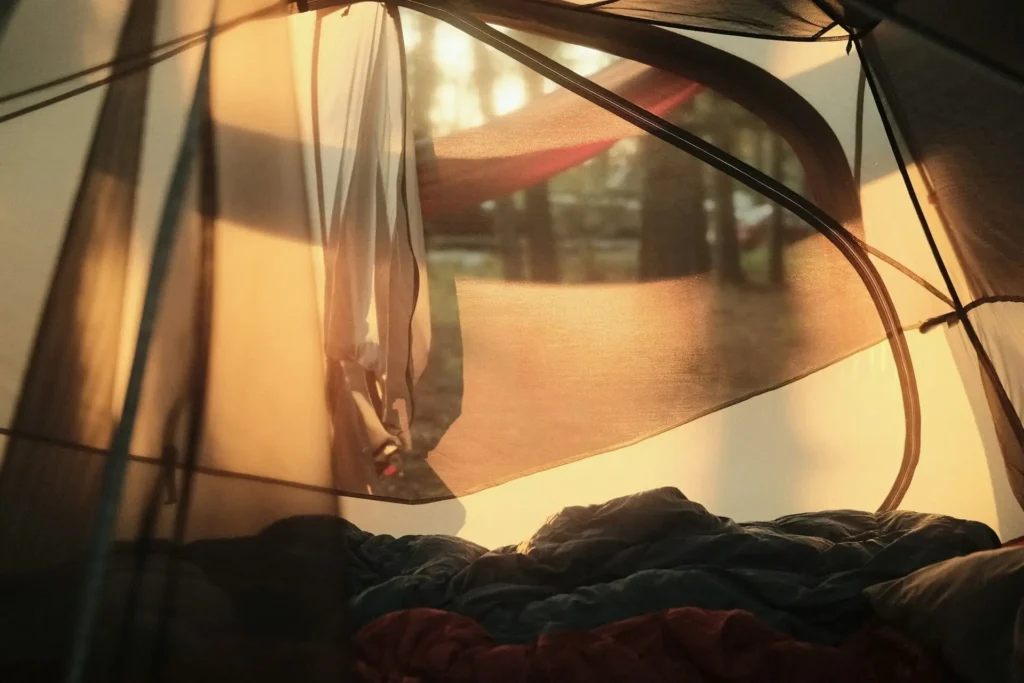
The void we find inside our minimalist backpacking tents is not just for the wilderness. It is a lesson we can carry with us back into our daily lives, back into the noise and chaos of the modern world.
When we learn to sit in the quiet emptiness of a nylon shelter in the woods, we learn to be comfortable with “nothingness.” We learn that we do not need to fill every moment with activity, every space with things, every thought with noise. We learn that the most valuable parts of life are not the material things we accumulate, the goals we achieve, the specs we check off. They are the quiet, empty moments where we can breathe, be present, and connect with ourselves and the world around us.
We learn that emptiness is not nothing. It is the space where everything happens. It is the hub that makes the wheel turn. It is the hollow that makes the bowl useful. It is the void that makes the shelter a home.
The next time you find yourself poring over gear specs, debating the merits of one tent over another, chasing the perfect combination of fabric, weight, and features, we invite you to pause. Close your eyes. Forget the numbers on the page. And imagine yourself stepping inside that shelter. Feel the empty space around you. Feel the stillness. Feel the peace.
That is the true utility of the tent. That is the gift of emptiness. That is what you are really carrying on your back when you head into the wild.
Welcome back to QuietRoam. Together, let us seek out the quiet, humble shelters that honor the void. Let us find those companions that fade into the background, so that we can step fully into the stillness, the presence, and the peace that lives in the nothingness.
For a practical look at the shelters that carry this principle into the backcountry, Best Backpacking Tents evaluates nine options against the Gift of Emptiness standard.