
This article contains affiliate links. We earn a commission if you purchase through them, at no extra cost to you.
There is a story I heard on a long ridge walk, and it is about water.
A woman was ahead of me by a few hundred yards. Every few hundred yards, she stopped. She took the backpack off one shoulder. She reached into a side pocket. She pulled out a bottle. She unscrewed the cap. She drank. She screwed the cap back on. She put the bottle away. She lifted the backpack back onto her shoulder. She walked.
She was carrying water. I was carrying water too.
The difference was that my water did not ask me to stop.
There was a reservoir in my pack, connected to a tube that ran over my shoulder. When I wanted water, I put the tube in my mouth and bit. The water came. I did not stop. I did not take anything off. I did not look at my hands. The water was simply there, the way the trail was there.
In the forty minutes after we started walking, she had stopped nine times. I had stopped zero times. She had thought about her water nine times. I had thought about it once, and that was the first bite.
This is the principle that guides every choice in this article. It is a line from the Dao De Jing, and it is about the kind of equipment a hiker should carry. Use things, but do not be used by things. The bottle uses her. She has to stop, reach, unscrew, drink, screw, put away. The reservoir uses me for nothing. It gives water and then disappears. That is what a backcountry hydration bladder is built to do, and the seven reservoirs in this article do it in seven different ways. The deeper principle — that water should be given and the giving should disappear — is the principle of the Tao of water: the highest excellence is like water, and the best water bladder is the one that gives water and is not missed when it is not there.
The Seven Reservoirs at a Glance
| Reservoir | Capacity | Weight | Material | Rating |
|---|---|---|---|---|
| CamelBak Crux 2 L | 70 oz (2 L) | 7.4 oz | Plastic | 4.6 / 5 |
| HydraPak Contour | 1.5 / 2 / 3 L | 5.0 oz at 2 L | PU | 4.5 / 5 |
| Osprey Hydraulics LT | 2.5 L | 167 g | TPU | 4.5 / 5 |
| HydraPak Force | 2 / 3 L | 6.3 oz | Plastic | 4.5 / 5 |
| CamelBak Omega | 100 oz (3 L) | 8.8 oz | TPU, RF-welded | 4.7 / 5 |
| Osprey Hydraulics 2 L | 2 L | 209 g | TPU | 4.2 / 5 |
| Water Buffalo Oasis | 2 / 3 L | 10.6 oz | TPU, BPA-free | 4.4 / 5 |
All specifications are listed as they appear on Amazon.
The Seven Backcountry Hydration Bladders
1. CamelBak Crux — The Most Popular Reservoir on Amazon
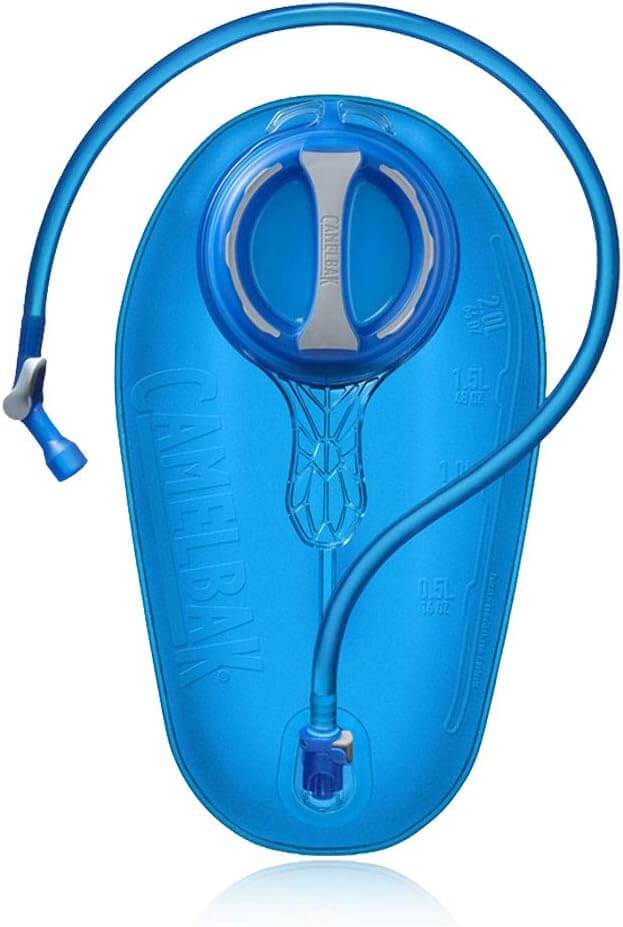
The CamelBak Crux is the safe choice, and it is the safe choice for a reason. It is one of the most-reviewed reservoirs on Amazon, and the reason it is there is not a single feature. It is the fact that nothing about it asks you to learn anything before you start drinking.
The Crux holds 70 fluid ounces of water in a body that weighs seven and a half ounces. The cap is leak-resistant and designed to be opened and closed without fuss, and the bite valve seals itself after every sip so that the tube does not drip down your jacket when you are walking downhill. There is a lever on the hose that turns the water on and off with one hand, and the fill handle on the top of the reservoir makes it easier to lift at a stream or a sink than a reservoir without one.
The Crux is the reservoir for the hiker who is buying their first one, and for the hiker who has been hiking for twenty years and has decided they would rather not think about their water than think about it differently. It is not the lightest. It is not the most technologically ambitious. It is the one that works without becoming a project, and that is what nine thousand reviews are saying when they say it works. That is the simplest version of the Daoist standard: the thing that does its work and does not become work.
2. HydraPak Contour — The Lightest Water Bladder for Long Days
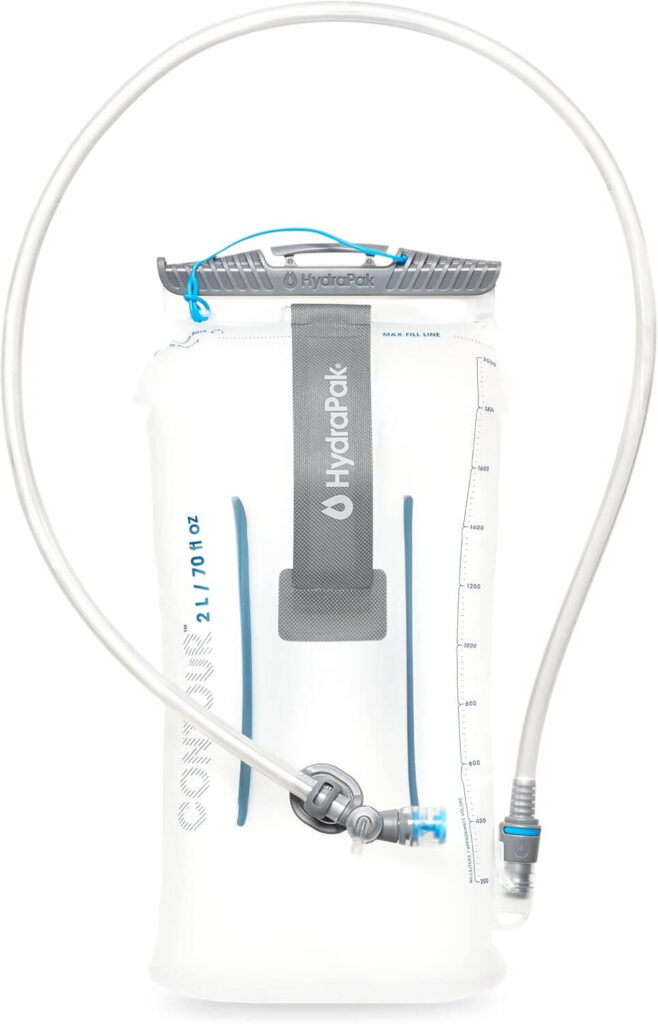
The HydraPak Contour is the reservoir for the hiker who has already decided that every gram is a decision. It comes in three sizes, one and a half, two, and three liters, and at two liters the entire reservoir weighs five ounces. It is shaped so that it does not slosh, because it has a three-dimensional bottom and fixed baffles that hold the water in a stable column when the pack is moving. That means the hose does not jump around your back, and the water does not push the reservoir against your spine.
The bite valve is a high-flow model that seals itself and can be shut off with a thumb, and the tube attaches to the pack with a magnet clip that clicks into place without a buckle. The reservoir can be turned inside out for cleaning, and it is dishwasher safe, which is not a trivial thing when a reservoir is made of a flexible plastic that would usually be rinsed and left to smell. It comes with a lifetime warranty.
The Contour is the reservoir for the runner, the alpinist, the ultralight hiker who is shaving grams and does not want to feel the water as a separate weight. The Daoist principle it carries is the one that the Laozi associates with the most useful things: the vessel is useful because it is empty, and the reservoir is useful because it is light enough to forget. The lightest reservoir is the one that stops being a reservoir and becomes simply the water, and the water is the thing that is carrying you.
3. Osprey Hydraulics LT — The Cleanest Design for a Quiet Drink
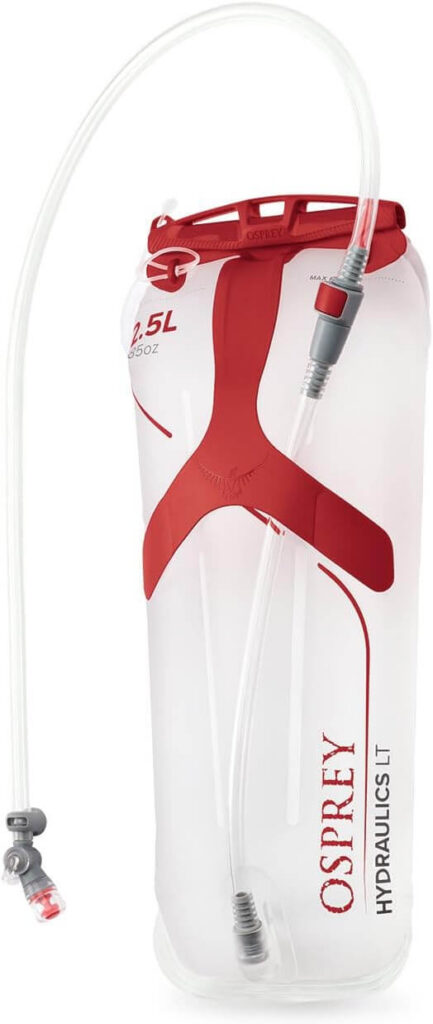
The Osprey Hydraulics LT is the reservoir for the hiker who cares about the small things, the things that add up to whether a piece of equipment feels tidy or feels like a piece of equipment that is doing its best to be invisible. It holds two and a half liters in a body that weighs just under six ounces, and it is made of TPU, which is the same material that gives the best reservoirs their balance of flexibility and toughness.
The features that make the LT different are the ones you feel before you notice them. The opening is a slide seal that can be filled and closed with one hand, and the pack hanger is designed to clip into the same slot on every new Osprey pack so that the reservoir sits in the right place without being lashed in. The hose attaches with a magnet instead of a buckle, and the magnet makes the difference between a hose that clicks into place and a hose that has to be wrestled into place. Inside the reservoir, two baffles keep the water flat and prevent the sides from buckling when the pack is full, so the reservoir does not bend into a shape that makes the hose difficult to drink from.
The design philosophy of the LT is the philosophy of the water itself. It does not announce itself. It does not require a second pair of hands. It fills, closes, hangs, and drinks, and each of those actions is simple enough that it does not become an event. That is the standard this article is built around: the thing that works quietly is the thing that has done its job, and the LT is the reservoir that most nearly achieves that standard in its construction.
4. HydraPak Force — The Bladder Built to Survive Anything
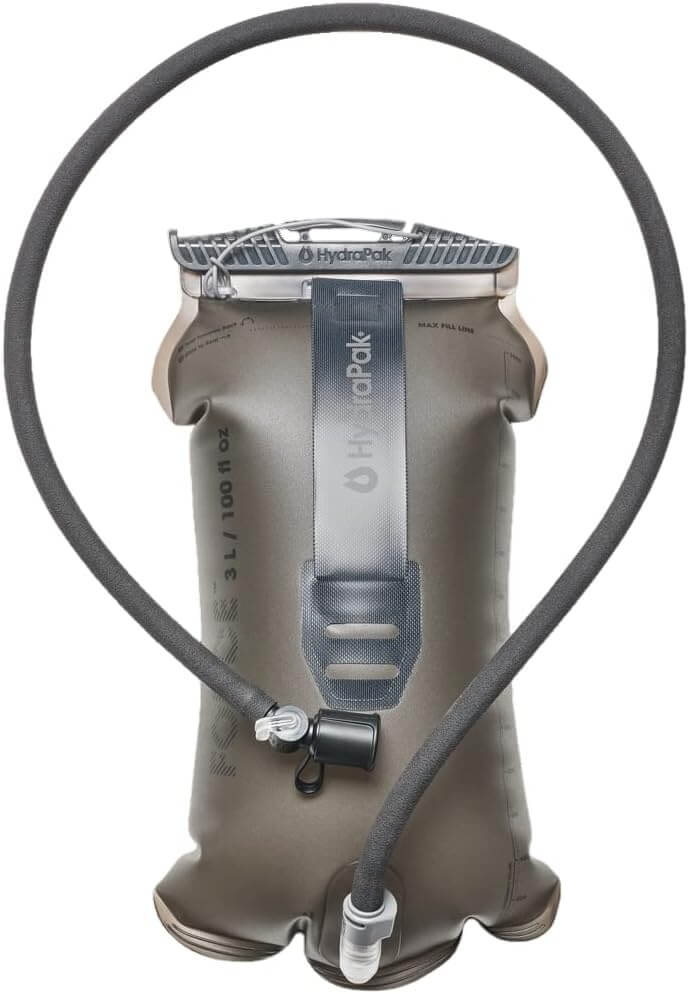
The HydraPak Force is the reservoir for the hiker whose pack sees rocks and ice and the kind of abuse that a more delicate reservoir does not survive for very long. It comes in two and three liter sizes, and at three liters it weighs six and a half ounces, and it is made of a plastic that HydraPak describes as military-grade abrasion resistant. The reservoir can be expanded to eight times its normal size without bursting, which is not a feature that most hikers will ever use but is the kind of property that tells you what kind of reservoir this is when it is sitting quietly in your pack doing its job.
The hose is an insulated one with a dust cover, and the bite valve is a high-flow model that seals itself and does not leak. The reservoir can be turned inside out for cleaning and is dishwasher safe, and it comes with a lifetime warranty. These are the features that matter when the reservoir is not new and the hike is not short and the conditions are not the ones you planned for.
The Daoist principle the Force carries is the one that the Laozi puts in a chapter on greatness: great skill looks like clumsiness. A reservoir that is built to survive rocks and ice does not need to look built to survive rocks and ice. It just has to be the reservoir that is still there at the end of the trip, still holding its water, still giving it without a leak or a complaint. The Force is not the lightest. It is not the most elegant. It is the one that disappears into the job of carrying water through the hardest kind of backcountry, and that is the version of the Daoist standard that matters most when the trail stops being kind. A backcountry hydration bladder built for the long, hard, cold mile is judged not by how it looks when it is new, but by how it holds up when it is old.
5. CamelBak Omega — The Heavy-Duty Legacy Reservoir
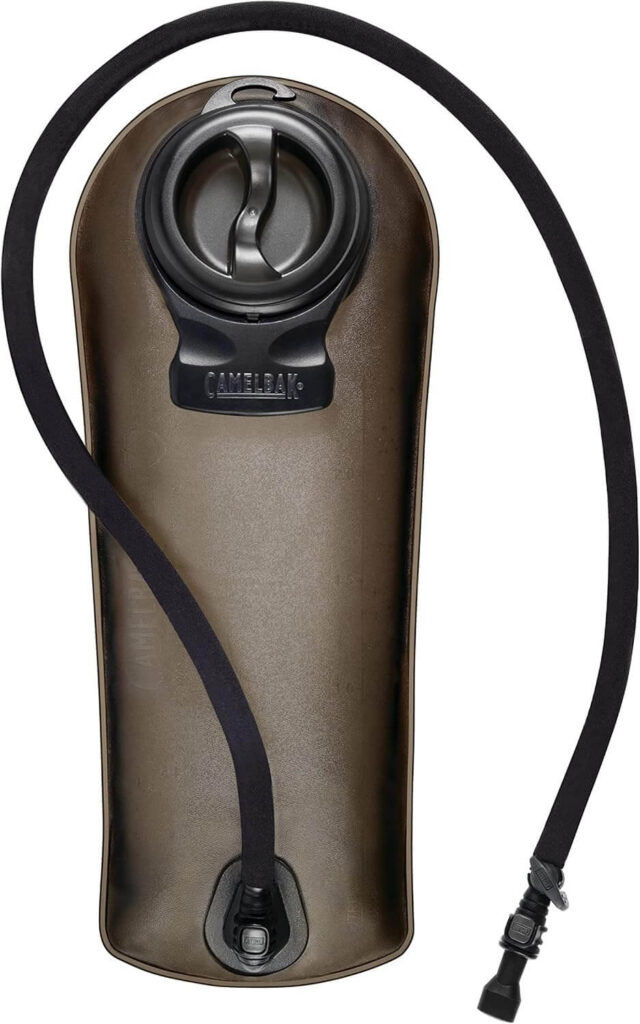
The CamelBak Omega is the reservoir for the hiker who already has a CamelBak pack that was built before the current system, and who needs a reservoir that fits into it without modification. It holds one hundred ounces, which is three liters, in a body that weighs eight and a half ounces, and it is made of polyurethane that is sealed with radio-frequency welding, which is the same construction method that gives the original CamelBak reservoirs their reputation for durability.
The Omega is designed for the legacy CamelBak systems, the ones built before twenty nineteen, and it fits into packs that are still in service and still on the back of people who have had them for a decade. The flow control is a lever that can be operated with one hand, and the bite valve is the same Big Bite design that CamelBak has used for years, which seals itself after each sip and does not drip. The tube has a protective cover that guards it against abrasion and sun.
The Daoist principle the Omega carries is the one about not forcing the old to become the new. A reservoir that fits an old pack is a reservoir that serves the pack that is already there, and that is a version of the principle that is about use without the friction of replacement. The Omega does not pretend to be the future. It is the reservoir that keeps the past working, and for the person who already has an old CamelBak on their back, that is the reservoir that disappears into the pack it belongs in.
6. Osprey Hydraulics 2 L — The Quiet All-Rounder
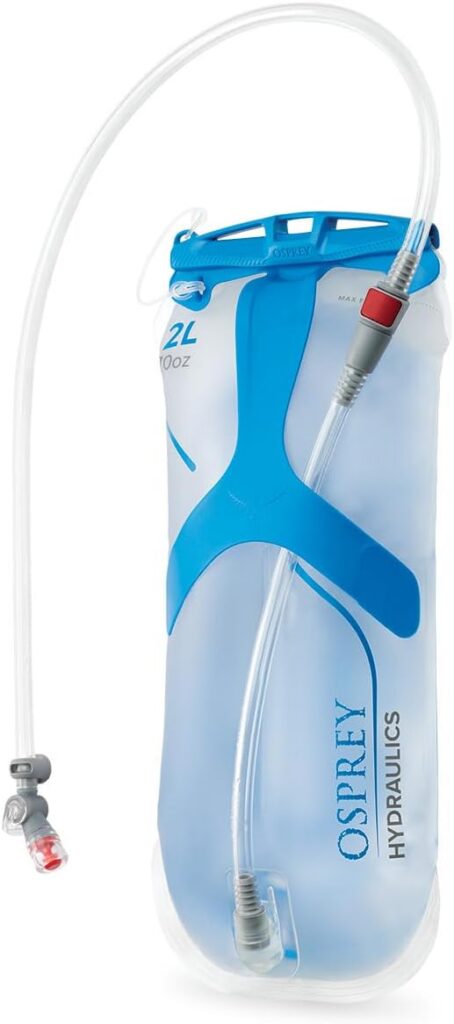
The Osprey Hydraulics 2 L is the reservoir for the hiker who wants the same clean design as the LT but in a two-liter size that fits into a smaller pack or a shorter day. It weighs just over seven ounces, which is two hundred and nine grams, and it is made of TPU, which gives it the same flexibility and toughness as the larger LT without the extra volume.
The features that make the 2 L version distinct are the center baffle and the backer plate, which are designed to keep the reservoir flat and to prevent it from bending into a shape that makes the hose difficult to drink from. The slide-seal opening works with one hand, and the hose attaches with a magnet, which is the same system that makes the LT feel tidy, and the baffle and the plate make the 2 L feel like a reservoir that does not shift in the pack as the water level changes.
The Daoist principle the 2 L carries is the one about the right size, and it is not a small principle. A two-liter reservoir is the reservoir for the day hike, the mountain bike ride, the long walk that does not need three liters of water and does not want to carry them. The right size is the size that does not make the pack heavier than it needs to be, and the 2 L is the reservoir that carries exactly the water the trail is asking for. It does not carry the water of the next day, and it does not leave the water of today behind.
7. Water Buffalo Oasis — The Budget Water Bladder That Does Not Skip Steps
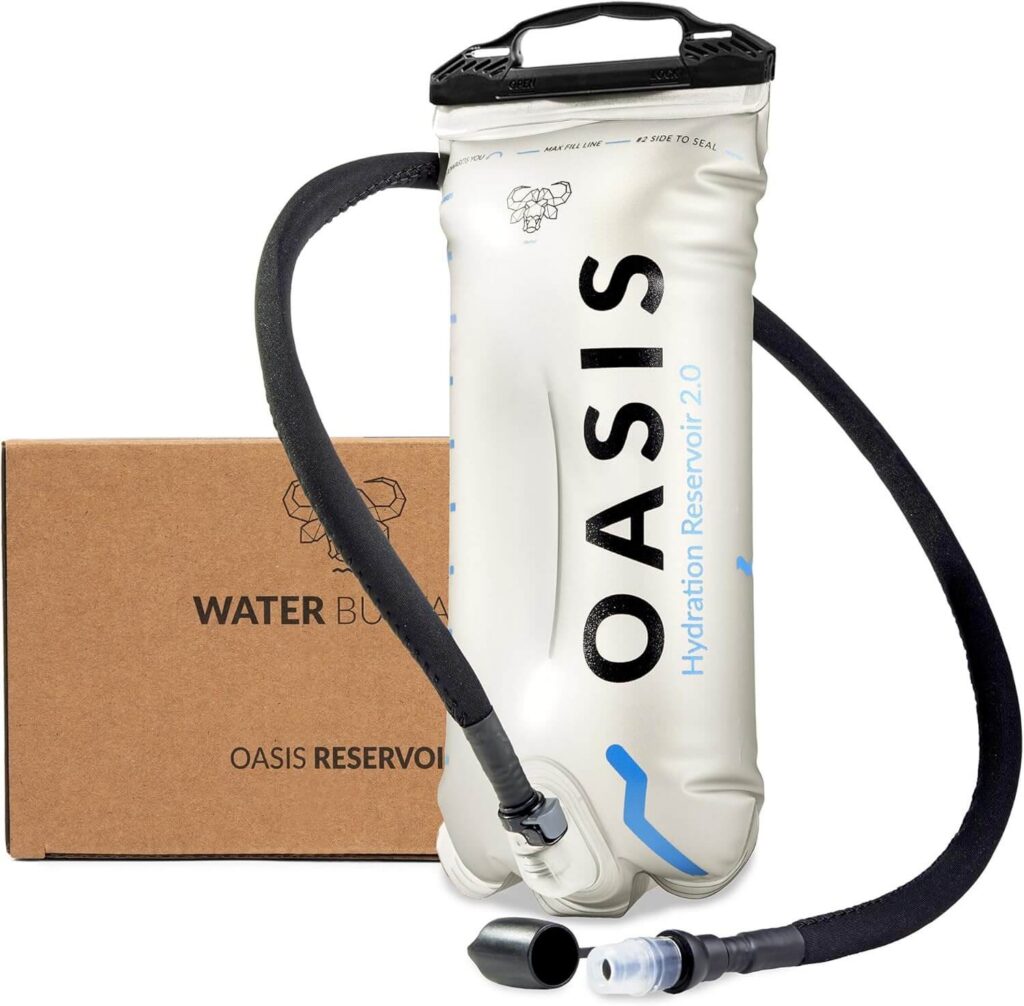
The Water Buffalo Oasis is the reservoir for the hiker who wants a good water bladder without paying for a brand name that has spent more on marketing than on the reservoir itself. It comes in two and three liter sizes, and at two liters it weighs ten and a half ounces, which is not the lightest in this article but is not the heaviest, and it is made of TPU that is free of BPA and free of the taste that a cheap reservoir leaves on the water.
The Oasis has a bite valve that seals itself and a hose that detaches for cleaning, which is a feature that a reservoir at half the price of the best ones in this article does not usually have. The opening is wide enough to wash out by hand, and the hose has an insulator that keeps the water cool in the heat and prevents it from freezing in the cold. The warranty is the manufacturer warranty, which is less generous than the lifetime warranties on the CamelBak and the HydraPak, but it is a warranty, and the reservoir at this price has earned the right to have one.
The Daoist principle the Oasis carries is the one about the uncarved block, and it is the principle that is easiest to understand and hardest to apply. The uncarved block is the thing before it has been shaped into something useful, and it is the thing that is already useful in the way it is. The Oasis does not pretend to be more than it is. It is a water bladder that holds water, and it holds it in a way that does not cost more than it needs to. For the hiker who is buying a water bladder for the first time, or for the hiker who wants a second one for a second pack, the Oasis is the reservoir that disappears into the price as completely as it disappears into the water.
The Standard, Applied
The standard this article has been built around is a single question: when you are drinking, where is your attention?
If your attention is on the valley, on the sound of your own steps, on the breath you are taking, the reservoir has done its job. If your attention is on the reservoir, on the cap, on the leak, on the tube, on the weight, the reservoir has not. The question is the same question that guides the choice of every piece of equipment a hiker carries, and it is the same question that the mindful roaming gear system asks of the whole pack. The standard is not complicated. The question is not complicated. The answer is the reservoir.
A backcountry hydration bladder is judged not by how much water it holds, but by how much of your attention it takes. The best one takes none. The seven reservoirs in this article do not take the same amount, but they all take less than the alternative, and the difference between the reservoir and the bottle is the difference between the hiker who stops and the hiker who does not.
Frequently Asked Questions
What size hydration bladder should I buy? Two liters is the right size for most single-day hikes and most bike rides. Three liters is the right size for long hikes, hot weather, and the trail where you cannot refill for ten miles. One and a half liters is the right size for running, because every extra ounce counts, and the weight of a two-liter bladder when it is empty is the weight of the bladder, not the weight of the water.
How often should I clean my hydration bladder? Rinse it after every use. Turn it inside out and let it dry every third use. Once a month in the summer, wash it with warm water and a drop of dish soap, then rinse it until the soap is gone and turn it inside out to dry. A reservoir that is not dried inside out smells in four days, and a reservoir that smells in four days is a reservoir that the hiker stops drinking from, and a reservoir the hiker stops drinking from is a reservoir the hiker has begun to use the bottle instead.
Does a hydration bladder leak? A reservoir that is in good condition and is being used correctly does not leak. The bite valve seals itself, and the hose can be shut off with a lever, and the cap on the top is leak-resistant when it is closed. The leaks that happen are usually the leaks that happen because the bite valve has not been chewed, or the cap has not been closed, or the hose has been disconnected and the water is coming out of the wrong end of the tube.
Can I put ice in a hydration bladder? Yes. The wide opening on the Oasis makes it easier to add ice by hand, and the insulated hose on the Force and on the Oasis keeps the water cool in the heat. A reservoir that holds ice is a reservoir that gives cold water in the summer, and cold water is the difference between a hike in the heat and a hike in the heat that does not turn into a problem. The insulated tube also helps in the cold, where a frozen tube is the same as no tube at all.
Which bladder is best for winter? The HydraPak Force is the one that is best for winter, because the insulated hose keeps the water from freezing in the tube, and the dust cover on the valve keeps the water from leaking out and freezing on the valve. A frozen valve is the same as no valve, and a frozen hose is the same as no water. For a hiker who is moving from summer to autumn, the question of cold weather is the question of how a piece of equipment changes its behavior when the temperature drops, and that is the question the thermoregulation essay asks of every layer in the pack.
Summary
The best backcountry hydration bladder is not the one with the most features, the highest warranty, or the most reviews. It is the one that you stop noticing, because noticing it means it is doing something that the trail is not, and the trail is the thing you are carrying yourself for.
Use things, but do not be used by them. The bottle uses the hiker who carries it, because the hiker has to stop, reach, and unscrew. The reservoir does not. It gives water and disappears, and the hiker who drinks from it is the hiker who is still walking, still listening to the valley, still on the trail. That is the standard, and that is the backcountry hydration bladder.