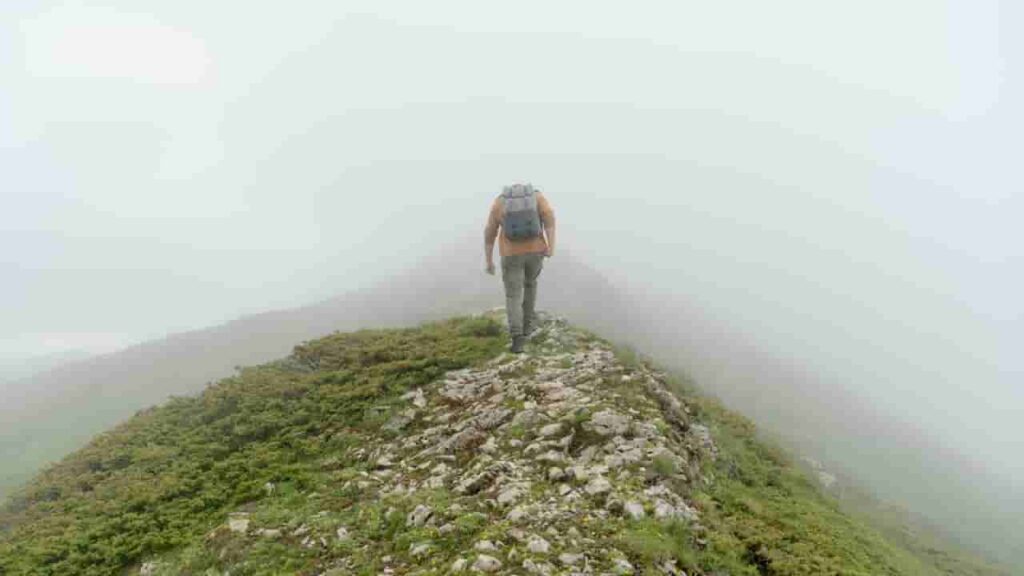
There is a moment on a long wilderness route, somewhere between the third and the fifth day, when the body has found its rhythm and the mind has finally let go of its agenda — when something quiet and real happens. The gear disappears.
Not literally. The pack is still on your back. The boots are still on your feet. The jacket is still on your shoulders. But you stop being aware of any of them. The weight becomes part of your body’s baseline, the way breathing becomes, eventually, something you do without deciding to. The equipment has vanished into the experience it was designed to serve.
You are no longer a hiker who is carrying things. You are a body moving through wild terrain, fully present, fully alive to the landscape around you, unencumbered by the awareness of your own equipment.
What this essay is really about is what happens when that moment stops being something that only arrives on the trail, and becomes something you carry home. That is the entire project of the mindful roaming gear system: not a shopping list, not a packing guide, but a discipline of attention, assembled so carefully and used so quietly that the carrying itself becomes invisible, and all that is left is the world, and the body moving through it.
The Two Extremes We Refuse
Before we go forward, it helps to name the two failure modes that frame everything.
The first is the Gear Hoarder. You know this archetype. The gear bag grows. The pack gets heavier. Every new piece of equipment is, on paper, a perfectly reasonable purchase. But the collection as a whole is not a system. It is a response, repeated again and again, to a fear that the hiker’s own body cannot be trusted in the wilderness.
The Gear Hoarder is not irrational. But the accumulation creates a different kind of risk. Every piece of gear that does not disappear into the experience it serves consumes a small amount of attention, and that attention is drawn from the only thing the hiker is out there to do, which is to pay attention to the landscape. More gear does not make a hiker more present. It makes the hiker aware, every minute, of what the hiker is carrying.
The second failure mode is the Ascetic Absolutist, and in some ways this one is more dangerous. They have internalized the gospel of base weight and made the mistake of treating weight as a virtue in its own right. The pack is light. And the body is cold, the foot is blistered, the hands are numb. Minimalism has become a discipline that earns merit through discomfort.
The problem is not philosophy. It is the confusion between means and ends. Minimalism is not a practice that earns points through privation. It is a method for removing, from the body’s relationship with the world, every element that draws attention away from it. To strip yourself of everything, even the things that would serve you, is not asceticism. It is another form of the same fear, turned inward.
Between accumulation and renunciation, there is a third way. It is the way of choosing exactly what is needed, knowing exactly why it is there, and using it in a way that asks nothing of your attention.
Use Things, but Do Not Be Used by Them
In the essay on the power of flow, I wrote that the best plan is sometimes to have a plan — and then be fully willing to let it go, to stop forcing and begin flowing. Zhuangzi wrote a line that resolves the false opposition between these two extremes, and it is the hinge on which the whole QuietRoam philosophy turns:
Use things, but do not be used by them.
The Stanford Encyclopedia of Philosophy notes the same line of thinking across the Daoist tradition: the wise person is governed by the Dao, not by the objects in the world. The Gear Hoarder has been used by things. The equipment has taken possession of the experience. The Ascetic Absolutist, from the other side, has rejected things out of a fear that feels more like control than like freedom. Both positions, in different directions, lose the body to the gear — one by letting gear fill the body’s attention, the other by making the body suffer so that it cannot think about gear at all.
The Daoist path is neither accumulation nor renunciation. It is mastery through selection. And the quiet truth most outdoor philosophy gets wrong is this: that kind of mastery requires more knowledge, not less. The person who carries everything is not more prepared than the person who carries nothing. They are both, in different ways, not present. The person who carries exactly what is needed, and knows exactly why it is there, is the only one who is.
This is the question every piece of the system must answer: not what to own, but what are you paying your attention to, and what are you paying it to. A system built on that question — where every object has been chosen because it stops asking for attention and starts serving the body — is what I call a mindful system. The great skill looks like clumsiness line from Lao Tzu says the same thing in different words: the mastery that announces itself as mastery is not mastery at all. The mastery the body knows is the one it has stopped noticing.
The Invisible Standard
Every piece of gear — and, by extension, every habit, every device, every routine we carry into the world — is judged against a single question.
When this thing is in use, does your attention move toward it, or toward the world it is meant to serve?
If the answer is toward the thing itself, the piece has not earned its place. The jacket that requires adjustment every twenty minutes. The pack that creates a pressure point the hiker keeps noticing. The boots that rub until the mind has no room for anything but the foot. The phone that pulls the eyes from the ridgeline. These are all things that are still, in a quiet way, competing for the body’s attention. They have not yet been earned.
If the answer is toward the world, the piece has done its job. The jacket that breathes so well the hiker forgets it is on. The pack that balances so naturally it feels like part of the body. The boots that disappear into the ground. These are the pieces that have earned invisibility through perfect function, and they are what a quiet system is assembled from. A mindful system is simply a body that has learned, through this repeated act of choosing, to move through the world with fewer things in its way. This is the same principle at the heart of every invisible system that every one of the preceding essays is secretly describing: a body moving through the world, attended to, but not observed.
This is not a rule for buying gear. It is a rule for living. A room that is too full of objects. A desk that competes with the work on it. A day that is packed so tightly that the mind never finds an empty place to land. These are all versions of the same failure. The gear is not the problem. The attention is.
Five Practices: Carrying the Philosophy Home
The eleven essays that precede this one did not exist to build a gear list. They were exercises in a single movement: returning attention to the thing itself. This is the discipline the system asks of the body. The first set of those essays — the ones on wu wei flow hiking, on Daoist simplicity, and on the art of effortless exploration — did the work of opening the body to a way of moving that does not fight the world. They taught that the map is not a shield against surprise, that real freedom comes not from lightening the pack but from lightening the mind, and that exploration done with grace is the act of meeting the wilderness on its own terms. That work had to be done first, because a gear system is useless to a body that does not yet know how to be free, and a gear system is useless to a body that does not yet know how to be free.
But philosophy is nothing until it enters the hands. Once the body has learned that it can move without forcing, that it can explore without a plan, that it can rest in an emptiness it did not build, the next question is practical: how does this body, now, in the next walk and the next day, carry those principles without turning them into a dogma? That is the answer to that question. It is the act of carrying the Dao forward into five deliberate habits, each practiced first in the wild and then at home, none of them depending on a particular list of objects.
1. Choose One Thing That Does Several Jobs
The principle is the same at any scale. On the trail it is a titanium cup that boils, serves, and drinks from — the single-vessel discipline applied to a single cup. At home it is the drawer you redesign so that three tools replace the six that used to compete for space.
The practice is not about owning less for its own sake. It is about removing the small, constant act of deciding which thing to reach for, so that the decision disappears and only the action remains. When you sit down to work, the pen, the notebook, and the surface you choose are already in front of you, and you do not spend the first ten minutes searching for them. The same curatorial standard that chooses a single pot chooses a single desk.
The great skill looks like clumsiness principle from Lao Tzu is relevant here in a way most people do not expect. The hiker who reaches for one cup and uses it for everything does not look efficient. They look simple. They look, even, clumsy. But that simplicity is doing work: it is removing a whole class of small decisions from the day, decisions that do not matter, that consume attention, that keep the mind away from the thing in front of it. A pack that has been edited down to pieces that each do more than one job is not a stripped pack. It is an edited pack. And editing is what the philosophy asks of the body.
The eleven essays are full of this same discipline, dressed in different clothing. The cup. The tent with the emptiness inside. The boots that are also the connection to the ground. The jacket that is also the temperature between body and weather. Each is a single thing doing several jobs, chosen so that the body can stop thinking about it.
2. Let the Tool Disappear Into the Task
A water system that is heavy, fiddly, and slow turns a five-second act into a ritual of pumping and waiting. One that is light and fast returns you to the stream in the same moment it returns your water. The difference is not measured in grams. It is measured in the quality of the moment. The highest excellence is like water principle, and water does not announce itself. It simply returns the hiker to the source, and the drinking happens without ceremony.
In daily life, the tool that disappears is the one that stops announcing itself. The work surface, the chair, the software — the question is the same: does it require a small, repeated act of accommodation, or does it settle into the body and go quiet? A piece of software you have to fight to make serve you is a tool that has taken possession of the experience, the way the wrong pack takes possession of the walk. The Daoist response is not to reject it. It is to replace it, quietly, with something that does the job and asks for nothing in return.
This is the same principle that governs hearth and cooking over fire. When the water is coming to a boil, the hiker who watches it is not being sentimental. They are giving their nervous system permission to stop. The tool — the canister, the pot, the flame — has done its work and is now quiet. The meal that follows is received by a body that is already quieter than the one that arrived at the camp. The stove should serve the tempo of the body, not announce itself against it. A canister that boils without noise, without hiss, without a smell that lingers in the wind, is part of that same choice. The tool disappears into the act, and the act — the meal, the stillness, the attention to the fire — is what remains.
The music of heaven essay names the same silence in a different register. When the hiker sits with a cup of tea and hears the forest, they are not listening to the absence of noise. They are listening to the silence that is itself doing something — filling the body with the sound that the body has stopped trying to speak over. The tool that disappears, whether it is a stove or a phone, leaves behind exactly that: a moment that holds itself.
3. Read the Signal Before You Trust the Screen
The practice of intuitive trail finding, of reading the terrain without a map, begins with a question that is rarely asked: are you reading the thing, or reading a representation of the thing? The hiker who has turned off live tracking and is building a mental map — registering anchor points, the aspect of the slope, the sound of water downhill — is doing something the GPS was designed to make obsolete, and something the body was built to do.
The body was built to move through the world by attending to the signals it gives off. The slope tells you something. The smell of damp earth tells you something. The way the ground gives under the foot tells you something. These are not vague impressions. They are information the body is already trained to read. A GPS device is a kind of translation of that information, and a translation is never the thing itself. The hiker who learns to read the terrain directly is not rejecting a tool. They are choosing the more complete instrument — the body — over the more limited one.
The same question sits at the heart of the modern attention economy. Every day, a phone offers a representation of the world — a stream of headlines, a feed of other people’s days, a map of where you should be going — and asks the eyes to land on it instead of the landscape. Putting the phone in the pocket, raising the eyes, and letting the thing in front of you be the thing in front of you, is not unplugging as performance. It is the same skill, practiced indoors: refusing the representation, attending to the signal.
This is where the principle of wu wei, of non-forcing, enters the navigation of a single day. The hiker who does not force the map onto the terrain is the hiker who flows with what the terrain is offering. The worker who does not force the to-do list onto the afternoon is the worker who is actually present for the afternoon. This is what the mindful roaming gear system is built on: choosing, in each small moment, to be present to the thing itself. The device you carry is not useless — it is the insurance policy you bought and are now choosing not to open. Trusting the body, trusting the terrain, trusting the moment: this is the same practice, whether you are in the forest or at a desk.
4. Make Space Where Nothing Is Carried
The gift of emptiness is not a theory about tents. It is an observation Lao Tzu made about every container in the world: the wheel is useful because of the hole, the bowl because of the void, the room because of the empty space between its walls. Thirty spokes share one hub; when the hub is empty, the wheel is useful. Clay is formed into a vessel; when it is empty, the vessel is useful. Doors and windows are cut in a room; when there is space between the walls, the room is useful. The material parts give benefit. The nothingness gives utility.
This is one of the simplest and most radical truths in all of Daoist thought, and it is almost never applied outside the metaphor. A hiker who fills the tent with gear has not just cluttered a sleeping space. They have filled the one place that was designed for stillness. A worker who fills the desk, the day, and the inbox until there is no surface left to rest on has done the same thing in a different register. The practice of keeping a void — inside the shelter, on the desk, in the schedule — is not aesthetic. It is the condition that lets the mind enter. A full bowl cannot hold water. A full mind cannot receive anything new.
The essay on the art of the void, on how the nothingness inside a shelter is the true utility, makes the case this way: a tent that is filled has become a storage space. It is no longer serving its purpose. It has become, in fact, one more thing the hiker is carrying — not on the body, but inside the only place the body was meant to stop. Emptiness is not the absence of use. It is the thing that makes use possible. And a life that has no empty space — no empty hour, no empty surface, no uncluttered place to land — is a life that cannot receive anything that is not already inside it.
5. Attend to the Moment That Holds Itself
Some practices on the trail are not about moving. They are about stopping. Cooking over fire is the moment the body stops processing the trail and begins, slowly, to process what it has been given. The hiker who watches the water come to a boil instead of planning the next day is not being sentimental. They are giving the nervous system permission to stop. That permission does not end at the campfire. It is the same act as sitting with a cup of tea without a screen, as hearing the forest and not filling the silence, as closing the workday by actually closing it rather than sliding into the next notification.
A related practice is hearing the sounds of nature, of sitting with the silence of the forest and letting it be the thing it is. The hiker who fills the silence with commentary, with music, with the next thought, is doing exactly what the gear hoarder does with objects: they are filling an empty space because the emptiness is uncomfortable. But the silence is not a problem to be solved. It is the space into which the body returns. A meal, a cup of tea, ten minutes before the screen comes back — these are the moments that hold themselves, if you stop filling them. The body notices which ones you keep.
The heel breathing practice, the art of breathing from the foot down rather than from the throat up, is the most physical version of the same idea. When the breath reaches the foot, the foot reaches the ground. The body that is breathing through the ground is a body that is not carrying its attention somewhere else. It is present. The hiker who learns this — who learns to sense the trail through the sole — is learning to stop filling the moment with thought, and to let the body receive what the ground is telling it — a kind of reading the foot does on its own, before the eye ever moves. At home, the same practice is sitting with the body for five minutes and not reaching for anything. It sounds simple. It is almost never done.
The Body Between the World and the Cold
There is one more piece of the system that the trail teaches, and that the body feels before the mind understands it. Every piece of gear sits between the body and the world, and the quality of that boundary is the quality of the day.
A jacket that does not breathe. A base layer that does not carry heat away from the skin when the body is hot, or trap it when the body is cold. Boots that wet, feet that freeze. The hiker who has chosen the wrong piece at that boundary does not know it at first. The cold builds slowly. The foot begins to hurt. The body, which has been quiet, begins to be loud. All the philosophy in the world will not make a cold foot comfortable. The body already knows what to do at that edge — hold heat, let it go, stay dry — and the job of the piece of clothing is simply not to get in the way.
The second skin of the body, the art of thermoregulation, is about this boundary. When the body is active, heat builds. The layer that breathes well carries it away, and the hiker stays comfortable. When the body stops, heat leaks. The layer that traps it keeps the body warm without overheating. The right piece does both, and the body forgets it is there. A review on sweat glands and human thermoregulation makes the mechanics blunt and simple: sweating is the primary mechanism by which the body dissipates heat, driven by the eccrine glands under the body’s own control, and a review of the physiology of cold endurance training with layered clothing during exercise shows how the layers between body and air either help that exchange or fight it. The wrong piece requires the hiker to constantly adjust, to pull layers, to suffer, to pay attention. And attention paid to a cold foot is attention taken from the landscape.
This is the same invisible system in yet another form. The gear, at the edge of the body, between the body and the weather, should work so quietly that the body has no reason to think about it. The body has an excellent internal thermostat. It needs a layer that lets it do its work. A layer that makes the body cold, or that makes the body fight it, is a layer that has not earned its place. The standard is the same as the standard for the pack, the stove, the water system, the tent: does your attention move toward the thing, or toward the world?
The Invisible System, Fully Assembled
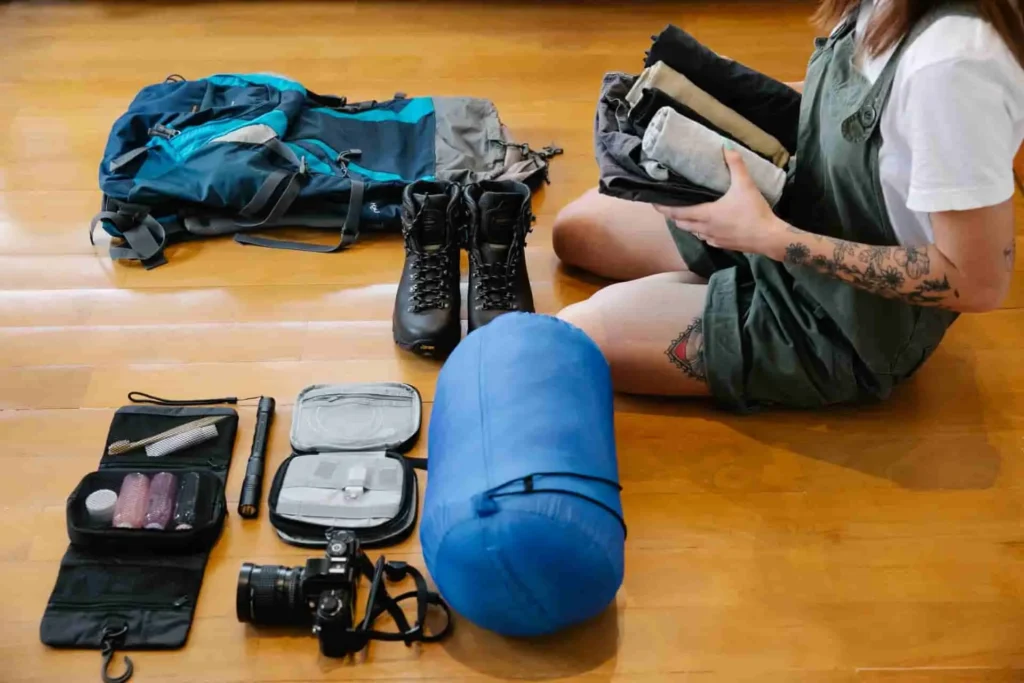
This is what the philosophy, applied to the body over the course of eleven essays and then carried into five practices, makes possible. Not the experience of having good gear. The experience of having no gear: moving through the day as a body whose tools have disappeared into their function, so that the only thing left is the world, and the body moving through it, fully present.
On the trail, that body reads the ground through the sole, breathes through the shell, tastes water without ceremony, navigates by what the terrain itself is saying, cooks by a fire whose tempo it does not fight, and sleeps in a shelter whose emptiness is its function. At home, that same body sits at a desk that does not fight back, drinks from a cup without reaching for a second screen, listens to the silence without filling it, and lets the day end by ending it.
The mindful roaming gear system is not a brand. It is not a style. It is the name for the state of the body when it has learned, through the principles of wu wei flow hiking, through Daoist simplicity and the effortless exploration of the wilderness, through the gift of emptiness and the highest excellence is like water, through the heel breathing that brings the body back to the ground, through the music of heaven in the silence, through the great skill looks like clumsiness, through the second skin that holds the body between itself and the cold, through the campfire alchemy of a meal that gives the nervous system permission to stop, through the intuitive trail finding that trusts the terrain more than the map — to use things without being used by them.
The gear is not the point. The attention is. And the attention belongs, finally, to the thing in front of you — the ridgeline, the meal, the cup, the silence, the work, the body carrying it all.
物物而不物于物 — Use things, but do not be used by them. From Zhuangzi’s outer chapters. The hinge on which the entire QuietRoam philosophy turns.
大巧若拙 — The highest form of mastery is invisible. Applied to gear and to life: the best thing you carry is the thing you have stopped noticing.
三十辐共一毂,当其无,有车之用 — Thirty spokes share one hub; when it is empty, the wheel is useful. The void is not the absence of utility. It is what makes utility possible.