
Walk into any outdoor outfitter in search of minimalist hiking shoes, and you will be met with the same relentless promise: more cushioning, more support, more protection. The shelves are lined with thick, rigid boots that look less like footwear and more like armored tanks, engineered to absorb every shock, block every rock, and insulate your feet from the unforgiving wilderness below. We have been taught that these boots are a mark of seriousness, of preparedness, of mastery over the trail. We lace them up, cinch them tight, and head into the wild believing we are equipped to conquer the path ahead.
But in our obsession with cushioning and control, we have lost something far more precious. Those thick, armored soles do not just block sharp rocks and muddy soil. They block a conversation that humans have had with the earth for millennia. They muffle the signals, deaden the feedback, and sever the sensory thread that ties our bodies to the land we walk on. We are no longer feeling the trail. We are conquering it, our feet sealed off from the world beneath us, our minds stuck on the destination rather than the step below.
This is not just about footwear. Just as we discovered the gift of emptiness hidden within our shelters, we must now address the sensory wall we build around our feet. It is about relearning to read the earth as a living book, one step, one page, one unhurried conversation at a time. We call this practice Sensory Roaming: a return to a more primitive, more alive way of walking, where your feet are not just tools to carry you forward, but the primary organs through which you understand the world beneath you.
The practice at the heart of this article is heel breathing hiking, a concept drawn directly from Zhuangzi’s chapter Da Zong Shi. For those who want to understand the broader philosophy behind this approach, the Wikipedia entry on Sensory perception explores how every system in the body, the feet included, is wired to gather information from the world around it. What Zhuangzi understood 2,500 years ago is the same thing modern science has only recently confirmed: the feet are not passive carriers of weight. They are active readers of the ground.
The phrase in Chinese is Zhong Xi. The character Zhong means heel. The character Xi means breath, or rest, or stillness. Together, they describe not a respiratory technique, but a state of awareness that has descended from the head into the feet. This is the foundation of heel breathing hiking, and it is the thread that runs through every word of this essay.
The Numbness of Modern Travel
I learned this the hard way on a section of the Appalachian Trail. I was wearing the top-of-the-line, heavily cushioned hiking boots that every outdoor magazine promised were the gold standard for thru-hiking. Stiff, bulky, nearly three pounds each, with a thick rubber sole that promised to absorb every jolt, every rock, every uneven patch of trail.
For ten miles a day, I marched along in those boots. I hit my mileage goals. I checked off the viewpoints on my list. But I could not tell you a single thing about the trail beneath my feet. I could not tell you if I was walking on pine needles or packed dirt, on smooth granite or mossy stone. The sole was so thick, so insulating, that every step felt the same: a dull, muffled thud. No feedback. No nuance. No conversation. I was moving through the wilderness, but I was not in it. I was a spectator, sealed behind a wall of rubber and foam.
By the fourth day, my body began to protest in ways I could no longer ignore. Not dramatically, no twisted ankle, no injury, but with a dull, persistent ache that settled deep into my knees, and a strange, suffocating numbness in my feet, as if they had been sealed inside airless boxes for so long they had forgotten what it felt like to breathe. Every step had become a negotiation between my will and the dead weight strapped to my feet. I was not walking anymore. I was hauling.
That evening at camp, I made a decision that felt almost embarrassing in its simplicity: I switched to the thin, flexible trail shoes I had nearly left at home. I had almost not packed them. I thought they were too simple, too unimpressive, too clumsy-looking for a serious hike.
Within the first mile in those shoes, something happened that I had not expected and could not explain. My awareness sank. Not metaphorically, it felt physical, a slow descent from behind my eyes down through my chest, my legs, my ankles, until it settled, quietly and completely, in the soles of my feet. My mind, which had been churning with mileage calculations and weather checks, went still. For the first time on that trip, I was not thinking about where I was going. I was just walking. Feeling the trail rise and fall beneath me. Listening to what it had to say.
I had been on this trail for three days, but this was the first time I was truly on it.
This is the numbness at the heart of modern outdoor travel. We have been sold a lie: that the more we insulate ourselves from the wild, the better we can experience it. But the opposite is true. Every layer of cushioning we add between our feet and the soil is a layer of separation between ourselves and the world we came to explore.
We walk for hours while our minds are elsewhere, on the mileage we need to hit, the summit we need to reach, the photo we need to take. We have forgotten that walking is not just a way to get from Point A to Point B. It is a sensory practice. A dialogue. A way to read the earth, if only we give our feet the chance to listen.
Heel Breathing Hiking: The Dao of Sensory Grounding
Nearly 2,400 years ago, Zhuangzi wrote in the Da Zong Shi, the Great Master, of the difference between the true man and the ordinary man:
真人之息以踵,众人之息以喉。
The true man breathes with his heels. The common man breathes with his throat.
This is the origin of what we call heel breathing, the central practice of heel breathing hiking. The phrase in Chinese is Zhong Xi. Zhong means heel. Xi means breath, or rest, or stillness. Together, they describe something Zhuangzi saw clearly two and a half millennia ago.
In modern Daoist circles, heel breathing is often treated as an advanced meditative technique. It is taught in certain qigong lineages as a sophisticated breathing exercise, something you must study for years to master. But Zhuangzi’s original instruction reaches further and simpler than any technique. Zhong Xi is not a physical trick of respiration. It is a state of being: the deliberate, conscious descent of your full awareness from the mind down into the heels, the ankles, the soles of the feet, a rooting of your entire self in the step you are taking right now, not the one you will take ten minutes from now.
The contrast Zhuangzi draws is precise. Breathing with your throat is the life most of us live: awareness trapped in the head, breath shallow, consciousness hovering in the skull, cut off from the body and the ground. It is the hiker whose feet are on autopilot while the mind races ahead to the summit. It is the walker who covers miles without once feeling the earth beneath them.
Heel breathing is the antidote. But it is important to understand what this means, and what it does not. It is not a breathing technique to master. It is a practice of letting awareness sink into the feet, of arriving where your body already is.
When that descent happens, something radical and immediate follows. The chatter of the mind quiets. Anxiety about what comes next fades. The past stops pulling at you. You are held, completely, in the present moment, because the only thing your feet can feel is the ground beneath them, right now. This is not mindfulness as an abstract discipline. It is the same state of Flow we have explored together at QuietRoam: effortless, aligned, fully inhabiting the world rather than observing it from a distance.
On that Appalachian trail, in those thin shoes, that is what I stumbled into. I was not thinking about it. I was not practicing it. I was just walking with less between my feet and the earth, and Zhuangzi’s ancient instruction found me before I had even read the words. The ground beneath me became a teacher. My feet became the ears.
This is the magic of heel breathing. It requires no special training, no spiritual credential, no years of practice. It only requires that you give your feet the chance to feel the earth, and that you give your mind permission to follow them down.
The Feet as Primary Readers of the Earth
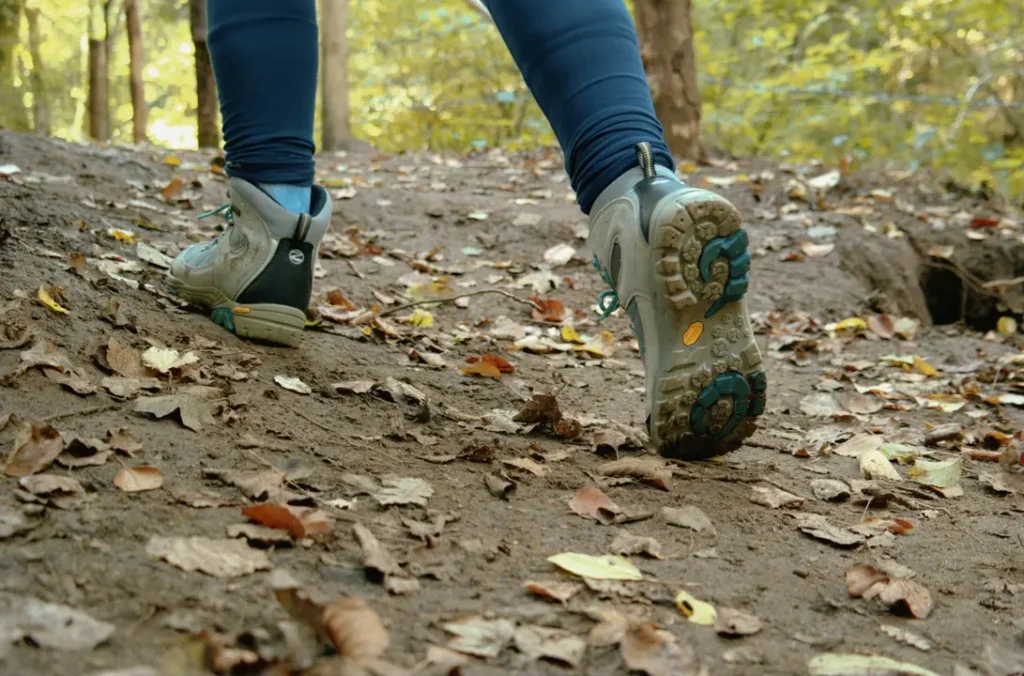
To understand why this practice is so powerful, we need only look at the extraordinary biology of the human foot. Your feet are not just stumps to carry your weight. They are masterpieces of sensory engineering, designed to read the world beneath you with remarkable precision.
Each human foot contains 26 bones, 33 joints, and over 100 muscles, tendons, and ligaments. But most remarkable of all: it houses more than 200,000 sensory nerve endings, more per square centimeter than almost any other part of the human body, rivaled only by the lips and fingertips. These nerve endings are your body’s most sensitive antennae. They detect the slightest shifts in texture, gradient, temperature, and terrain, sending constant, real-time signals to your brain about the world beneath you, adjusting your step, calibrating your balance, moving you through the wild with a grace and intelligence that no boot’s foam midsole can replicate.
When you seal those nerve endings behind a thick, rigid sole, you cut off the signal entirely. You disable your body’s most sophisticated sensory tool. You turn your feet from intelligent, adaptive readers of the earth into blunt instruments that only know how to strike the ground. It is like trying to read a book with heavy gloves on, or listen to a symphony through walls of foam. The shape is there. The meaning is gone.
When you remove that insulation, when you give those nerve endings the chance to speak, the earth becomes a book, and every step is a page.
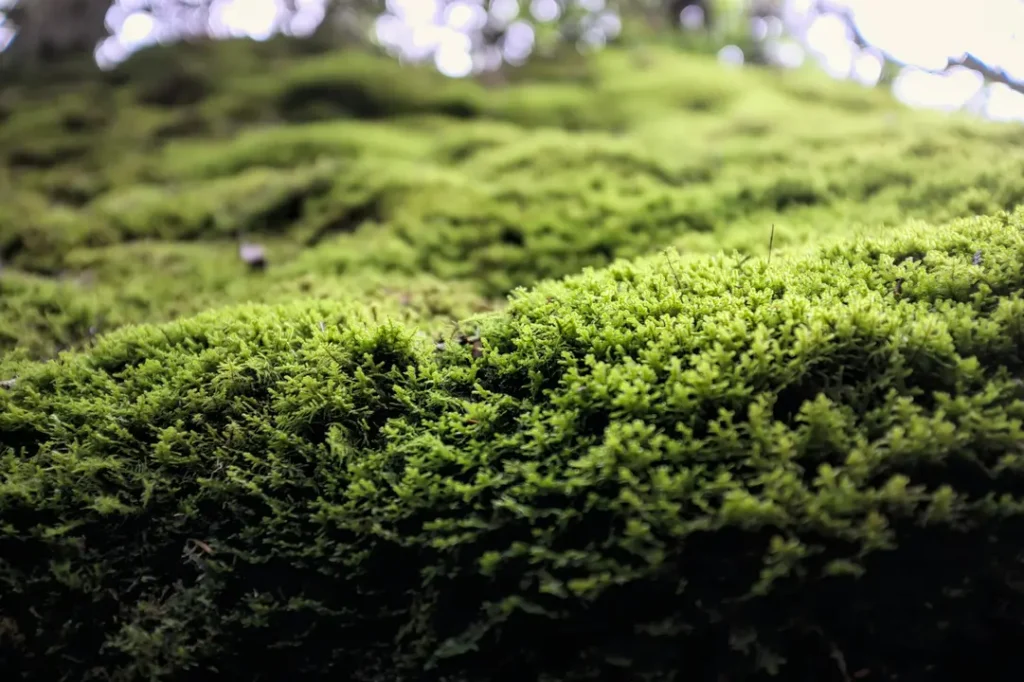
Each terrain has its own language, its own story to tell, if you know how to listen. Step onto a bed of thick, damp moss, and your feet sink into its soft, springy give, a quiet, gentle welcome from the forest floor. Step onto smooth, sun-warmed granite, and you feel its solid, ancient stability rise up through your soles, a reminder that the earth has been here longer than your thoughts.
Step into a shallow, cold mountain stream, and the rush of water over your feet wakes every nerve ending at once, a jolt of pure aliveness that pulls you into the present more effectively than any act of willpower. Step onto dry pine needles, and you hear the soft crackle beneath you, feel their slight give, a whisper from the canopy above.
These are not small sensations. They are the vocabulary of a living conversation, one your body has been trying to have for years, and your boots have been answering for you. When you can feel the trail beneath you, you do not just walk through the wilderness. You participate in it. You respond to its shifts. You honor its texture with every step.
This is what it means to read the earth as a book. And your feet are the only tool you need to turn the pages.
The feet, in their full sensory capacity, have always been capable of reading the ground. They have done so for every human who has ever walked barefoot, who has ever moved with the lightness and intention that barefoot walking demands. What the cushioned boot does is not protect that ability. It suppresses it. It turns a rich, ongoing dialogue between foot and ground into a muffled, one-way transmission: the foot pushes down, the ground absorbs the impact, and nothing is learned from either side.
The practice of heel breathing hiking restores that dialogue. It does not require you to walk barefoot. It does not require you to abandon your shoes entirely. It asks only that you choose footwear that allows the earth’s signals to pass through, and that you pay attention to the information your feet are already gathering, even now, beneath the soles of the shoes you are wearing.
Choosing Footwear That Makes Way for the Land
If the armored boot is the barrier, then the right footwear is not a replacement, it is an absence. It is gear that gets out of the way.
At QuietRoam, our approach to footwear follows the same Daoist logic that guided our exploration of great skill looks like clumsiness: the best gear is the gear that disappears. The best minimalist hiking shoes are not the ones that announce their innovation and technical prowess. They are the ones that honor the conversation between your feet and the earth, rather than replacing it with their own noise.
To the uninitiated eye, they look flat, thin, and perhaps even unrefined, completely lacking the spectacle of high-tech boots with their towering midsoles and aggressive lugs. But this is the mastery of the void: by removing the noise of excess cushioning, they allow the earth to speak. The apparent simplicity is the point. The apparent clumsiness is the skill. Here is what to look for when you choose your next pair.
1. Zero-Drop Construction: Restore Your Natural Posture
Any shoe that honors Sensory Roaming must be fully zero-drop, no height difference between heel and toe. Most modern hiking boots carry a raised heel, which quietly tilts your entire body forward, shifts your weight distribution, and disconnects you from the grounding sensation of heel breathing. You feel it as a vague, low-level tension that travels from your feet all the way up into your lower back.
A zero-drop shoe restores your body’s natural, neutral alignment, the same posture you have when you are barefoot. Your weight spreads evenly across your whole foot, from heel to toe. You can sink your awareness into your heels, just as Zhuangzi taught, and root yourself fully in each step rather than being perpetually tilted toward the next one.
2. Wide Toe Box: Let Your Feet Spread and Listen
Nearly all conventional footwear squeezes your toes into a narrowed, tapered box, forcing them inward and dulling the sensory nerve endings at the front of your foot. Over years, this creates a kind of permanent numbness at precisely the part of the foot most involved in reading the terrain ahead.
A wide, roomy toe box lets your toes spread naturally, the way they do when you are barefoot, fanning out, gripping the ground, picking up information. This is not a comfort feature. It is a sensory feature. It gives the front of your foot back its ability to feel, to adjust, to participate in the conversation between your body and the earth.
3. Thin, Protective Sole: Preserve the Signal
The sole is the most important decision of all. A thick sole may block sharp rocks, but it also blocks the vast majority of sensory feedback from the trail, the very feedback that makes Sensory Roaming possible. The goal is not to eliminate protection. It is to find a sole thin and flexible enough that the earth’s signals pass through, while still durable enough to keep your feet safe on technical terrain.
Think of it not as a barrier, but as a translator: present enough to protect, transparent enough to let the conversation through.
Over the past decade, a number of brands have begun to honor this philosophy in their designs. The shift toward barefoot footwear, toward minimalist hiking shoes, toward zero-drop construction and wider toe boxes, is not just a fashion trend. It is a quiet return to something the human body already knows how to do: feel the ground, and move with it rather than over it.
When the philosophy of sensory roaming settles in, the practical questions begin to surface on their own: what to actually wear on the trail? Which boots are worth buying? We have walked through these questions in a companion review that tests a dozen beginner hiking boots on real ground, looking for the ones that honor both budget and foot—twelve boots, all under $100, all tested on the trail. The philosophy lives here. The boots live there. Both belong to the same question: how do I walk, really, in my own skin, on my own ground.
Practicing the Sensory Roam: Relearning How to Walk
Reclaiming the dialogue between your feet and the soil is not about throwing away your boots and heading out on a twenty-mile barefoot hike tomorrow. It is a gradual reawakening, a practice you can begin on your next hike, or your next walk around the block.
Practice A: Blind Surface Sensing
Find a short, flat, obstacle-free stretch of trail, no sharp rocks, no exposed roots, no steep drops. A smooth pine needle path or packed dirt trail works well. Stand still, take three slow breaths, and close your eyes. Then take one deliberate step forward. Pause. Let every sensation register beneath your feet. Is the ground soft or firm? Smooth or textured? Warm or cool? What is beneath you right now, in this exact step?
Move at a slow, unhurried pace for ten minutes. Do not plan your next step. Do not track where you are going. Your only task is to feel the trail, to read it with your feet, one small page at a time. You will be surprised at how much the earth has been trying to tell you, once you stop walking over it and begin walking with it.
This is Sensory Roaming in its most direct form: walking, feeling, listening.
Practice B: The Rhythm of Landing
Most of us have learned to walk with a heavy heel strike, slamming the heel into the ground and letting the shoe’s cushioning do the rest. This is the gait of Forcing: rigid, loud, disconnected, hard on the body, hard on the land.
On your next hike, slow your pace by half. Instead of leading with your heel, focus on landing softly on the middle or ball of your foot first, then rolling gently back toward the heel. Notice how much quieter your step becomes. Notice how your foot begins to adjust itself, shifting, adapting, responding to each rock and root rather than driving through it.
This is not just a technique. The practice of non-Forcing is what emerges when you let your feet respond to the earth rather than imposing your rhythm upon it. With every soft, intentional step, you are not just covering ground. You are in conversation with it.
The practice of heel breathing hiking has a quiet kinship with the Daoist principle of effortlessness that runs through all of QuietRoam’s work. In both cases, the goal is not to exert more effort, but to remove the noise that keeps us from accessing what is already present. The trail is already beneath your feet. The earth is already speaking. Your feet are already listening. The only thing standing in the way is the insulation, the hurry, the conviction that you need to be somewhere else rather than here.
When the Boundary Dissolves
There is a moment that comes with the practice of Sensory Roaming, impossible to plan for, impossible to forget. It arrives when you have been walking for a long while, your awareness fully settled in your feet, your mind quiet, your breath steady. In that moment, you stop feeling the shoes on your feet. You stop feeling the boundary between your body and the trail beneath you.
You can feel every rise and fall of the earth through your soles, as if the ground’s movements are happening inside your own body. The texture of the moss, the solidity of the granite, the softness of the pine needles, they feel not like external sensations, but like memory. Like something returning. The boundary between you and the wild does not break so much as dissolve, slowly and without drama. You are no longer a traveler moving through the terrain. You are a thread in it. A participant in its quiet, ancient story.
This is what the earth has been waiting to tell you, in the language your feet were designed to hear.
Zhuangzi wrote of the true man who breathes with his heels not as an ideal to strive toward, but as a description of what becomes possible when we stop living entirely in our heads. It does not require enlightenment. It does not require special shoes, or a particular trail, or years of practice. It requires only this: that you slow down enough to feel the ground beneath you, and trust that what it has to say is worth hearing.
The earth is a book. Your feet already know how to read it. They have always known. The only question is whether you are willing to take off enough armor to let them begin.
The practice of heel breathing hiking does not ask you to master a technique. It asks you to unmaster everything that keeps your awareness pinned to your head, and to let it sink, slowly and naturally, into the place where it belongs: in the soles of your feet, in the step you are taking right now, in the ground beneath you that has been waiting to speak to you for millennia.
What makes heel breathing hiking different from other walking practices is that it does not ask you to achieve anything. It asks you to stop achieving, to stop striding toward the next goal, to stop treating the step beneath you as a means to somewhere else. The step is the point. The ground beneath you, right now, is the point. The earth is not beneath your feet as a surface to cross. It is beneath your feet as a presence to listen to.
When you hear that presence, something shifts. The world stops being a place you move through. It becomes a place you move with. And in that shift, the most armored, the most insulated, the most hurried version of yourself begins to fall away, until what remains is just your feet, the ground, and the quiet conversation they have been having all along.
This is not a mystical experience reserved for ascetics or long-distance hikers. It is the natural state of a human body that has been given back its senses. The foot was designed to read the earth. The body was designed to listen. The mind was designed to quiet when the body knows where it is. When you restore that design, you do not become someone else. You become more fully the person you were before the cushioned boot and the hurried gait and the constant, restless stride told you that you needed to be somewhere other than here.
You do not need to walk barefoot to begin. You do not need to purchase specialized gear or change your entire approach to the trail overnight. The first step is simply this: on your next walk, whether it is a ten-minute stroll through your neighborhood or a full-day hike on a familiar path, slow down and notice what your feet are telling you. Feel the ground beneath you. Let your awareness sink. The earth has been waiting. Your feet already know how to listen.