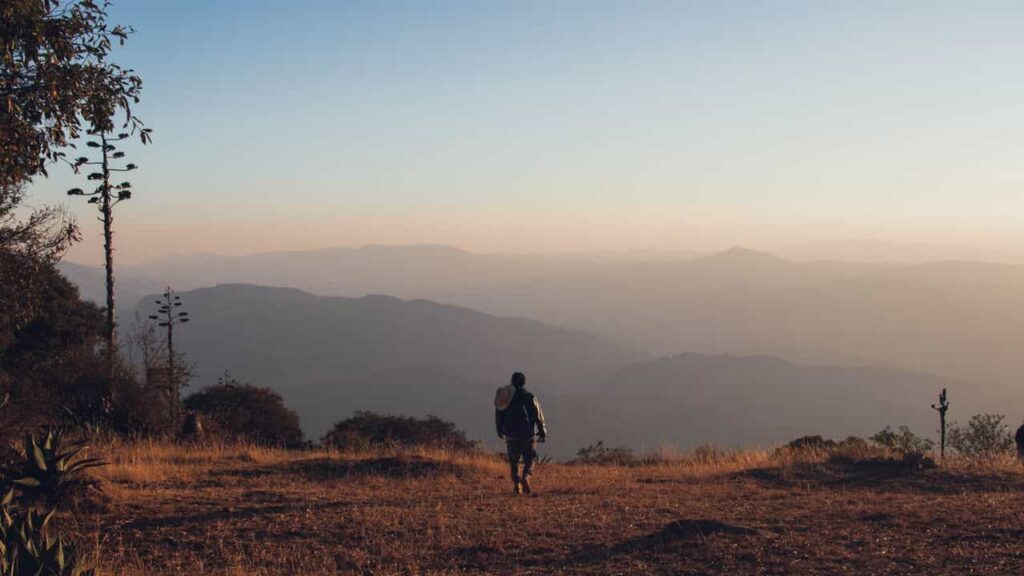
There is a trail in the White Mountains that I have hiked three times, and I have never reached the summit. The first time, I turned back at a rock scramble that looked more dangerous than I was willing to accept alone. The second time, I made it to a false summit, sat down, ate a sandwich, and decided that the view from where I was sitting was good enough. The third time, I started late and the weather turned by midday, and I turned around because I knew the mountain would still be there in the morning. Each time, the return of the trail taught me something that reaching the summit never could.
I do not think of these as failures. I think of them as the mountain teaching me something that I could not have learned by reaching the top. The mountain taught me that the way up is not the only direction that matters. The mountain taught me that the way down is also the way forward. And the mountain taught me that letting go of the summit is sometimes the only way to keep moving.
The old Chinese book that has guided this site from the beginning says it in a line that is barely a sentence long. Reversal is the movement of the Dao. Weakness is the use of the Dao. The Dao De Jing, Chapter 40, is one of the shortest chapters in the book, and it is also one of the most difficult to understand. According to the Stanford Encyclopedia of Philosophy, the concept of reversal (fan) is central to Laozi’s understanding of how the Dao operates, not through linear progress but through cyclical return. It says that the fundamental movement of the universe is not forward but backward. It says that the most useful quality is not strength but softness. This Daoist reversal is the key to understanding why the trail that goes down is actually the trail that goes up. And it says that the thing you think you are moving toward is actually the thing you are moving away from, and that the way to get there is to stop trying to get there.
This is a difficult idea to carry into a hike. But it is the idea that has changed the way I walk, and it is the idea that I want to explore in this essay. The return of the trail is not a theory. It is something I have felt in my legs, in my lungs, in the way the miles feel different when I stop measuring them against the summit. The practice of wu wei hiking — moving with the trail rather than against it — begins with understanding this single principle.
The Pattern of the Trail
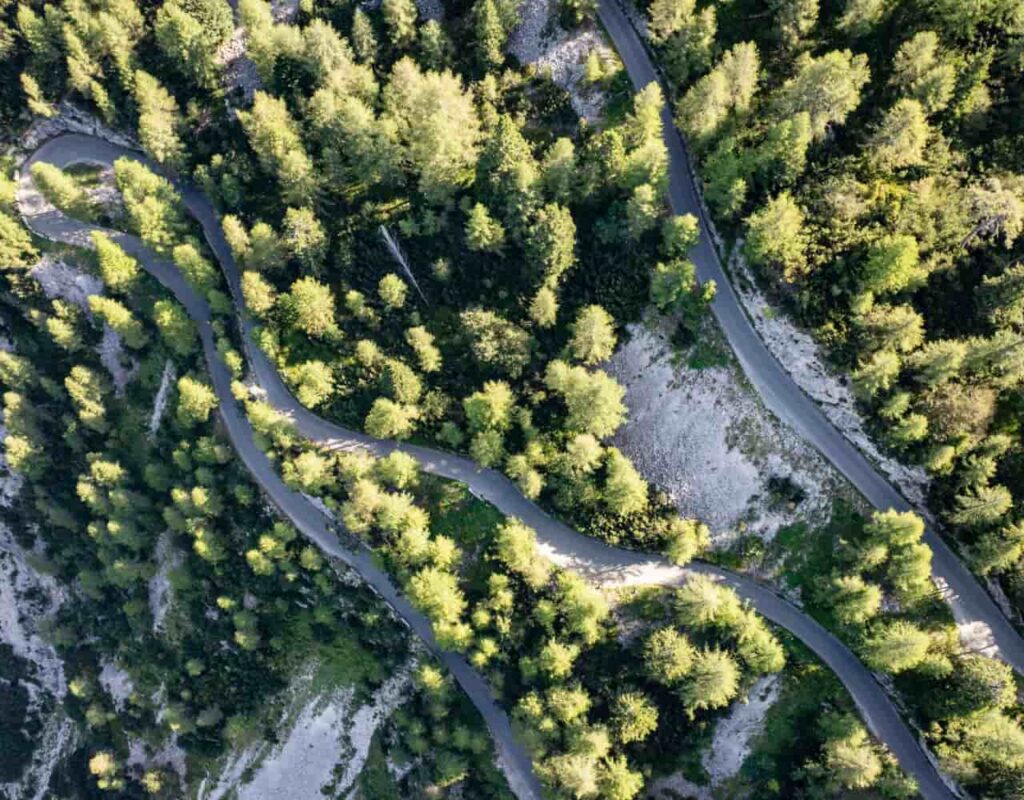
Every trail has a shape. It goes up, it goes down, it goes up again. It switchbacks to gain elevation slowly, and it descends in long, sweeping turns that feel like they are giving back the elevation you worked so hard to earn. The shape of the trail is not a straight line. It is a series of returns.
The Dao De Jing describes this pattern as the fundamental movement of the universe. Reversal is not a mistake. It is not a failure of the path to stay straight. It is the path itself. The trail that goes down is not a trail that has betrayed the hiker who wants to go up. It is a trail that is doing what trails do. It is returning to the valley so that it can climb again.
I have watched hikers fight this pattern. They charge up the switchbacks, refusing to stop, refusing to rest, pushing their bodies past the point where the body is asking for a break. They arrive at the summit exhausted, spend ten minutes taking photos, and then descend in a hurry because they are thinking about the car and the drive home. They have experienced the mountain as a problem to be solved, and the solution is the summit. Everything else is noise.
But the mountain does not care about the summit. The mountain is not a problem to be solved. The mountain is a system of relationships — between the rock and the root, between the water and the stone, between the air and the body that moves through it. The summit is not the point of the mountain. The summit is a place where the reversal happens. You go up, and then you come down. The up is not more important than the down. The down is the other half of the movement, and without it, the up has no meaning.
The first lesson of Chapter 40 is that the movement of the Dao is reversal. The trail goes up, and then it goes down. The day goes from morning to night, and then it returns to morning. The season goes from summer to winter, and then it returns to summer. The breath goes in, and then it goes out. The hike goes from the trailhead to the summit, and then it returns to the trailhead. The return is not a failure of the forward movement. The return is the forward movement, because the forward movement is circular. This is the same principle that guides the art of effortless exploration — the recognition that the trail is not a line to be crossed but a cycle to be entered.
Why the Body Already Knows
I have noticed something about the body that I did not learn from a book. I learned it from hiking.
The body does not move in a straight line. It moves in cycles. The heart beats, rests, beats again. The lungs fill, empty, fill again. The muscles contract, release, contract again. The body is a system of returns, and the body that is forced to move in a straight line, to push without rest, to climb without pause, is a body that will break.
The hiker who understands this does not fight the reversal. When the trail goes down, they do not resent the descent. They use the descent to rest the muscles that worked on the ascent. They use the flat sections to eat and drink. They use the switchbacks to pace themselves, knowing that the switchback that goes away from the summit is actually the switchback that is taking them toward it.
I have hiked with people who do not understand this. They walk faster on the descents, treating them as time to make up for the slowness of the climbs. They arrive at the bottom of a valley with burning quadriceps and a sense of urgency that has nothing to do with the trail. They are fighting the reversal, and the reversal is winning, because the reversal is not something you can fight. The reversal is the shape of the universe.
The body that accepts the reversal is the body that moves with the Dao. The body that accepts the descent as part of the climb is the body that does not need to recover because it has never stopped recovering. The pause between the breaths is not a waste of time. It is the time that makes the next breath possible. The switchback that goes away from the summit is not a detour. It is the path. This is the Daoist simplicity that lets go of the weight of the destination and finds the freedom of the step.
The Paradox of Climbing
There is a distinction in the Dao De Jing that is often misunderstood. The character for reversal, fan, carries the meaning of returning, of turning back, of going the other way. It is not a negative word. It is a descriptive word. It describes what the Dao does.
The same character appears in the phrase that describes the movement of the seasons. The year returns to its beginning. The cycle completes itself and starts again. The flower returns to the root. The leaf returns to the ground. The water returns to the ocean. The return is not a loss. The return is the process by which things are renewed.
I think about this when I am climbing a steep section and my legs are burning and my lungs are working harder than they were five minutes ago. The burning is a signal. It is the body telling me that it is approaching a limit. The body is asking for a reversal: a rest, a slower pace, a change in the direction of effort. The mind that is fixed on the summit hears this signal and interprets it as weakness. The mind that understands the reversal hears it and interprets it as information.
The difference is the difference between fighting the mountain and moving with it.
The climber who pushes through the burning, who ignores the body’s request for a pause, who arrives at the summit in a state of exhaustion that borders on collapse, this climber has not conquered the mountain. They have survived it. They have treated the mountain as an opponent, and they have won, but the victory is hollow because the experience of the climb was dominated by the experience of the struggle.
The climber who accepts the reversal, who stops when the body asks, who breathes, who looks at the view from a resting point that is not the summit — this climber has not surrendered to the mountain. They have joined it. They have treated the mountain as a partner, and the partnership is the experience itself.
The paradox of climbing is that the fastest way to the summit is not always the path that goes straight up. The fastest way to the summit is the path that respects the body, that pauses when the body asks, that moves at the pace the mountain allows. The reversal is not a delay. It is the method.
The Softness That Outlasts
The second half of Chapter 40 is even stranger than the first. Weakness is the use of the Dao. The Dao does its work through softness, through yielding, through the quality that Western culture has taught us to avoid.
I have thought about this line for years, and I have come to believe that it is not about literal softness. It is about the quality of being that does not resist. The weakest thing in the world is water, and water is the thing that carves the Grand Canyon. The weakest thing in the world is the air in the lungs, and the air in the lungs is the thing that keeps the body alive. The weakest thing in the world is the pause between the breaths, and the pause is the thing that makes the next breath possible. In this yielding, we see how softness overcomes hardness — the water that does not fight the rock is the quiet force that eventually wears it down.
On the trail, the hiker who is soft does not fight the terrain. When the trail is steep, they shorten their stride. When the trail is rocky, they slow down. When the trail is wet, they adjust their footing. They do not impose their will on the trail. They respond to the trail’s will, and they find that the trail’s will is not opposed to their own. The trail wants to be walked. The hiker wants to walk. The softness is the quality that allows these two desires to meet without conflict.
The hiker who is hard insists on a pace, a route, a schedule. They check their watch, calculate their pace, measure their progress against a plan made before they saw the trail. They are fighting the reversal, and the reversal is winning because the reversal is not something you can fight with hardness.
The softness that outlasts is not a weakness in the Western sense. It is not a failure of will. It is a different kind of will, the will that does not need to assert itself because it is confident in its own direction. The water that flows around the rock is not weaker than the rock. It is more patient. It has time. It does not need to prove anything by moving through the rock. It is content to move around it, and over time, the rock is worn down by the passage of water that never insisted on being the stronger one.
The Breath and the Return of the Trail
I have been hiking for long enough to notice that the body has a natural rhythm that is easy to disrupt and hard to restore. The rhythm is not a pace. It is a relationship between the breath, the step, and the terrain.
When I am hiking well, my breath matches my steps. I inhale for three steps, exhale for three steps, and the rhythm is steady and unforced. When I am hiking poorly, my breath is disconnected from my steps. I am breathing too fast or too slow, and the effort of the climb feels like a weight that I am carrying separately from the work of breathing.
The return of the breath is the reversal that happens when I stop trying to control it. I cannot force myself to breathe in rhythm. The rhythm emerges when I stop forcing and let the body find its own pace. The reversal is the movement from control to trust, from forcing to allowing, from hardness to softness. This is the return of the trail in miniature — the cycle of effort and release that repeats across every mile.
I have seen this in every long hike I have ever taken. The first mile is always the hardest, not because the terrain is difficult but because the body has not yet found its rhythm. The body is adjusting to the load, the temperature, the incline. The mind is adjusting to the reality of the trail. The first mile is a series of small reversals — adjustments, corrections, recalibrations. By the second mile, the body has found its rhythm, and the hike has become something other than a series of adjustments.
The rhythm is not something you can manufacture. It is something you return to. The body knows how to hike. It has been hiking since before you were born, in the sense that the body is the product of millions of years of walking. The rhythm is already there. The work is not to create it. The work is to get out of the way of it.
The Summit That Is Not a Summit
There is a story about a Zen monk who was asked what he did before enlightenment. He said he chopped wood and carried water. He was asked what he did after enlightenment. He said he chopped wood and carried water.
The point of the story is that enlightenment does not change the work. It changes the relationship to the work. The summit is not a different place from the trail. It is the same place, seen from a different perspective. The hiker who reaches the summit and feels they have arrived at a destination has not understood that the destination is the whole trail, not just the highest point on it.
I have reached the summit of a mountain and felt nothing. I have also reached the summit of a mountain and felt everything. The difference was not in the mountain. It was in the relationship I had to the ascent. When I had fought the climb, the summit was a relief. When I had moved with the climb, the summit was a continuation.
The summit is the reversal. It is the point where the up becomes the down. The summit is not the end of the hike. It is the middle of the hike. The summit is the place where the trail turns, and the descent is the second half of the same movement. The hiker who reaches the summit and thinks they are done has missed the point. The hiker who reaches the summit and knows that the trail is still ahead has understood the reversal.
The Down That Is Also Up
The descent is one of the most misunderstood parts of hiking. Hikers treat it as a recovery, a cooldown, a return to the car. But the descent is its own kind of effort. The quadriceps are working harder on the descent than they were on the ascent. The knees are absorbing impact that the climb did not require. The ankles are adjusting to the angle of the trail in a way that is different from the climb.
The descent is not the opposite of the climb. It is the complement of the climb. The ascent and the descent are two halves of a single movement, and the hiker who treats the descent as a time to relax is missing the work that the descent requires.
The Dao De Jing describes this as the relationship between the strong and the weak. The ascent is strong. It is visible. It is the part of the hike that everyone talks about. The descent is weak. It is invisible. It is the part of the hike that no one mentions. But the descent is the longer half of the hike, and the descent is the half that carries the experience of the summit back to the trailhead.
The descent is the reversal that the ascent requires. Without the descent, the ascent is incomplete. The summit is not a destination. It is a turning point. The trail does not end at the summit. It continues to the trailhead, and the trailhead is the place where the hike began. The hike returns to its beginning, and the return is the completion of the cycle.
The Practice of Letting Go
I have a personal practice that I have developed over years of hiking, and I have never found a name for it that fits. I call it letting go, but that is not precise. It is the practice of releasing the attachment to the outcome of the hike. To let go on the trail is to practice the reversal itself, the moment when the hiker stops climbing toward the summit and starts climbing for the climb itself. The letting go on the trail is not giving up but giving in to the shape of the trail itself.
When I am hiking, I have a destination in mind. I have a route, a plan, a timeline. But I also have a practice of asking myself, at regular intervals, whether I am still attached to the destination. The question is not whether I should stop. The question is whether I am enjoying the hike for the hike, or whether I am enjoying the hike for the destination.
The letting go is the reversal. It is the shift from the future to the present. It is the shift from the summit to the step. It is the shift from the question of whether I will make it to the question of whether I am present for the making of it.
I have found that the letting go is not a single event. It is a practice that I have to repeat. The mind returns to the future as naturally as the trail returns to the valley. The mind wants to plan, to calculate, to measure. The practice of letting go is the practice of returning to the present, and the return is the reversal that the mind needs.
The letting go is also the practice that makes the hiking possible. The hiker who is attached to the summit is the hiker who is disappointed by the weather, frustrated by the terrain, anxious about the time. The hiker who has let go of the summit is the hiker who is present for the weather, responsive to the terrain, and patient with the time. The letting go is not a surrender. It is a release of the attachment that creates the suffering.
The Return to the Beginning
The trail ends where it began. The hiker returns to the trailhead, to the car, to the road, to the life that was left behind. The return is not a failure. It is the completion of the cycle.
The Dao De Jing describes the return as the movement of the Dao. The ten thousand things arise from the Dao and return to the Dao. The hike arises from the trailhead and returns to the trailhead. The breath arises from the lungs and returns to the lungs. The self arises from the world and returns to the world.
The same pattern runs through the seasons. The trails open in the spring, run full in the summer, fall quiet in the autumn, and close in the winter. Each season has its lesson: patience in spring, abundance in summer, letting go in autumn, stillness in winter. The hiker who moves through the seasons without fighting them is the hiker who has understood the return.
The mountain itself is a process of return. The rock breaks down into soil. The soil grows into trees. The trees fall and become soil again. The hiker who walks on the mountain is part of this return. The footstep that presses into the soil is a small return. The breath that leaves the body is a return to the air. The hiker is not separate from the mountain. The hiker is a temporary part of the mountain’s return.
The return to the beginning is not a loss. It is an integration. The hiker who returns to the trailhead is not the same hiker who left it. The hike has changed them, and the return is the process of integrating the change. The trailhead is the same place, but the hiker is different. The return is the recognition that the difference has been made, and that the difference is now part of the hiker.
I have felt this after every long hike I have ever taken. The drive home is not the end of the hike. It is the continuation of the hike — the time when the experience of the trail settles into the body. The first shower is not the end of the hike. It is the washing away of the dirt that the trail gave. The first night in my own bed is not the end of the hike. It is the sleep that the trail earned.
The return to the beginning is the reversal that completes the movement. The trail does not end at the summit. It ends at the trailhead, and the trailhead is the same place where the hike began. The cycle is complete. The reversal has happened. The Dao has returned to its beginning.
The Trailhead Practice: Closing the Cycle
I have developed a practice that I use on every hike now, and it is based on the principle of the return. At the end of every hike, before I get into the car, I stand at the trailhead and I take a moment to acknowledge the return. I look at the trail that I have just walked, and I thank it for the experience. I feel the ground under my feet, and I recognize that the ground is the same ground that I stood on when I started. I feel the difference in my body, and I recognize that the difference is the gift of the trail.
The practice of the return is the practice of closing the cycle. It is the recognition that the hike is not a linear experience. It is a circular one. The beginning and the end are the same place, and the difference is not in the place. The difference is in the hiker.
The practice of the return is also the practice of the letting go. The trail that I have walked is now behind me. The experience is complete. The return is the moment when I release the trail and carry only the experience.
I believe that the practice of the return is the practice that the Dao De Jing describes in Chapter 40. The reversal is the movement of the Dao. The return to the beginning is the movement that completes the cycle. The softness that accepts the return is the quality that allows the cycle to continue. This is the power of flow — the art of moving with the trail instead of against it.
The Final Letting Go

There is a moment at the end of every hike that I have come to recognize as the most important moment of the hike. It is the moment when I stop walking. The trail is behind me. The summit is behind me. The descent is behind me. The car is in front of me. I am standing at the trailhead, and the hike is over.
In that moment, I have a choice. I can treat the end of the hike as the end of the experience. I can get into the car, drive home, and forget that the hike happened. Or I can treat the end of the hike as the beginning of the integration. I can stand at the trailhead and feel the return. I can let the trail settle into my body. I can carry the experience of the mountain into the life that I am returning to.
I have developed a small practice that helps with this transition. It is not a ritual from any tradition. It is something I discovered accidentally, and it has become the most reliable way I know to complete the return. When I reach the trailhead, I sit down on the ground, take off my boots and socks, and press the soles of my feet against the earth for thirty seconds. Not the padded floor of the car. Not the rubber mat at the trailhead sign. The actual ground — dirt, pine needles, gravel, whatever is there. The feet that have been sealed inside boots for hours, protected from every stone and root, finally touch the trail directly. The skin reads the temperature, the texture, the moisture. The body remembers that it is part of the ground, not just a passenger moving across it.
I call it the grounding. It takes half a minute. It costs nothing. And it is the most effective practice I have found for turning the end of a hike into the completion of the return.
The Dao De Jing says that reversal is the movement of the Dao. The reversal is not just the movement of the trail. It is the movement of the whole life. The hike returns to the trailhead. The day returns to the night. The summer returns to the winter. The breath returns to the lungs. The life returns to the earth. The grounding is the moment when the hiker, having returned to the trailhead, completes the circuit by returning the feet to the ground.
The final letting go is the acceptance of this return. The hiker who accepts the return is the hiker who has understood the movement of the Dao. The return of the trail is complete when the hiker stands at the trailhead and walks away, carrying the mountain not in the pack but in the body. The hiker who fights the return is the hiker who is fighting the shape of the universe.
The trail does not end. It returns. The mountain does not stay. It returns. The hiker does not arrive. They return. And the return is the movement that makes the next hike possible.
反者道之动,弱者道之用。天下万物生于有,有生于无。
— Dao De Jing, Chapter 40
Reversal is the movement of the Dao. Weakness is the use of the Dao. The ten thousand things arise from what is, and what is arises from what is not.