Affiliate Disclosure: This post contains affiliate links. If you buy through these links, we may earn a small commission at no extra cost to you. We only recommend gear that serves the hiker.
Your feet hurt on a long hike. Not your knees, not your back, your feet. And the problem is almost never the shoe. It is the sock. A bad sock blisters. A good sock disappears. The difference between the two is the difference between a hike you remember and a hike you suffer through. This guide is about the socks that disappear. Six merino wool hiking socks, each judged by one question: does it let your foot touch the trail, or does it become the thing you notice?
I learned this lesson on the John Muir Trail, on a day that started with six miles of easy granite and ended with eight miles of switchbacks through pine that felt like they had been designed by someone who hated feet. The first six miles I wore a pair of merino wool hiking socks I had bought on a whim at a gear shop in Mammoth Lakes. They were cheap, five dollars a pair, and they had a thick cushioning that felt luxurious when I pulled them on at the trailhead. By mile four, those socks had become a problem. They were too thick for my shoes, which meant my toes were pressing against the front of the shoe on every downhill step. By mile six, the cushioning had compressed into a flat layer that offered no protection. By mile ten, I had developed a blister on my left heel that I could feel with every step, and the blister was not the kind you ignore but the kind you dance around, shifting your weight, trying to walk in a way that keeps pressure off the sore spot. And all of this was caused not by the shoe, not by the terrain, but by a sock that was too much sock. That day I learned that the best hiking socks are not the thickest, the softest, or the most expensive. They are the socks that let you forget you are wearing them.
How to Choose: Match Socks to Your Hike
The right hiking sock depends on three factors: temperature, distance, and boot fit. For warm-weather day hikes, a lightweight sock like the Darn Tough CDT Micro Crew or the Niorasen Merino Wool keeps feet cool and dry without adding bulk. For cold-weather backpacking, a thick cushion sock like the Time May Tell or the innotree Merino Wool provides insulation that no base layer can match. For long-distance thru-hikes where durability matters more than weight, the Smartwool Hike Classic or the Icebreaker Merino Lifestyle will outlast multiple pairs of cheaper socks. For hikers who want one sock that does everything well, the innotree is the most versatile option, with adequate cushioning for summer and enough warmth for shoulder-season trips.
The Six Socks at a Glance| Sock | Weight (per pair) | Material | Cushioning | Length | Rating |
|---|---|---|---|---|---|
| Darn Tough CDT Micro Crew | 2.6 oz | 63% Merino Wool | Lightweight | Micro Crew | 4.8 / 5 |
| Smartwool Hike Classic | 1.1 oz | 67% Merino Wool | Light | Crew | 4.6 / 5 |
| Icebreaker Merino Lifestyle | 2.4 oz | 64% Wool | Lightweight | Crew | 4.2 / 5 |
| Niorasen Merino Wool | 1.5 oz | 50% Merino Wool | Heavy | Crew | 4.6 / 5 |
| innotree Merino Wool | 1.5 oz | 67% Merino Wool | Medium | Crew | 4.5 / 5 |
| Time May Tell | 5.4 oz | 80% Merino Wool | Medium | Crew | 4.5 / 5 |
Specifications listed as they appear on Amazon. Not a certified independent test report.
The Best Merino Wool Hiking Socks
1. Darn Tough CDT Micro Crew — The Lightest Option
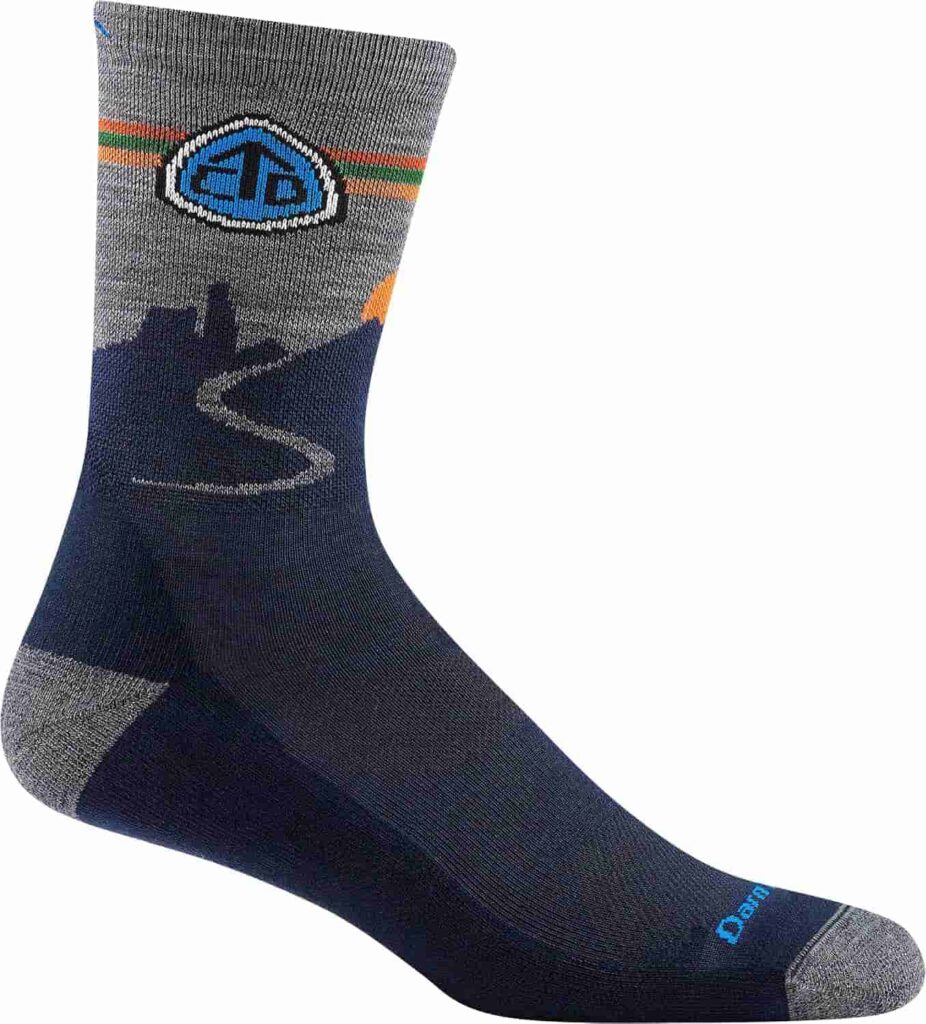
The Darn Tough CDT Micro Crew weighs two point six ounces per pair. It is made of sixty-three percent merino wool, nylon, and spandex. The construction is seamless, which means there is no ridge at the toe to cause a blister. The cushioning is lightweight, the lightest level Darn Tough makes for their CDT line. It is enough to protect against sharp rock without creating a barrier between your foot and the ground.
The CDT Micro Crew is a micro crew length, sitting just above the ankle. It stays in place without sliding, and it does not climb up your calf. The merino wool wicks moisture away from the skin, and the spandex returns it to the air. The result is a sock that keeps your foot dry without feeling damp, and light without feeling thin. This sock is made in Vermont, USA, which means it has been tested in the same conditions that many hikers will encounter. The philosophy behind it is straightforward: a sock that disappears is a sock that has done its job. You should not notice the CDT Micro Crew while you walk. You should only notice the trail.
For the hiker who wants a sock that supports without directing, the mindful roaming gear system describes exactly this kind of invisible architecture.
2. Smartwool Hike Classic — The Longest-Lasting Option
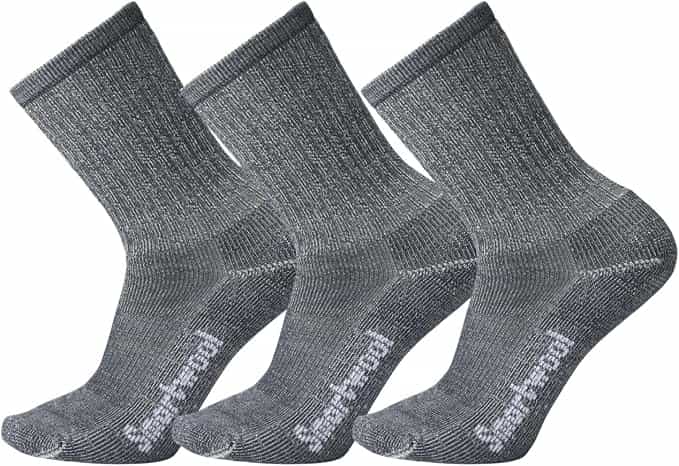
The Smartwool Hike Classic weighs one point one ounces per pair (sold in 3-packs). It is made of sixty-seven percent merino wool, thirty-two percent recycled nylon, one percent elastane. The phased cushioning system pads the heel, ball, and toe box, and thins out everywhere else, so the sock does not add bulk to a shoe.
The Virtually Seamless toe technology is a flat knit toe seam designed for additional comfort. The Merino wool is the key ingredient in every sock Smartwool makes. It is soft, manages moisture, regulates temperature, and resists odors. The crew length sits just below the calf and above the ankle. A sock that lasts a thousand miles without asking to be replaced does its work quietly. This is the kind of work the Zhuangzi meant when he wrote about the butcher who cuts oxen without thinking — his knife has been used for nineteen years and it is still sharp, because he knows where the gaps are and he does not force his way through bone. For the hiker who is still deciding what a good hiking sock should feel like, the thermoregulation article explains why the layer between your foot and your shoe matters more than the shoe itself.
3. Icebreaker Merino Lifestyle — The Best Temperature Regulator
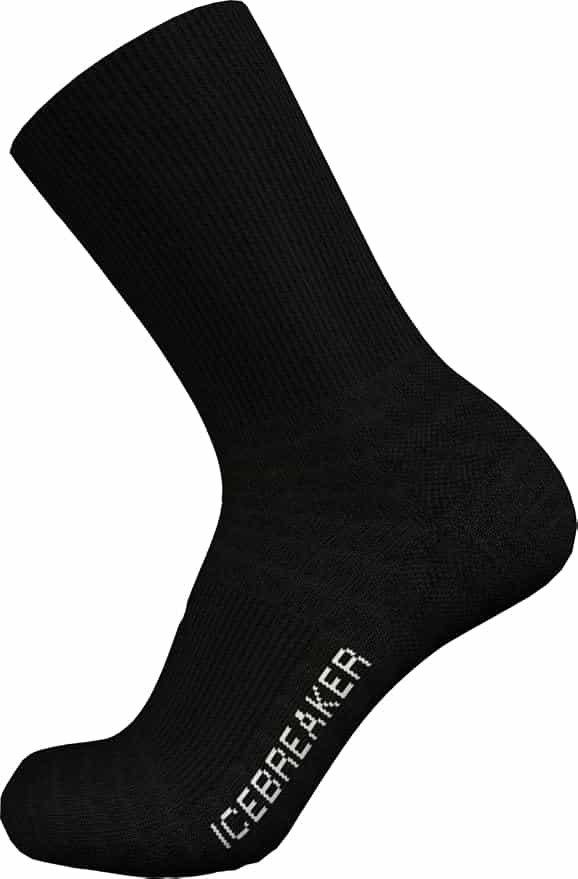
The Icebreaker Merino Lifestyle weighs two point four ounces per pair. It is made of sixty-four percent wool, thirty-four percent nylon, two percent elastane. The zone-specific construction puts more wool where moisture accumulates and less where it does not, so the sock responds to the topography of your foot rather than being a uniform layer of fabric.
The crew length sits mid-calf, working with both low-cut trail shoes and mid-height hiking boots. The arch support is built into the knit, not added as a separate band, so it holds your foot without compressing it. The seamless toe closure reduces bulk and prevents blisters. The Icebreaker acts as a thermal buffer, responding to foot sweat without needing you to think about it. For the hiker who thinks about what they wear the way they think about what they eat, as fuel rather than as gear, the minimalist cooking article explores the same principle from a different angle.
4. Niorasen Merino Wool — The Best Value
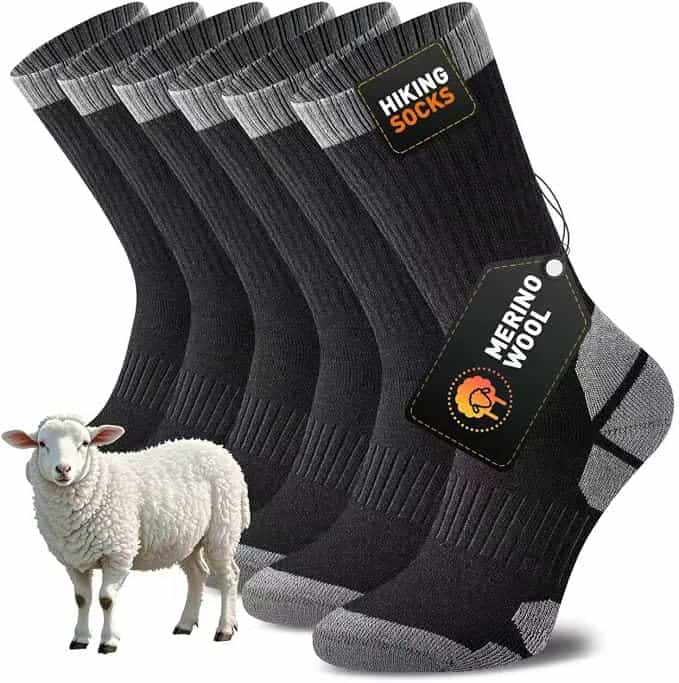
The Niorasen Merino Wool weighs one point five ounces per pair (sold in 3-packs). It is made of fifty percent merino wool, thirty percent nylon, seventeen percent acrylic, three percent elastane. The full terry cushioning runs the length of the foot, easing pressure and absorbing impact on rocky trails.
The Niorasen is a value option that does not skimp on protection. The reinforced heel and toe hold their shape and cushioning season after season. The OEKO-TEX certification means the socks are safe for sensitive skin. The unisex fit means they work for men and women alike. It does not try to be expensive, flashy, or engineered to impress. It simply keeps your foot comfortable for the duration of the hike. That is what the Laozi meant when he wrote that the useful thing is useful because of what it is not — not expensive, not flashy, not engineered to impress.
5. innotree Merino Wool — The Best for All-Season Hiking
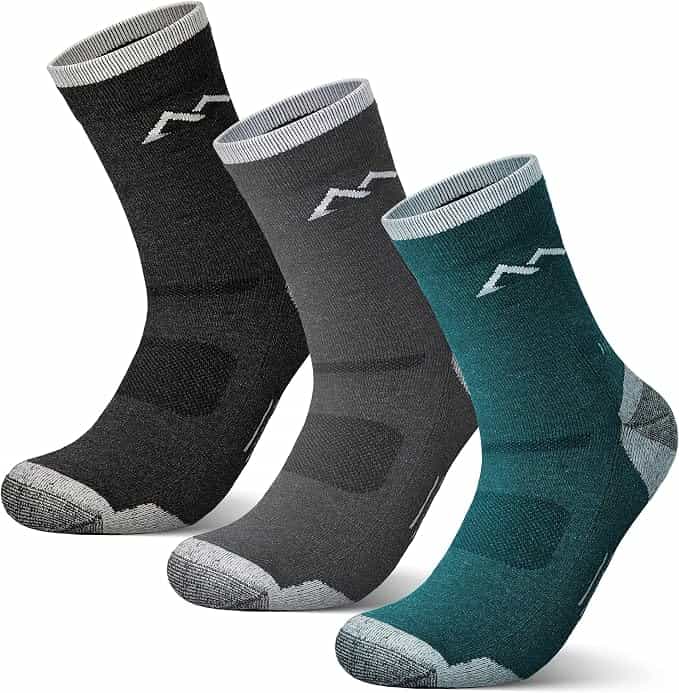
The innotree Merino Wool weighs one point five ounces per pair (sold in 3-packs). It is made of sixty-seven percent merino wool, sixteen percent spandex, four point six percent elastane, twelve point four percent nylon. The thermoregulating properties keep you warm when it is cool and stay cool when it is hot, making these socks great for all-season wearing.
The half thickness cushioning reduces the risk of blisters while the arch compression supports your foot and reduces fatigue. The seamless technology and fine gauge knitting provide maximum comfort. The one-year warranty means if the socks wear, tear, or develop holes within a year, innotree will replace them. Warmth and breathability, cushioning and flexibility, durability and comfort — the innotree does not ask you to choose between extremes. It offers a middle path that works in most conditions, which is what hikers who encounter variable weather need.
6. Time May Tell — The Warmest Option
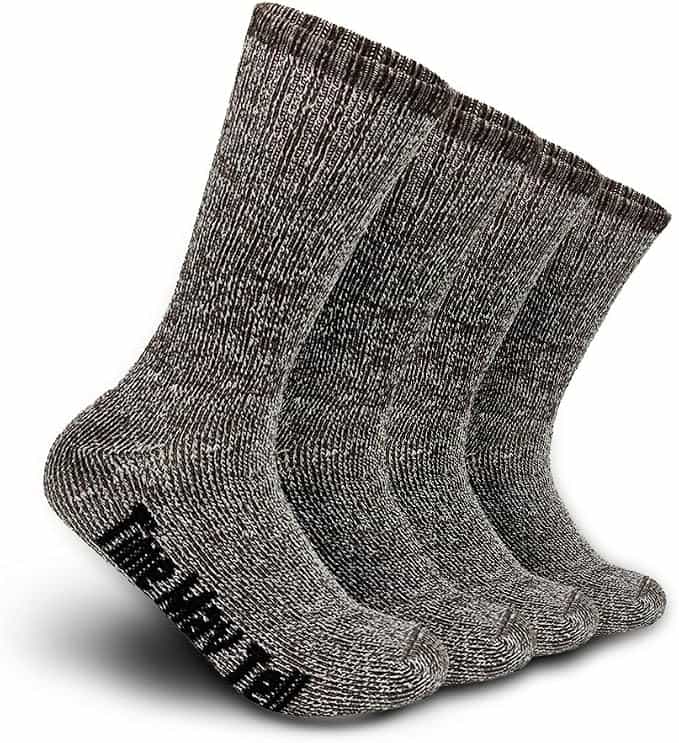
The Time May Tell weighs five point four ounces per pair (sold in 2-packs). It is made of eighty percent merino wool, fourteen percent nylon, five percent poly, one percent spandex. The high merino content makes these among the warmest socks in this guide, ideal for cold weather hiking and winter conditions.
The medium cushioning provides comfort without excessive bulk. The crew length sits mid-calf, working well with hiking boots. The stretch fit contours to your foot while the moisture-wicking properties keep your feet dry. With over thirteen thousand reviews and a 4.5-star rating, this is a proven performer. Eighty percent merino wool is a lot of wool. It does not try to be the lightest sock or the most technical. It simply uses the best material and lets that material do its work.
The Standard, Applied
The standard is one question: when you are walking on the trail, are you aware of the sock, or are you aware of the ground?
If you are aware of the ground, the sock has done its job. If you are aware of the sock, the sock has not. The best socks in this guide are judged by this standard, not by price, brand, or thread count. A pair that disappears is a sock that has done its work. A pair that announces itself is a sock that has become work.
The six socks do not all disappear equally. The CDT Micro Crew comes closest through lightness. The Smartwool Hike Classic through durability. The Icebreaker through temperature regulation. The Niorasen through value. The innotree through all-season versatility. The Time May Tell through warmth. When choosing merino wool hiking socks, consider what matters most to you — weight, warmth, or durability. They are all close, and closeness is the only metric that matters.
Frequently Asked Questions
Are they worth it for hiking?
Yes. Merino wool wicks moisture, resists odor, regulates temperature, and stays soft when wet. For multi-day hikes, the odor resistance alone justifies the price.
How often should I replace hiking socks?
Replace them when the cushioning compresses permanently, the arch band loses elasticity, or the toe seam begins to break down. With proper care, a good pair of merino wool socks can last two to three years of regular use.
Can I wear them in summer?
Yes. Merino wool is breathable and moisture-wicking. Lighter weights (under 200 g/m²) are ideal for hot conditions.
Should I size up or down for hiking socks?
Neither. Hiking socks should fit snugly without constriction. A sock that is too loose creates wrinkles and blisters. A sock that is too tight restricts circulation. Follow the size chart for your shoe size.
How many pairs of hiking socks should I carry?
For multi-day trips, carry at least one pair per day plus a spare. Merino wool’s odor resistance means you can wear the same pair for multiple days in mild conditions. If you are doing ultralight hiking socks for summer, one pair may be enough if you rotate and air-dry between uses.
What makes this guide different from others?
Most hiking sock guides focus on warmth or price. This guide focuses on presence: does the sock disappear in your shoe, or does it become the thing you notice? The answer to that question determines whether the sock serves you or the sock becomes work.
Should I wear liner socks under merino wool hiking socks?
Liner socks are not necessary with high-quality merino wool socks. The merino fiber wicks moisture away from the skin naturally, and a well-fitting merino sock will not bunch or cause blisters. However, if you are prone to blisters or hiking in wet conditions for days at a time, a thin silk or synthetic liner can reduce friction. The Darn Tough and Smartwool options in this guide are thick enough to work without liners in most conditions.
Summary
The best socks are not the softest, the warmest, or the most expensive. Among the best options, the ones that disappear are the ones worth choosing. The Darn Tough CDT Micro Crew disappears through lightness. The Smartwool Hike Classic through longevity. The Icebreaker through regulation. The Niorasen through value. The innotree through versatility. The Time May Tell through warmth. When you choose hiking socks, choose the pair that lets you forget you are wearing them.
They are the background hum that lets your foot do what feet are meant to do on a trail: touch the ground, feel the ground, move across the ground without interruption. When you take them off at the end of the day, you should not remember putting them on. You should only remember the trail. That is what makes a pair of merino wool hiking socks truly useful — they let the trail be the memory, not the sock.
Final recommendation: If you want the best all-around hiking sock, the Darn Tough CDT Micro Crew is the clear winner with its lifetime guarantee. For cold conditions, choose the Time May Tell or innotree. On a budget, buy two pairs of Niorasen. The options in this guide cover every trail condition, temperature, and budget. The best merino wool hiking socks are the ones that let you forget your feet and focus on the trail ahead.
Care tip: To extend the life of your merino wool hiking socks, wash them inside out in cold water and hang them to dry. Avoid fabric softeners and bleach, which break down the merino fibers. Rotate between two or three pairs on multi-day trips to let each pair dry completely between wears. With proper care, a quality pair of merino wool hiking socks will last 500 to 1,000 miles before the cushioning begins to fade. The best merino wool hiking socks are an investment in comfort, and treating them well pays back every mile.
Whether you are hiking a 3-mile nature trail or a 30-mile alpine route, your choice of sock affects every step. The right pair reduces friction, wicks moisture, and cushions your feet against the trail. The wrong pair turns a beautiful hike into a painful memory. Invest in quality, rotate your pairs, and your feet will Choose your socks as carefully as you choose your boots — your feet will carry you every mile of the journey. carry you anywhere.