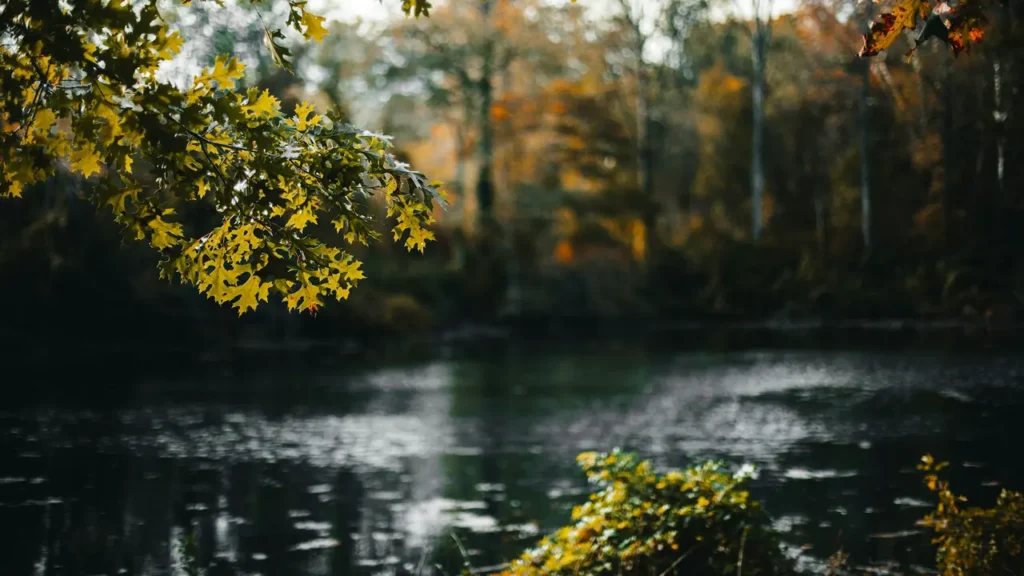
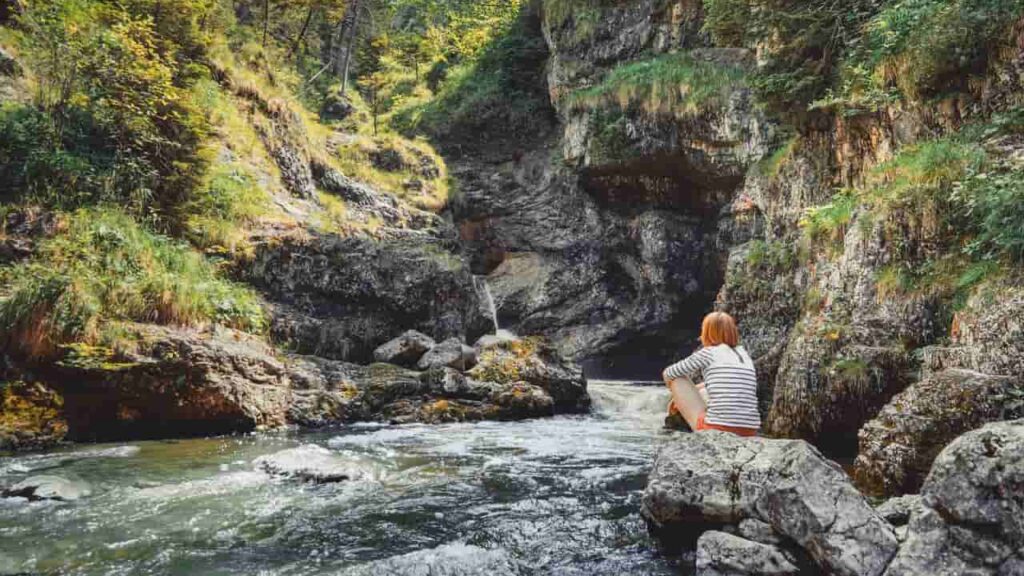
There is a moment on the trail when you stop being a person who walks on the trail and become a person who walks inside the trail. It does not happen at the summit. It does not happen at the trailhead. It happens somewhere in between, on a stretch of path you have walked a thousand times in your mind but never actually walked, and it happens because your body has finally caught up with your eyes, and your eyes have finally caught up with your ears, and your ears have finally caught up with something that was there from the beginning and that you have been too busy to notice. This is what Daoist sensory immersion means — not conquering the path but letting the path enter you, feeling it, becoming part of it, aware and alive in a way that most hikers rarely ever truly experience.
I remember the first time this happened to me. It was on a ridge in the North Cascades, on a day that started with rain and ended with sun. In between, in that long stretch where the rain had stopped but the sun had not yet broken through, I sat down on a wet rock and took off my shoes. I did not take them off because my feet hurt. I took them off because something in me had decided, without my permission, that the conversation between my skin and the stone was more important than the conversation I was having with the trail.
The Zhuangzi tells a story about this moment. He tells it in the form of a question, and the question has been asked by hikers, fishermen, philosophers, and children for two thousand years: when the fish swims in the river, how does the fish know it is swimming? This story, found in the Autumn Floods chapter of the Zhuangzi, has been debated by philosophers for over two millennia. For academic context, see the Stanford Encyclopedia of Philosophy entry on Zhuangzi, which discusses this passage in depth.
子非鱼,安知鱼之乐? You are not a fish. How do you know what the fish enjoys?
- Zhuangzi, Autumn Floods
The Zhuangzi did not ask this to prove that fish have feelings. He asked it to show that the person asking the question has already forgotten how to listen. His friend Huizi asked, “How do you know the fish are happy?” The Zhuangzi answered, “How do you know I do not know?” Huizi said, “You are not a fish, so you cannot know.” The Zhuangzi said, “You are not me, so you cannot know that I do not know. And I know it from standing here by the river.”
The last sentence is the key. The Zhuangzi does not know what the fish enjoys because he has studied fish. He knows because he has stood by the river and let the river teach him. The knowledge is not intellectual. It is sensory. It is the kind of knowledge your foot has when it touches the stone, your ear has when it hears the wind, your skin has when it feels the rain. It is the knowledge that exists before the mind translates it into language, and it is the knowledge that language destroys the moment it tries to capture it.
What the Zhuangzi Means for Hikers
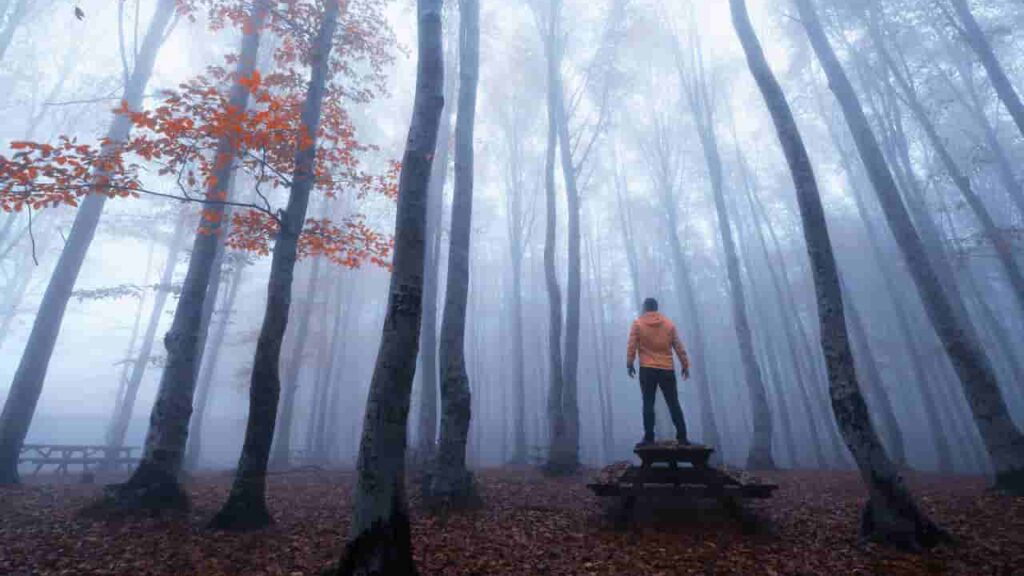
The Zhuangzi is full of stories about people who know things without knowing how they know them. The butcher who cuts oxen without thinking, his knife has been used for nineteen years and it is still sharp, because he knows where the gaps are and he does not force his way through bone. The wheelwright who cannot explain why his wheels last longer than others, his hands know what his mind cannot say. The musician who plays the zither and makes the listener weep without knowing why, the music flows through him rather than being played by him.
All of these stories share one quality: they have stopped trying to control what they are doing and have started letting the thing they are doing control them. The butcher does not cut the ox. The cut happens through him. The wheelwright does not make the wheel. The wheel makes itself through his hands. The musician does not play the zither. The music plays through him.
On the trail, the same thing happens when you stop walking and start listening. The trail does not become a place you move through. It becomes a place you move inside. And the movement inside is not imaginary. It is the real movement of your senses opening to a world that was always there, waiting for you to stop talking long enough to notice it.
Most hikers walk with their eyes on the path ahead, their ears full of the sound of their own breathing, their skin protected by fabric that keeps the wind and the cold at bay, their nose occupied by the smell of sweat and sunscreen, their tongue busy with the thought of the next meal. The trail is a symphony, and the hiker is listening to a recording. The Zhuangzi does not tell you to close your eyes. He tells you to open them wider. He does not tell you to plug your ears. He tells you to let the sound in without translating it. This is the essence of Daoist trail practice, not adding anything, but removing the barriers between your senses and the world. This connects directly to the philosophy explored in Mindful Roaming Gear System, where the same principle of letting go of control is applied to how we carry our gear.
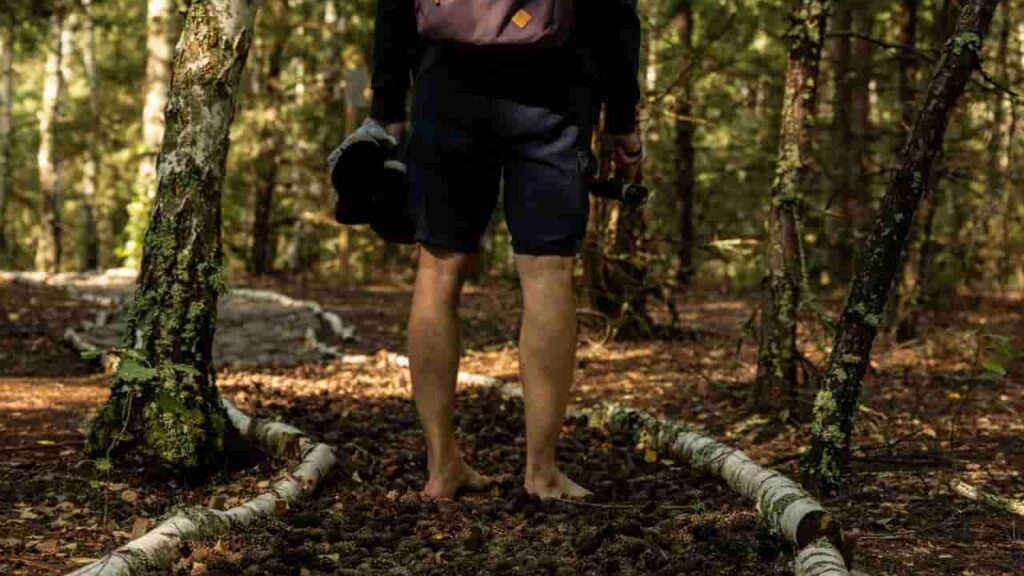
Consider the sense of touch first, because touch is the sense that connects you most directly to the ground, and the ground is the first thing you lose when you put on shoes. A bare foot on a trail is not just a foot on a trail. It is a foot that knows the temperature of the rock, the texture of the dirt, the slope of the root, the moisture of the moss. When you lose that information, you lose your sense of location. You become a body moving through space rather than a body that is part of space. The Zhuangzi would say that the difference between those two states is the difference between hiking and being hiked. This is the principle behind heel breathing hiking, a practice that restores the conversation between foot and earth — the same conversation your skin is having with that rock. This is why the right footwear matters — not just for protection, but for connection. Merino wool hiking socks manage moisture without irritating the skin, letting you feel the trail without distraction.
Consider the sense of hearing next, because hearing is the sense that most hikers abandon as soon as they put on headphones. The sound of a trail is not music. It is not white noise. It is a layered conversation between wind and leaf, between water and stone, between bird and branch, between your own breathing and the breathing of everything else around you. Most hikers fill the silence with podcasts, with playlists, with the internal monologue that never stops. And in filling the silence, they fill the world with themselves, and the world becomes smaller. This is the Daoist insight: fill the silence with the world, and the world becomes larger.
Consider the sense of smell, because smell is the sense that most hikers ignore entirely. The smell of pine needles after rain. The smell of damp earth in the morning. The smell of wild mint growing between two rocks. These smells are not decorations. They are coordinates. They tell you where you are, what season it is, whether water is near, whether the weather is changing. The Zhuangzi understood this. He did not separate smell from understanding. To smell the pine was to understand the pine, and to understand the pine was to know that you were in a forest, and to know that you were in a forest was to feel, for the first time in days or weeks or years, the relief of being somewhere that did not require you to be anyone.
Consider the sense of sight, because sight is the sense most hikers overuse and least understand. They look at the trail. They look at the summit. They look at their phone. They look at their feet. They rarely look at the space between things, which is where the trail actually lives. This is the Daoist insight that the space between the tree and the rock is more real than the tree and the rock, because the space is what connects them, and connection is the Dao. Just as sight is the sense most hikers overuse, the clothing we wear can either enhance or block our sensory experience. A quality UPF hiking shirt protects without trapping heat, allowing your skin to feel the breeze while the sun is kept at bay.
Consider the sense of taste, because taste is the sense most remote from the trail, and the one most easily restored. The taste of clean water from a stream. The taste of a simple meal cooked over a fire. The taste of air at altitude, which is thin and cold and tastes like nothing because it is so pure that your tongue has nothing to interpret. This is the Daoist insight that tasting the trail is the same as tasting the world, and the world is always available if you are willing to stop swallowing it and start letting it pass through you.
Three Practices You Can Try Today
Practice 1: The Five-Minute Stop. Walk for twenty minutes, then stop. Sit on a rock. Do nothing for five minutes. Do not meditate. Do not breathe consciously. Do not try to empty your mind. Simply sit, and in those five minutes, the trail begins to speak. You hear birds you did not hear before. You notice the way the light moves through the trees. You feel the temperature of the air on your skin. You become aware of the rhythm of your own breathing, and then you stop paying attention to it, and then your breathing becomes the rhythm of the trail, and then you are no longer walking on the trail and the trail is walking through you. This is what the Zhuangzi meant by sitting and forgetting, not emptiness, but presence without the ego at the center.
Practice 2: The Junction Practice. When you reach a trail junction, do not consult your map. Stand at the junction and listen. Listen to the sound of the wind. Listen to the sound of the water. Listen to the silence between the sounds. And then choose the path that feels right, not the path that looks right on the map. This is not a replacement for navigation. It is an addition to it, a second system of decision-making that operates alongside the rational system. Over time the two systems begin to communicate, and the rational system learns from the sensory system, and the sensory system learns from the rational system. This is the Daoist insight this is how the Dao works: not by choosing one path over another, but by letting the path choose you.
Practice 3: The Grounding. When you finish your hike, do not immediately put your shoes back on and walk to the car. Take off your shoes and socks. Stand barefoot on the ground, dirt, grass, rock, whatever is there, for thirty seconds. Feel the temperature. Feel the texture. Feel the slope. Let your feet remember what the ground feels like without a shoe between them and the earth. This is the practice that closes the circle: you entered the trail as a person walking on the ground, and you leave the trail as a person who has remembered what the ground feels like. The Zhuangzi would call this returning to the source, not as a philosophical concept but as a physical act, a reconnection with the earth that has been waiting for you since you put on your shoes at the trailhead. The gear you choose should follow the same principle — ultralight backpacks that disappear on your back so the trail can speak. The ancient Chinese philosophers understood this distinction long before modern hikers discovered mindfulness. They did not separate the body from the mind, the senses from the spirit, the trail from the traveler. For them, to walk was to pray, to breathe was to meditate, to feel the earth beneath your feet was to touch the Dao itself. When you walk without trying to control every step, when you let the trail guide you rather than forcing your will upon it, you enter a state that the Zhuangzi called “sitting and forgetting” — not emptiness, but presence without the ego at the center.
The River as Teacher
The Zhuangzi returns to the river again and again, because the river is the perfect metaphor for the Dao. The river does not plan its course. It does not decide to reach the sea. It simply flows, and in flowing, it reaches the sea. The river does not argue with the rocks. It flows around them, through them, over them, and in doing so, it shapes them. The river does not try to be the ocean. It is already part of the ocean, because all water is part of the ocean, and the ocean is the destination of all rivers, and the destination is not somewhere the river goes but somewhere the river already is.
On the trail, the river teaches the hiker the same lesson. The hiker who tries to control the trail fails. The hiker who tries to conquer the summit fails. The hiker who tries to optimize their pace fails. The hiker who simply flows, who lets the trail carry them, who lets the mountain shape them, who lets the river teach them, that hiker succeeds, not because they achieved something but because they stopped failing. And the stopping of failure is the same as the beginning of success, because on the trail, failure is not the absence of achievement but the presence of resistance, and resistance is the only thing that is not part of the Dao.
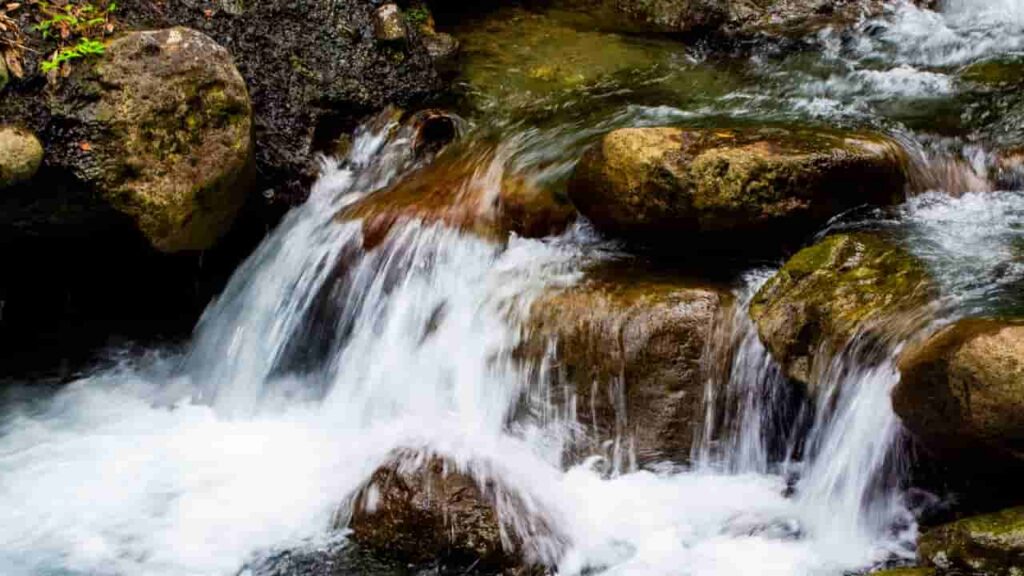
The fish does not resist the water. The water does not resist the riverbed. The river does not resist the sea. And the hiker who learns to resist nothing is the hiker who arrives everywhere without moving, who achieves everything without trying, who understands everything without knowing. This is not mysticism. It is mechanics. It is the physics of a body moving through a world that is moving with it, and the only thing that can stop the movement is the body’s refusal to move with the world. This is the essence of Daoist sensory immersion — not fighting the current, not trying to control the flow, but allowing yourself to be carried by something far greater than your own will. The river does not ask for your permission to flow. It simply flows, and in flowing, it shapes the landscape, wears down the mountains, and eventually reaches the sea.
For the hiker, this is the same lesson. The trail does not require your control. It only asks that you be present, that you let yourself be shaped by the experience rather than trying to shape the experience to your will. This is the wisdom of the river, and it is the wisdom that the Zhuangzi offers to anyone willing to listen. This is the Zhuangzi philosophy hiking built upon: not conquering the trail, but letting the trail enter you. The water philosophy outdoor that runs through the Zhuangzi is the same principle, let the water carry you, and you will arrive where you need to go without fighting the current. And the hiker who practices Daoist sensory immersion learns to do exactly this: to let the trail carry them rather than trying to control it.
The Art of Not Trying
The Zhuangzi has a chapter called “The Secret of Caring for Life,” in which he describes a man named Solongji who was famous for his skill in chopping wood. When asked how he did it, Solongji explained that he did not rely on skill or effort. He relied on the Dao, which meant he waited until the moment was right before acting. If he acted too early, the wood would split the wrong way. If he acted too late, the axe would dull. But if he acted at the right moment, the wood split cleanly and the axe remained sharp.
This is the same principle that applies to hiking. The hiker who tries to force the trail fails. The hiker who tries to conquer the mountain fails. The hiker who tries to optimize their pace fails. The hiker who simply flows, who lets the trail carry them, who lets the mountain shape them, who lets the moment guide their steps, that hiker succeeds, not because they achieved something but because they stopped failing.
When you practice Daoist sensory immersion, you are practicing the art of not trying. You are learning to let the trail carry you rather than trying to carry the trail. You are learning to let the mountain shape you rather than trying to shape the mountain. You are learning to let the moment guide your steps rather than trying to control the steps. And in doing so, you discover that the trail was never something to be conquered but something to be joined, the mountain was never something to be climbed but something to be part of, and the moment was never something to be controlled but something to be lived.
The Zhuangzi’s Butterfly
The Zhuangzi has another famous story, the story of the butterfly dream. He dreams that he is a butterfly, flitting about, happy and carefree. He does not know he is Zhuangzi. Suddenly he wakes up and finds that he is Zhuangzi again. But now he does not know whether he was Zhuangzi who dreamed he was a butterfly, or a butterfly dreaming he is Zhuangzi.
This story is often misunderstood as a metaphor for the unreality of the world. But the Zhuangzi is not saying that the world is unreal. He is saying that the boundary between the self and the world is arbitrary, that the distinction between waking and dreaming is not as clear as we think, and that the self is not as fixed as we believe. When you sit by the river and watch the fish swim, you are not a separate observer watching an external object. You are part of the river, part of the fish, part of the water, part of the moment. The boundary between you and the world is a boundary you created, and you can dissolve it at any time by simply letting go of the need to separate yourself from what you experience. This story appears in the Zhuangzi, Chapter 2, “On the Equality of Things” (Qiwulun), and it has been studied by philosophers, practitioners, and hikers for thousands of years. The lesson is simple: skill without effort, action without force, movement without resistance. This is what the Daoist calls Wu Wei — not laziness, but action in harmony with the natural flow of things.
On the trail, this dissolution happens naturally when you stop thinking about yourself and start paying attention to the trail. You are no longer a hiker walking on a trail. You are the trail. You are the mountain. You are the river. You are the fish. And the fish does not know it is wet, and neither do you, and that is not a problem to be solved but a state to be lived.
This is what the Zhuangzi meant when he said that the perfect man has no self. The perfect man is not someone who has achieved some kind of spiritual perfection. The perfect man is someone who has stopped trying to be someone at all. The perfect man is the butterfly, and the butterfly is the perfect man, and neither of them knows they are anything at all, and that is exactly the point.
Back to the Fish
Zhuangzi’s question, “How do you know the fish are happy?”, is not a question about fish. It is a question about knowledge itself, and about the limits of the kind of knowledge that the modern world values most. The modern world values knowledge that can be measured, tested, verified, replicated. The Zhuangzi values knowledge that can be felt, experienced, shared, transmitted, but not explained.
The fish knows it is swimming. The hiker knows they are on the trail. The river knows it is flowing. None of them can explain how they know. And the inability to explain is not a weakness. It is the strongest form of knowledge there is, because it is the knowledge that cannot be wrong, cannot be disproven, cannot be taken away. This is exactly what Daoist sensory immersion means for hikers: not intellectual understanding but sensory participation.
When you stand by the river and watch the fish swim, you do not need to know that the fish is happy. You need only to let the fish be what it is, and in letting it be what it is, you become what you are, and what you are is not a hiker, not a philosopher, not a person standing by a river, but a body in motion, a consciousness in space, a moment in the eternal flow of the Dao. And that moment is enough. That moment is everything.
The Zhuangzi would not ask you to spend your life by the river. He would ask you to carry the river with you, to let it flow through your feet when you walk, through your ears when you listen, through your skin when you feel the wind, through your breath when you breathe, through your mind when you think, not as a metaphor, but as a reality, because the river is not outside you. The river is inside you. And you are inside the river, and the fish is inside you, and the fish does not know it is wet, and neither do you, and that is the point. And yet, the trail does not require such permanence. It does not demand that you live beside it. It asks only that you be present while you walk it, that you allow yourself to be changed by the experience, that you let go of the need to control every step.
The fish does not know it is wet. You do not know you are on the trail. And that is not a problem to be solved. It is a state to be lived. This is the Daoist sensory immersion that hikers seek: not intellectual understanding but sensory participation, not conquering the trail but letting the trail enter you.
When you practice this on the trail, something unexpected happens. The trail does not become easier. The distance does not shrink. The incline does not flatten. What changes is your relationship to the trail. You stop fighting it. You stop trying to conquer it. You stop trying to optimize it. And in stopping those things, you discover that the trail was never the enemy, that the mountain was never something to be overcome, that the distance was never something to be conquered but something to be traveled, that the incline was never something to be survived but something to be climbed.
This is the difference between hiking and being hiked. When you hike, you are the subject and the trail is the object. You move through it. You overcome it. You conquer it. When you are hiked, the relationship is reversed. The trail is the subject, and you are the object. The trail moves through you. You are moved by it. You are overcome by it. You are conquered by it. And in being conquered, you are freed.
The Zhuangzi understood this. He did not write about hiking because he wanted to give you tips for your next trip. He wrote about the fish and the river and the butterfly and the butcher and the wheelwright and the musician because he wanted to remind you that the world is not something outside you that you need to conquer or understand or control. The world is something you are part of, and the only way to know it is to let it know you, to let it enter you, to let it change you.
When you stand by the river and watch the fish swim, you are not a separate consciousness observing an external phenomenon. You are the river. You are the fish. You are the water. You are the swimming. And the fish does not know it is wet, and neither do you, and that is not ignorance but wisdom, not confusion but clarity, not failure but success. This is the Daoist sensory immersion that hikers seek: not a technique to be learned but a state to be lived, not a practice to be performed but a way of being to be discovered. The Zhuangzi’s question is not meant to be answered. It is meant to be lived. And when you live it, you will discover that the fish was never separate from you, the river was never outside you, and the trail was never something to be conquered but something to be joined.
子非鱼,安知鱼之乐? You are not a fish. How do you know what the fish enjoys?
- Zhuangzi, Autumn Floods