
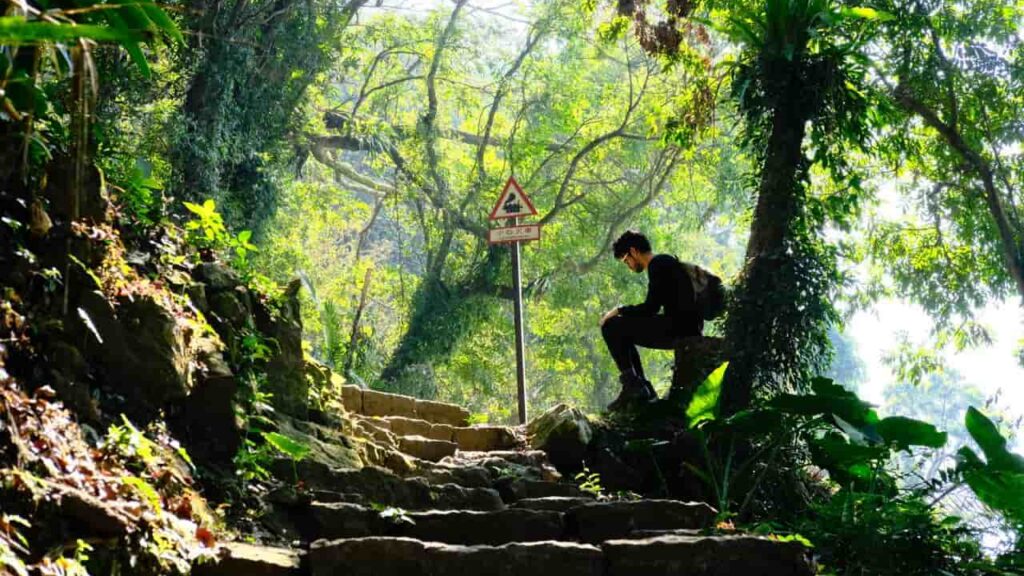
There is a kind of listening that happens on the trail when you stop trying to hear anything at all, and it is the foundation of Daoist heart fasting hiking.
I remember a stretch of the Appalachian Trail in Virginia where the ridge opened into a long meadow at dusk. The sun was gone but the light was still there, a deep blue that seemed to come from the ground rather than the sky. I had been hiking for eight hours, and my mind had been doing what minds do on a long trail. It had been planning the next day. It had been replaying a conversation from the week before. It had been worrying about the water level in the next creek. It had been doing everything except being on the trail.
I sat down on a fallen log at the edge of the meadow. I did not close my eyes. I did not try to meditate. I simply stopped the process of listening to my own thoughts, and I let the trail come in.
What came in was not a sound. It was a quality of presence that had been there the whole time, hidden behind the noise of my own thinking. The crickets were there, but they were not the point. The wind was there, but it was not the point. The point was that the mind had stopped filtering the world through its own categories, and the world was present in a way that it had not been a moment before.
This is the practice that the Zhuangzi calls heart fasting, or xin zhai, and it is one of the oldest and most radical practices in the Daoist tradition. The phrase Daoist heart fasting hiking describes the application of this practice to the trail, where the mind’s filtering system can be set aside and the trail can enter you without the mediation of words, concepts, or judgments.
若一志,无听之以耳而听之以心,无听之以心而听之以气。
Focus your will. Do not listen with your ears, but with your mind. Do not listen with your mind, but with your qi. — Zhuangzi, Chapter 4 (Ren Jian Shi)
What Heart Fasting Is and What It Is Not
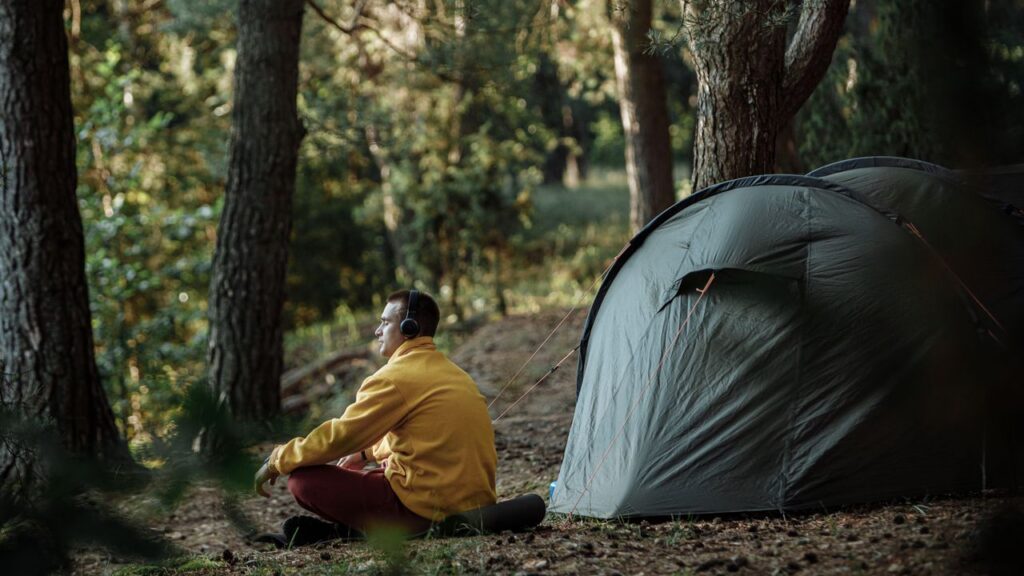
The Zhuangzi passage that describes heart fasting comes from a conversation between Confucius and his disciple Yan Hui. Yan Hui wants to go to a troubled state and reform its ruler, and Confucius tells him that he is not ready. He is approaching the problem with his own ideas, his own judgments, his own sense of what is right and wrong. Before he can act effectively, Confucius says, he must first practice heart fasting.
The instruction is deceptively simple. Do not listen with your ears. Listen with your mind. Then do not listen with your mind. Listen with your qi. The progression is a movement from the outer to the inner, and then from the inner to the ground of being itself. This Daoist heart fasting hiking practice draws on the three levels of listening that the Zhuangzi describes.
Listening with the ears is the ordinary mode of perception. The ears pick up sounds, and the mind categorizes them. A bird call is a robin. A rustle in the leaves is a squirrel. A distant rumble is a storm coming. The mind takes the raw data of the senses and organizes it into a world of separate objects, each with its own name, its own category, its own relationship to the hiker’s plans and fears.
Listening with the mind is a more refined mode. The mind does not simply name the sounds. It attends to them without the immediate reflex of categorization. The hiker who listens with the mind hears the bird call as a presence rather than a label. The sound is not a robin. It is a quality of the moment, woven into the fabric of the trail.
Listening with the qi is the deepest mode. The qi is the vital energy that flows through all things, and to listen with the qi is to let the world enter you without the mind’s filtering at all. The hiker who listens with the qi does not hear the bird. The hiker is the bird, the trail, the wind, the dusk. The separation between the perceiver and the perceived dissolves, and what remains is a single field of presence.
The Zhuangzi passage is often read as a spiritual instruction, and it is that. But it is also a practical instruction for the trail. Every hiker has experienced the moment when the mind stops chattering and the trail becomes vivid in a way that it was not before. That moment is heart fasting. The practice of formal meditation is a way to cultivate the capacity for heart fasting, but the trail itself is the most direct teacher. The trail does not ask you to sit still for thirty minutes. It asks you to walk, and to walk without the mind overlaying its own narrative on the movement.
The Three Practices of Heart Fasting on the Trail
Heart fasting is not a single technique. It is a progression of three practices that the hiker can move through over the course of a day, or a week, or a lifetime of walking. The three practices correspond to the three modes of listening that the Zhuangzi describes: the ear, the mind, and the qi.
The First Practice: Letting Go of Labels
The first practice is the most accessible. It is the practice of walking without naming what you see. This is a kind of mindful hiking practice that strips away the mental labels we place on the trail. The practice of sensory immersion trail walking is a natural extension of this first level of heart fasting.
On an ordinary hike, the mind is constantly naming things. That is a white oak. That is a granite outcrop. That is a switchback. That is a stream crossing. The names are useful for navigation and for communication, but they are also a layer of abstraction that stands between the hiker and the trail. The name is not the thing. The word “stream” is not the sound of water running over stones, not the coolness of the air above the water, not the particular quality of light that the moving water creates.
The practice is simple: for a section of the trail, stop naming. Walk for ten minutes without applying a single label to anything you see. When the mind offers a name, acknowledge it and let it go. Do not argue with the name. Simply return to the raw perception. The brown of the bark is not oak bark. It is brown. The sound of the water is not a stream. It is sound.
The purpose of this practice is not to make the trail less useful. It is to make the trail more present. The hiker who has spent ten minutes without naming has spent ten minutes in direct contact with the trail, and the trail that is experienced without the filter of language is the trail that the Daoist sensory immersion practice describes. The Zhuangzi writes that the fish is happy in the water, and the fish does not know the word for water. The fish is happy because the fish is not naming the water. In the same way, a pair of best hiking shorts that you do not notice on a warm day is the pair that has done its work.
The Second Practice: Letting Go of Judgment
The second practice is the natural progression from the first. Once the hiker has stopped naming, the next step is to stop judging.
The mind does not only name. It evaluates. The climb is hard. The descent is too steep. The view is beautiful. The campsite is too crowded. The weather is turning. The pack is heavy. The trail is muddy. Each judgment is a small narrative that the mind creates, and each narrative pulls the hiker away from the present moment. The judgment “the climb is hard” is not a description of the climb. It is the mind’s story about the climb, and the story is always a simplification of the reality.
The practice is to walk without judging for a section of the trail. When the mind offers a judgment, notice it and let it pass. The climb is not hard. The climb is a gradient. The view is not beautiful. The view is a particular arrangement of light, distance, and form. The rain is not bad. The rain is water falling from the sky. The judgment is an addition, and the addition is the layer that heart fasting asks the hiker to remove.
This practice is related to the wu wei principle of non-forcing. Wu wei is the art of not forcing the trail to conform to the hiker’s expectations. Heart fasting is the art of not forcing the trail to conform to the hiker’s judgments. The two practices are different sides of the same coin. Wu wei changes how you move. Heart fasting changes how you perceive. The same principle of non-interference applies to the gear you choose, like the best hiking rain pants that protect you from the elements without demanding your attention.
The Third Practice: Letting Go of the Self
The third practice is the most difficult, and it is the one that the Zhuangzi describes as the culmination of heart fasting. It is the practice of letting go of the sense of a separate self that is doing the perceiving.
The first two practices remove the filters of language and judgment. The third practice removes the filter of the self. The hiker who has stopped naming and stopped judging still has a sense that there is a hiker who is doing the hiking. The third practice asks the hiker to let go of that sense as well.
The practice is not a technique that can be forced. It is a quality that arises when the first two practices have been done thoroughly enough. The hiker who has walked for an hour without naming and without judging practicing the Daoist heart fasting hiking method begins to notice that the boundary between the hiker and the trail is not as solid as it seemed. The breath is the wind. The pulse is the rhythm of the step. The sense of “I am hiking” begins to dissolve into the simpler reality of hiking itself.
The trail becomes not something that the hiker is doing, but something that is happening. The hiker is not a subject acting on an object. The hiker and the trail are a single event, and the event is called walking. The Zhuangzi describes this state as the point where the mind becomes a mirror that reflects the world without holding onto it, and the mirror that does not hold onto anything is the mirror that has done the work of heart fasting.
The Grounding: A Practice for the End of the Trail
Heart fasting is a practice for the trail, but it is also a practice for the transition between the trail and the life that follows it. The hiker who has spent a day practicing heart fasting on the trail must find a way to carry the practice back into the ordinary world.
The practice I have developed for this transition is called the grounding, and it is the simplest form of Daoist heart fasting hiking that I know. When you return from the trail, before you take off your boots, before you check your phone, before you speak to anyone, stand on the ground with your bare feet. Take off your shoes and socks. Stand on the earth. Feel the ground under your feet for thirty seconds. Do not think about the trail. Do not think about the day ahead. Do not think about anything. Let the ground tell you what it feels like, and let the feeling be the only thing that is there.
The grounding is not a meditation. It is a physical act of reconnection. The feet are the part of the body that has been in contact with the trail all day, and the feet have been covered by boots and socks that have mediated the contact. The grounding removes the mediation. The feet touch the earth directly, and the earth that the feet touch is the same earth that the trail is made of. The trail does not end at the trailhead. The trail is the earth, and the earth is under your feet wherever you stand.
The practice is called the grounding, and it is a form of heart fasting meditation that completes the cycle of the day on the trail. The hiker who has spent the day listening with the qi does not need to cling to the experience. The experience is not a possession. It is a quality of presence that the hiker has touched, and the grounding is the act of touching that quality again, briefly, at the end of the day. The thirty seconds are enough. The practice is not about duration. It is about the quality of attention that the hiker brings to the moment.
The Integration of Heart Fasting and the Trail
Heart fasting is a practice that the Zhuangzi describes in the context of politics and social action, but the trail is the most natural setting for its practice. The trail is a space where the mind’s ordinary categories are less useful than they are in the city. The names of the trees do not help you climb the hill. The judgment that the rain is inconvenient does not make the rain stop. The sense of being a separate self on the trail is a sense that the trail itself erodes, because the trail is always larger than the hiker and the trail is always present in a way that the city is not.
The integration of Daoist heart fasting hiking with the trail is not a matter of adding a practice to the hike. It is a matter of removing the obstacles that prevent the hiker from being fully present. The obstacles are the names, the judgments, and the self. The trail does the work of removing them. The hiker’s only task is to not add them back.
The mindful roaming gear system is built on the same principle. The gear that disappears into the hike is the gear that does not add a layer of mediation between the hiker and the trail. Heart fasting is the same principle applied to the mind. The mind that disappears into the hike is the mind that does not add a layer of mediation between the hiker and the trail. The gear and the mind are the same thing at different levels. The goal is the same: to let the trail be present, and to let the hiker be present with the trail. The best lightweight hiking shoes are an example of gear that disappears into the walk, letting the foot feel the trail directly.
The Zhuangzi describes the heart fasting practice as a progression from the ear to the mind to the qi. The progression is a movement from the most external mode of perception to the most internal. The ear is the external. The mind is the internal. The qi is the ground of both. The hiker who moves through this progression of Daoist heart fasting hiking is the hiker who has walked the trail not as a journey through space, but as a journey into presence.
The Relationship Between Heart Fasting and the Hiking Practice
The relationship between heart fasting and the act of hiking is not a relationship of addition. The hiker does not hike and then practice heart fasting. The hiker practices heart fasting by hiking. The Zhuangzi heart fasting teaching is a guide for the trail, not an alternative to it.
The difference between a hike with heart fasting and a hike without it is the difference between a hike that is experienced and a hike that is narrated. The ordinary hike is a hike that the mind narrates. The mind tells the story of the hike as it happens. The switchback is steep. The view is worth it. The water is cold. The campsite is close. The narration is not wrong, but it is a layer of separation. The hiker who is narrating the hike is not fully in the hike. The hiker is in the story of the hike.
The heart fasting hike is a hike without narration. The switchback is not steep. The switchback is a switchback. The view is not worth it. The view is a view. The water is not cold. The water is water. The campsite is not close. The distance is the distance. The hiker who is not narrating the hike is not in the story of the hike. The hiker is in the hike. This is the essence of Daoist heart fasting hiking: the practice of walking without the internal story.
The difference is subtle, and it is difficult to sustain for a full day. The mind will return to narration. The mind will offer names and judgments and stories. The practice of heart fasting is not a practice of perfection. It is a practice of returning. The hiker returns to the trail without the narration. The hiker returns to the trail without the judgment. The hiker returns to the trail without the self. Each return is a practice of heart fasting, and each return deepens the capacity for presence.
The Zhuangzi describes the heart fasting practice as a process of emptying. The mind empties itself of its contents, and the empty mind is the mind that can receive the world directly. The trail is the same. The trail is not a place that the hiker fills with experiences. The trail is a place that the hiker empties into. The hiker who is full of names, judgments, and the sense of self has no room for the trail. The hiker who is empty has room for everything.
The Practice of Not-Knowing on the Trail
One of the most challenging aspects of heart fasting is the acceptance of not-knowing. The mind is uncomfortable with uncertainty. It wants to know what is ahead, what the weather will do, where the trail goes, how long the climb will be. The mind wants to know because knowing gives the mind a sense of control.
Heart fasting asks the hiker to let go of the need to know. The trail is not known in advance. The trail is known in the walking. The hiker who is present on the trail does not need to know what is around the next bend. The hiker who is present on the trail is already where the trail is, and the trail is always at the feet.
The practice of not-knowing is related to the return of the trail principle, which draws on the Dao De Jing teaching that reversal is the movement of the Dao. The trail that returns to its beginning is the trail that does not need to be known in advance. The trail that returns to its beginning is the trail that the hiker walks without knowing, and the walking without knowing is the Daoist heart fasting hiking practice in motion.
The not-knowing is not a deficiency. It is a capacity. The hiker who does not know what is ahead is the hiker who is fully present to what is here. The hiker who is fully present to what is here is the hiker who has done the work of heart fasting. The not-knowing is the space that the mind creates when it stops filling the trail with its own projections, and the space is the space that the trail fills with its own presence.
The Ethical Dimension of Heart Fasting
The Zhuangzi passage on heart fasting is set in a political context, and the ethical dimension of the practice is not incidental. Yan Hui wants to reform a ruler, and Confucius tells him to practice heart fasting first. The implication is that effective action arises from presence, not from the mind’s ideas about what is right.
The same principle applies to the trail. The hiker who practices heart fasting is not practicing a private spiritual discipline. The hiker is practicing a way of being that affects every aspect of the hike. The hiker who is present on the trail is the hiker who makes better decisions, who is more aware of the environment, who is more responsive to the needs of the group, who is more respectful of the trail itself.
The ethical dimension of heart fasting is the recognition that the hiker is not separate from the trail. The hiker who is separate from the trail treats the trail as an object to be used. The trail is a resource, a challenge, a source of experiences. The hiker who is present with the trail treats the trail as a relationship. The trail is not a resource. The trail is a presence. The hiker is not a user of the trail. The hiker is a participant in the trail.
The intuitive trail finding practice is an example of this ethical dimension. The hiker who navigates by intuition rather than by GPS is the hiker who is in relationship with the trail. The GPS is a tool that mediates the relationship. The intuition is a capacity that arises from the relationship itself. Heart fasting is the practice that deepens the relationship, and the relationship that is deepened is the relationship that guides the hiker through the trail without the need for external tools. The heel breathing hiking practice, with its focus on sensory contact through the feet, is another expression of the same principle.
The Challenges of Heart Fasting on the Trail
Heart fasting is a simple practice, but it is not an easy one. The mind is habituated to naming, judging, and narrating. The habits are deep, and they return as soon as the hiker’s attention wavers. The practice of heart fasting is the practice of noticing when the habits have returned, and returning to the trail without them.
The first challenge is the insistence of the mind. The mind will offer names and judgments whether the hiker wants them or not. The hiker who is practicing heart fasting does not fight the mind. The hiker acknowledges the name or the judgment and lets it go. The fight is not the practice. The letting go is the practice.
The second challenge is the social pressure to narrate. Hiking with others often involves conversation, and conversation is narration. The hiker who is practicing heart fasting with a group must find a way to be present without being antisocial. The practice is not a rejection of conversation. It is a choice to be present in the conversation, rather than using the conversation to escape the trail.
The third challenge is the difficulty of sustaining the practice for a full day. The mind will return to its habits. The heart fasting will be lost and regained and lost again. The practice is not a state that the hiker achieves and maintains. The practice is the process of returning. The hiker who returns to the trail a hundred times in a single day has practiced heart fasting a hundred times, and the hundred returns are the practice.
The fourth challenge is the integration of heart fasting with the physical demands of the trail. The hiker who is pushing through a difficult section may not have the attention to practice heart fasting. The physical effort is the practice in that moment. The heart fasting is the quality of attention that the hiker brings to the effort, not the effort itself. The hiker who is climbing a steep grade with full attention is practicing heart fasting, even if the mind is not in the state of quiet emptiness that the practice describes.
The Heart Fasting Journey

The heart fasting journey is the journey that the hiker takes when the external journey of the trail becomes the internal journey of presence. The two journeys are the same journey. The trail is the external expression of the internal practice. The internal practice is the depth of the external trail.
The Zhuangzi describes the heart fasting journey as a process of emptying that leads to fullness. The mind empties itself of its contents, and the empty mind is filled with the qi that flows through all things. The hiker who empties the mind of names, judgments, and the sense of self is the hiker who is filled with the trail. The trail is the qi. The trail is the presence that flows through the hiker when the hiker stops blocking the flow.
The heart fasting journey does not have a destination. The hiker who is practicing heart fasting is not trying to get anywhere. The hiker is trying to be where the hiker already is. The trail is the destination. The present moment is the destination. The heart fasting is the practice of being present to the destination, and the destination is always the same. It is the here. It is the now. It is the trail under the feet.
The Zhuangzi passage ends with a description of the heart fasting state. Confucius tells Yan Hui that when the heart has been emptied, the emptiness will be filled with the qi. The qi will fill the emptiness, and the person who is filled with the qi is the person who can act without the need for the self.
气也者,虚而待物者也。唯道集虚。虚者,心斋也。
The qi is the emptiness that receives the world. The Dao gathers in the emptiness. The emptiness is the heart fasting. — Zhuangzi, Chapter 4
The hiker who has practiced heart fasting on the trail is the hiker who has been emptied and filled. The hiker is empty of names, judgments, and the self. The hiker is filled with the trail. The trail is the qi. The trail is the Dao. The trail is the heart fasting, and the heart fasting is the practice of walking without the walker, and the walking without the walker is the Daoist heart fasting hiking that the Zhuangzi describes as the heart fasting of the trail. For the hiker who wants to explore this practice further, the Stanford Encyclopedia of Philosophy offers a comprehensive treatment of the Zhuangzi’s philosophy, and the Chinese Text Project provides the full passage in the original Chinese with translation.