The most dangerous moment on a mountain is not when you are climbing. It is the minute after you stop climbing and decide to keep going.
There is a story about a climb, and it ends the way most climb stories end.
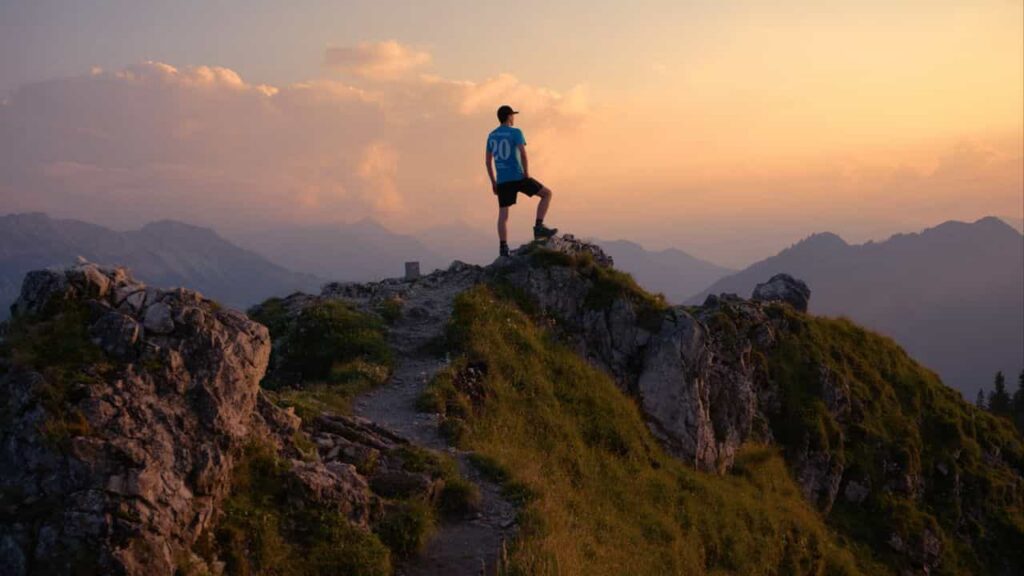
I was on a ridge in the high country, on a stretch of trail that had started at six in the morning and was supposed to take the rest of the day. The summit was two hours away by the map, and the light was still good, and I knew the kind of person who would look at that light and think it was enough. I was not that person yet, but I was close enough to it that the difference had not mattered for most of the day.
By the time I reached the summit the sun had moved past the ridge. The descent was going to be in the dark. I had the time and the light to have left two hours earlier and been off the ridge before dusk. I had also had the time and the light to climb higher, because the map was not the mountain and the mountain was not the plan, and the map had been wrong about something I did not find out until I was on the descent and could not see the switchbacks.
I made it down. I made it down with light, which is to say I made it down with the last hour of light and the beginning of something that would have been bad in another hour. I was not the person who came down too late. I was the person who almost came down too late and did not know it until I was already there.
The Dao De Jing has a chapter about this moment, and it is not about climbing. It is about a cup. It is also, finally, about a question that every person who spends time in the mountains will have to answer: what does it mean to know when to stop? The Daoist answer to that question is not a rule. Daoist knowing when to stop is a way of seeing, and the way of seeing is the practice of knowing when to leave.
持而盈之,不如其已;揣而锐之,不可长保。 To hold it to the brim, and it spills. To sharpen it to the edge, and it will not last.
- Laozi, Chapter Nine
The rest of the chapter goes on to say that fullness brings harm, that wealth and rank bring danger to the body, and that the way of heaven is to withdraw after success is achieved. The Laozi chapter nine is one of the best known passages in all of Daoist writing. The Stanford Encyclopedia of Philosophy covers the Dao De Jing’s opening chapters as the foundation of the book, where Laozi names the pattern of withdrawal as the natural order — the pattern that has been repeated, two thousand years later, by a hiker who looks at the fading light and decides, for the first time in the day, not to climb one more face. The last line of the chapter is a sentence that has been read over two thousand years, by people who had never climbed a mountain, and it is the line that every mountaineer learns the hard way before they learn it the easy way: when your work is complete, step back.
The chapter is not a warning against climbing. It is a warning against staying at the summit after the climbing is done. And on the mountain, that distinction is the difference between coming down alive and coming down with a story you tell in the bar.
The Principle at the Center
This article is about a principle that applies to the trail and to the way you move through a day, and to the way you move through a life, in the same sentence. It is the principle of knowing when you have done enough, and the discipline of stopping before you have done too much.
The Laozi calls it the way of heaven. The Zhuangzi would call it the way of the river – the river that flows over the stone and does not stop to argue with the stone, because the stone is not the point. The point is the direction, and the direction is not the top of the mountain. The direction is the return to the valley.
On the trail this principle has a practical name: the turn-around time. It is the hour you decide, before you leave the trailhead, that you will be descending. You do not wait for the summit to tell you whether you have time. You tell the summit you have a time, and you keep it. This is not an act of discipline in the sense of forcing yourself to do something difficult. It is an act of alignment with a rhythm that is older than the trail, and older than the mountain, and that has nothing to do with mountains at all.
It is a Daoist practice. It is the application of the principle of withdrawing after success is achieved — what the Laozi calls the way of stepping back once the work is done — to a stretch of trail. You have climbed. The climb is complete. You step back.
The practice is Daoist knowing when to stop. This is not a principle for mountaineers only. It applies to the person who drives home and keeps driving because the road is clear. It applies to the person who works late because the work is going well. It applies to the person who argues a point long after the point has been made, because the sound of their own voice is not yet satisfying. It applies to every person who has done enough and does not yet know they have done enough.
The Mountain and the Cup
The Laozi’s cup is the mountain. A cup held to the brim spills. A mountain climbed to its limit collapses – not the mountain, the climber. The two are the same sentence, because fullness is fullness whether it is water or light or the margin for error between you and a fall.
The mountain does not care whether you climb it. It is not a thing to be conquered. It is a thing to be moved through, the way you move through a day, the way you move through a season, the way you move through a year. The day has a beginning and an ending, and the season has a beginning and an ending, and the mountain has a beginning and an ending, and the beginning and the ending are not the same distance apart on the map.
The climber who treats the summit as the ending has made a mistake. The summit is not the ending. The summit is the point at which the mountain says it has given you everything it can give. The descent is the rest of the climb. And the rest of the climb is where most of the climbing actually happens, because it is where you are tired, and where the light is gone, and where the body is doing its work without the mind knowing it is working.
There is a Daoist insight that applies to this moment and to every moment when you are tired and still moving: you do not know you are tired until you are no longer climbing. The mind is busy with the climb. The body is doing its own work, and the body knows what the mind does not know. The body knows when the climb is over. The mind does not, and the mind will not, until the body is already in the descent.
This is why the rule is set before the climb, not after. You set it when the mind is fresh and the light is good, because the mind is not available at the summit. At the summit the mind is doing what minds do at the summit: it is celebrating, it is calculating, it is arguing with itself about whether there is enough light to climb one more face. Only the mind at the trailhead, when the day has not yet begun, is available to make the decision.
What the Zhuangzi Would Say
The Zhuangzi tells a story about a man who climbed a tree to avoid a flood, and he climbed higher when the flood rose, and higher still when the flood rose again, and the story ends with him in the top branches of a tree that is now an island, holding on with both hands and unable to come down, because the tree is a good thing when the flood is rising and a bad thing when the flood has receded and the man has forgotten how to get back down.
The tree is the summit. The flood is the climb. The man is the climber who has been going up for so long that he has forgotten what it means to go down. He is not in danger because he is high. He is in danger because he is attached to being high, and the attachment is the thing that keeps him from letting go.
The Daoist knowing when to stop is not a practice of climbing less. It is the practice of letting go of the part of yourself that thinks climbing more is the same as being more. It is the practice of recognizing that the summit is not the point, and that the point is the thing you do after the summit, which is the thing you were supposed to do all along.
The Zhuangzi would not recommend climbing the mountain. He would not not recommend it either. He would ask the climber a question: who is climbing? And the answer to that question is the answer to the question of whether to stop, because the person who climbs is not the same person who descends, and the person who climbs is a person who has not yet learned the lesson of the descent.
The descent is where the lesson is. The climb is where the story is. The summit is where the photograph is. The photograph is not the story, and the story is not the lesson, and the lesson is the thing you do not get if you stay at the summit too long.
The Practical Principle
The principle of knowing when to stop has a practical form on the trail, and it is not a matter of philosophy. It is a matter of gear, and of the order in which you pack the gear, and of the way you think about the weight in your pack.
Every piece of gear you carry has a weight, and every piece of gear has a purpose, and the purpose is to serve the climb and the descent and the day and the body, in that order. The gear that serves the climb does not always serve the descent. A climbing rope is heavy on the climb and heavier on the descent, and it is a piece of gear that is useful on the way up and a burden on the way down. A rain jacket is light on the climb and light on the descent, and it is a piece of gear that is useful all the way through. The difference between these two pieces of gear is the difference between the gear that serves one part of the day and the gear that serves the whole day, and the whole day is the day that includes the descent.
The Daoist principle applied to gear is the principle of great skill looking like clumsiness — the Laozi’s observation that the most capable thing is the one that announces itself the least. The simplest piece of gear is the piece of gear that does the most work. A pair of trekking poles is simple, and it does the work of the descent that the legs are not yet tired enough to feel. A lightweight rain shell is simple, and it does the work of the afternoon that the sun is not yet ready to leave. A pair of hiking boots that are already broken in is simple, and it does the work of the foot that is about to learn something it did not know this morning.
Light, properly used, is the gear that disappears. A backpacking pot set small enough to fit in the palm is the pot set that does its work without announcing itself — an ultralight cookware set the way it is meant to be, doing its job before you notice it. A rain shell that you reach for in the morning and forget you are wearing is a rain shell that has done its job. A pair of trekking poles that you plant without thinking is a pair of poles that has done its job. The gear that does its job without being noticed is the gear that has done its job the way the Laozi meant the work to be done: completely, quietly, and with no announcement of itself at all.
The gear that serves the descent is the gear you think about before you climb, and the reason you think about it before you climb is that you do not want to think about it on the way down, because on the way down the mind is not available and the body is not asking to be told what to wear. The pair of shoes that a hiker forgets they are wearing is the same pair that lets them down without telling them why.
Water and the Day
The Dao De Jing speaks of water in Chapter Eight, and the chapter has been read as a description of how to live, and it has also been read as a description of how to move through a day. Water, the Laozi says, benefits all things without contending. It goes where the low places are, and it does not stop there because it is full. It stops there because there is no lower place to go.
The body is water. The body does what water does. It flows. It stops when there is no lower place to go, which is to say it stops when it has given you everything it has to give. The climber who does not understand this is the climber who treats the body as a thing to be commanded, and the body is not a thing to be commanded. The body is a thing to be listened to, and the thing the body is saying is always the same: there is a time to go, and there is a time to stop, and the time to stop is the time you do not want to hear about until you have already passed it.
There is a reason the best hydration practice on the trail is to drink before you are thirsty, and the reason is the same as the reason you set a time before you leave the trailhead. You drink before you are thirsty because you will not feel thirsty when you are thirsty in the way that matters, and you will not know when to stop when you do not know when to stop. The two practices are the same practice, applied to water and to time, and both are practices of listening to the body before the body has said anything.
A backcountry hydration philosophy is a philosophy of reading the body’s signals before the body is asking you to act. The same philosophy applies to the day: you read the light before the light is gone, you read the body before the body is tired, and you read the mountain before the mountain is done with you.
The body and the mountain are not asking you for permission. They are asking you for attention. The body says stop, and the mountain says stop, and the person who is listening hears both of them before they have to hear them again. This is the knowing when to descend that the old books describe, and it is the knowing when to step back that every climber learns the first time they come down before the light goes out, and it is the same listening that saves the day.
The Practice on the Trail
The practice of knowing when to stop is a practice you can begin today, on a short hike, before the long trip, before the summit, before the season. It is a practice of listening, and it begins with the question you ask yourself at the trailhead: when am I getting back?
The answer to that question is the turn-around time, and it is the most Daoist decision you make on a hike. It is a decision that withdraws after success is achieved, because it withdraws before success is achieved, and the reason it withdraws before is that success is not the point. The point is the return.
The practice has three parts. The first part is setting the time before you leave. You do not set it on the trail. You do not set it on the summit. You set it at the trailhead, when the day has not yet begun and your mind is still available to make a decision that will be needed later. The second part is writing it down, because writing it down makes it real, and making it real makes it a practice instead of a wish. The third part is keeping it, because keeping it is the practice, and the practice is the thing that comes down to the body when the body needs it most — in the same way that a single pole on a long descent is the piece of gear that saves the knee — a pair of trekking poles the way they were meant to be, the piece of gear that does its work so quietly it is only noticed after it is gone.
These three parts are not a list of things to do. They are a single practice, and the practice is the same practice the Laozi describes in Chapter Nine: hold it to the brim, and it spills. Set the time, and you will not climb past the point where the climb ends. Keep it, and you will not stay at the summit after the climb is done. The practice is not a restriction. It is a form of alignment with the way the day moves.
Coming Back
The Dao De Jing uses a single character for coming back, and it is not a single word. It is three words in one, and the three words describe the same movement: the movement from the summit to the valley, from the climb to the descent, from the day to the night.
Coming back is not an ending. It is a return. And a return is not the same as an ending, because an ending is the last thing, and a return is the thing that comes after the last thing. The mountain is the last thing. The return is the thing after the mountain, and the thing after the mountain is the thing that matters most, because it is the thing that brings you home.
The Dao De Jing does not end with the summit. It ends with water, and water ends in the sea, and the sea is not a place. It is a direction. The direction is down, and the direction is the direction of the day, and the direction of the day is the direction of the body, and the direction of the body is the direction of returning.
The person who has learned Daoist knowing when to stop on the trail does not stay at the summit because the summit is not the point. They do not climb because the mountain is not a thing to be climbed. They move because the day is moving, and the body is moving, and the direction is down, and the direction is home, and the direction is the thing that the Laozi has been talking about for two thousand years.
功成,身退,天之道也。 When your work is complete, step back. This is the way of Heaven.
- Laozi, Chapter Nine
The way of Heaven is not the way of the summit. It is the way of the return. And the return is the only direction that matters.
The Dao of the Return
The word for the return in the Dao De Jing carries the weight of wu wei knowing when to leave, and it means both to come back and to return to what was always there. The return is not a movement in space. It is a movement in time, and a movement in attention, and a movement in the relationship between the person and the ground that the person is standing on.
The person who has learned the Daoist practice of knowing when to stop has learned a skill that applies to the mountain and to the day and to the relationship with the person standing beside them. The skill is not about the mountain. The Daoist practice of knowing when to stop is not a rule. The skill is about the person who is on the mountain, and the person who is on the mountain is the same person who is on the desk, and the same person who is in the kitchen, and the same person who is in the dark at three in the morning, unable to sleep because the mind is still climbing.
The Dao of the return is the Dao of stepping back from the thing you have finished, before you have finished it in the way that matters. Finishing is not a moment. It is a recognition. The recognition is that the work is done, and the recognition is the moment when the person stops, because the person has been taught to stop, because the person has learned, on a trail, on a day, on a climb, that the most dangerous thing on a mountain is not the wrong foot. It is the right foot that keeps going after it was supposed to stop.
There is a story about a teacher, and the teacher was a hiker, and the teacher walked with a young climber on a high ridge, and the young climber was climbing toward a peak that the teacher had climbed a hundred times. The teacher did not tell the young climber to stop. The teacher told the young climber to climb, and to keep climbing, and to go higher, and to keep going, and at some point in the afternoon, when the light was already moving past the ridge and the young climber had not said a word in an hour, the teacher turned around and began to walk down.
The young climber asked where the teacher was going. The teacher said I am going home. The young climber said but the peak is only two hours away. The teacher said I know. The young climber said then when are you coming back. The teacher said I will come back when the peak is over. The young climber said the peak will be over in two hours. The teacher said I know. The teacher walked down.
The young climber did not climb that peak that day. The young climber walked down beside the teacher, and on the way down the young climber asked a question: why did you not climb the peak today. The teacher said I climbed the peak a hundred times. The teacher said today I walked down. The teacher said the Dao of the return is not about the peak. The teacher said the Dao of the return is about the person who walks down, and the person who walks down is the person who will be here to walk up tomorrow.
The young climber climbed that peak the next day. The young climber climbed it in the morning, and the young climber climbed it with the rule written on the back of the hand, and the young climber climbed it with the teacher’s story walking down beside them, and the young climber came down at five in the afternoon, with the light still in the sky and the mountain still behind them and the teacher waiting at the trailhead with a thermos of tea.
The teacher did not say you did it right. The teacher said you came back. And the teacher was right. Coming back is the only thing that matters. The climbing is the climbing. The return is the return. And the person who understands the return is the person who will climb again tomorrow.
Summary
The practice of Daoist knowing when to stop is not a restriction on climbing. It is a practice of alignment with the way the day moves, and it begins with a question you ask at the trailhead and an answer you keep. The turn-around time is the Daoist practice applied to a stretch of trail: it withdraws after success is achieved because it withdraws before success is achieved, and the reason it withdraws before is that success is not the point. The point is the return.
The gear that serves the return is the gear you think about before you climb, because on the way down the mind is not available to think about it. A rain shell that does its work without announcing itself is the kind of gear that has done its job. The simplest gear is the gear that does the most work, and the most work is the work of the descent.
Coming back is not an ending. It is a return, and a return is the thing that comes after the last thing. The mountain is the last thing. The return is the thing after the mountain, and the direction of the return is the direction of the day, and the direction of the day is the direction of home.
The way of Heaven is not the way of the summit. It is the way of the return.