I once hiked a trail I knew well. I had a map, a headlamp, and a checklist in my phone. I also had a knot in my stomach the entire way because I was thinking about the summit, not the trees. That night, sitting at a campsite I’d passed three times without stopping, I realized something: I had been walking through the woods like I was running errands.
The trail was seven miles long. I covered it in two hours and twenty minutes. My heart rate was elevated, my calves burned on the last ascent, and I could name every switchback from memory.
But when I got home and someone asked me what the hike was like, I couldn’t answer. I remembered the GPS track, the elevation gain, the calories burned. I didn’t remember the light. I didn’t remember the smell of damp pine needles after rain. I didn’t remember the moment when the fog broke and the valley opened up below me and I felt small in a way that wasn’t about ego but about scale. I remembered nothing that would make me want to go back.
That felt like a failure. Not a physical one. A philosophical one. I had done everything right by modern hiking standards and somehow missed the whole point.
The idea that you should conquer a mountain, tick a trail, or collect a summit like a badge has crept into outdoor culture the same way it creeps into office culture. We measure our days by what we got done, not by what we noticed. The wilderness does not care about your itinerary. It only asks whether you show up.
This is where the old Chinese concept of wu wei comes alive. Often translated as “effortless action,” it is not laziness and not giving up. It is moving with the grain of things instead of against it. The Dao does not ask you to stop hiking. It asks you to hike differently — to stop measuring your day by miles logged and start measuring it by moments noticed. That is what effortless exploration actually means.
What the Dao Really Means
Western culture has a word for this: flow state. Psychologists study it. Athletes chase it. They put it on T-shirts. But they are describing a surface phenomenon. The Dao goes deeper.
Flow state is a psychological observation. Wu wei is a philosophy of how to live. One tells you what happens when you stop fighting. The other tells you why you were fighting in the first place.
This distinction is the heart of wu wei hiking. You are not trying to move with less effort — you are trying to move with the right kind of effort.
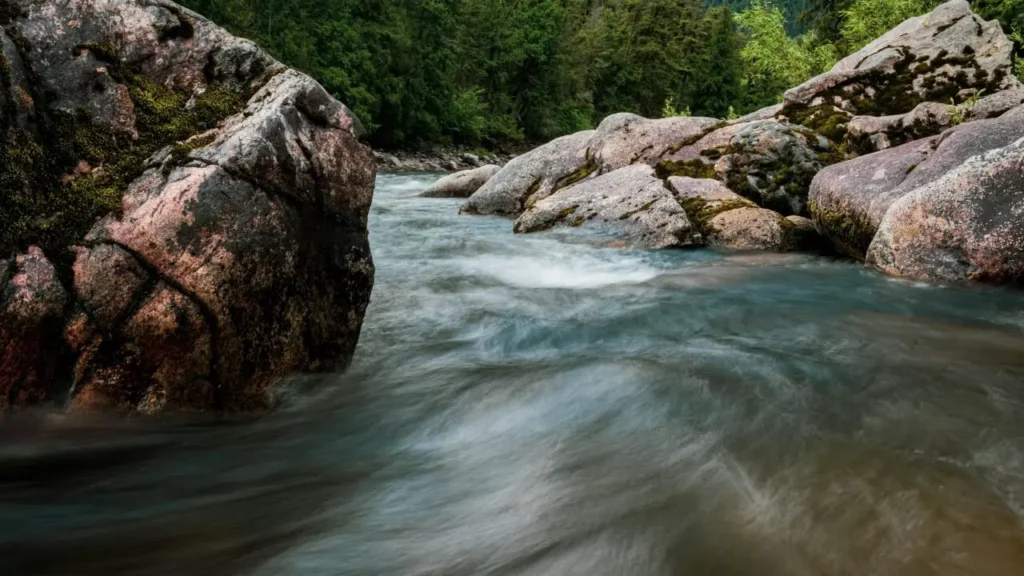
Laozi wrote about this two thousand five hundred years ago. He observed that water never forces its way through rock. It finds the crack, waits, and flows. Over time, the rock yields. Not because water is strong, but because water does not waste energy on things that do not matter. This is not passive. It is strategic. Water chooses its battles. Most people choose the wrong ones.
Think about the last time you went hiking with a heavy pack and a tight schedule. You were probably fighting the terrain the entire time. Pushing uphill with clenched jaws. Rushing down switchbacks. Treating every mile as an obstacle between here and there. The alternative is simpler than it sounds: you stop treating the trail like a problem to solve and start treating it like a conversation you are having with the land.
Nature does not rush. Rivers meander. Trees grow at their own speed. A mountain does not care if you reach the top before dark.
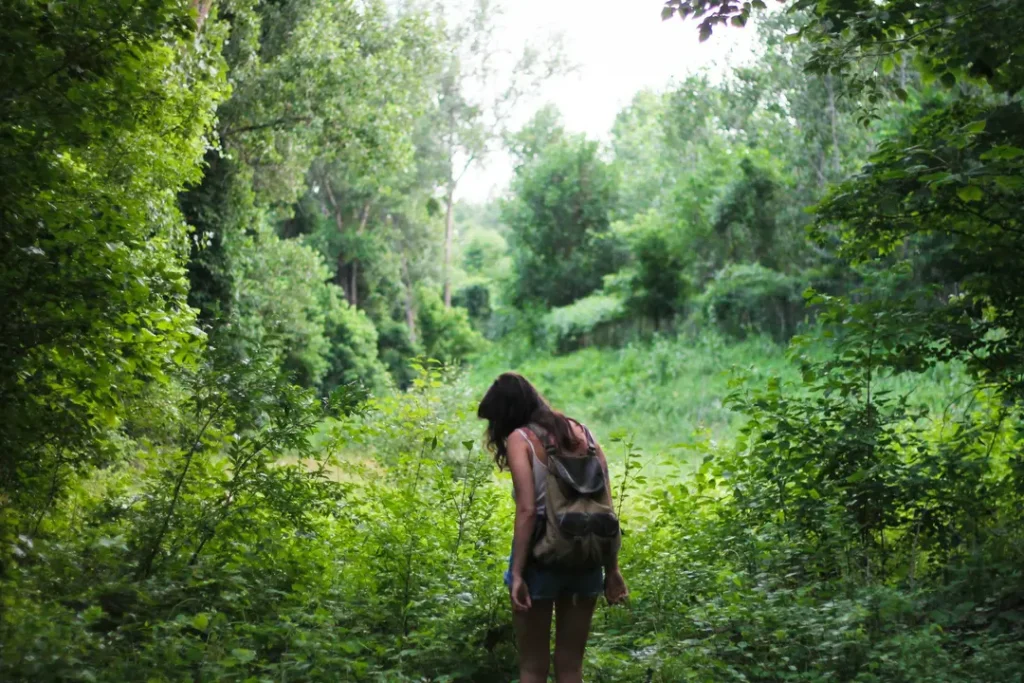
When you stop treating the trail like a race, you start noticing things: the way light falls through a stand of fir, the sound of water under rock, the moment the air changes temperature when you cross a ridge. These are not distractions from the hike. They are the hike.
Zhuangzi offered a different angle on this. In the Qi Wu Lun (Discussion on Making All Things Equal), he writes about the butterfly dream: he dreamed he was a butterfly, fluttering freely, and when he woke, he could not tell whether he was Zhuangzi who had dreamed he was a butterfly or a butterfly now dreaming he was Zhuangzi. The point was not solipsism. The point was that the boundary between self and world is thinner than we think. When you are on the trail and the wind hits your face and the ground shifts under your boots and the sky opens above you, you are not separate from that scene. You are in it. The Dao reminds us of that inseparability.
This understanding changes everything. When you realize you are part of the landscape rather than a visitor passing through it, your relationship with the land shifts from extraction to participation. You stop asking what the trail can give you and start asking what it wants to teach you.
Our Quiet Beliefs
These are not rules. They are the principles that shape how we think about being outdoors. They come from the Dao, but they apply to anything you carry into the wild.
Flow, Don’t Force
A good day on the trail feels easy. You find your pace, your breath settles, and the path starts making sense without you forcing it. The alternative is fighting the terrain: pushing uphill with clenched jaws, rushing down switchbacks, treating every mile as an obstacle between here and there.
I learned this lesson on a ridge walk in the Cascades. I was trying to beat a storm front and pushed myself harder than my body wanted to go. By the time I reached the summit, I was shaking, my hands were numb, and the view meant nothing to me because I was too busy trying to survive the descent. Two weeks later, I went back on a clear day with no schedule. Same ridge. Same mountains. Different experience entirely. On the second trip, I stopped every hundred yards to look at something. I sat on a rock and ate half a granola bar while watching a hawk circle below me. I crossed a stream by stepping on stones and got one boot wet and laughed about it. The summit was the same. I was not.
There is a Japanese word for this: ma. It means the space between things. The pause between notes in music. The gap between brushstrokes in a painting. In hiking, ma is the time you spend not moving — sitting, looking, breathing, being — that gives movement its meaning. Without ma, a hike is just distance covered. With it, a hike becomes an experience. The Dao does not tell you to stop moving. It tells you to make room for the moments that happen when you are not moving.
This is what effortless exploration looks like. Not the absence of effort. The presence of attention.
Join, Don’t Conquer
There is a difference between climbing a mountain to stand above it and climbing it to see what it sees. One is about dominance. The other is about participation.
Carrying less gear helps. A pack that does not dig into your shoulders lets you feel the ground beneath your boots. Moving quietly makes you a guest rather than an invader. Leaving no trace is not just a rule — it is an acknowledgment that this place existed long before you arrived and will exist long after you leave.
When you stop trying to win the trail, the trail starts talking back. I have heard elk bugle on ridges I walked a hundred times without hearing them once. I have watched a fox follow my footsteps for exactly thirty paces and then stop and look back at me with an expression that was unmistakably judgmental. These moments do not happen when you are focused on the summit. They happen when you are paying attention to the ground between here and there.
The people who seem most at home in the wild are rarely the ones with the most expensive gear or the longest list of peaks bagged. They are the ones who move slowly, who stop frequently, who seem to listen more than they look. There is a reason indigenous cultures across the world developed navigation systems based on reading the land rather than imposing grids upon it. They understood that the territory already knows how to get you where you need to go. You just have to be quiet enough to hear it.
I once followed an old logger’s trail through dense timber in the Olympic Peninsula. The path was barely visible, just a faint depression in the moss where boots had walked for decades. There were no signs, no blazes, no orange arrows on trees. Just the land itself, worn smooth by repeated passage. I moved at the pace of that trail, which was slower than anything my GPS wanted me to do. Halfway through, I found a clearing with a view of the ocean I would have missed entirely if I had stuck to the marked trail above. The logger’s path did not go there. It went somewhere else. But being willing to wander off the intended route was the whole point. That is what Zhuangzi meant when he said the useful and the useless are not as different as they seem. The marked trail got me from A to B. The unmarked detour got me somewhere I did not know I needed to be.
For more on developing that kind of relationship with the land, see our essay on intuitive trail finding.
Seek Simplicity, Not Excess
Too much gear. Too many goals. Too many notifications buzzing in your pocket. Clutter is the enemy of presence, whether you are packing for a weekend trip or planning your week.
We prefer fewer things. Fewer items in your pack means more freedom in your stride. Fewer plans means more room for detours. Fewer distractions means more space to actually hear the wind. This is not asceticism. It is intentionality. Every object you carry should earn its weight. Every goal you set should serve the experience, not compete with it.
This is the foundation of a minimalist outdoor adventure: carrying only what lets you be fully present for what the trail has to offer.
Laozi wrote in Chapter 12: “The five colors blind the eye. The five tones deafen the ear. The five flavors dull the taste.” He was not talking about color palettes or music theory. He was talking about sensory overload. Modern hikers carry GPS devices, heart rate monitors, solar chargers, noise-canceling headphones, and six different apps that tell them where they are and what the weather will be. Laozi would say all of that noise is drowning out the one thing the trail is trying to teach you.
Simplicity is not about deprivation. It is about clarity. When you strip away the unnecessary, what remains is sharper, more vivid, more real. A single cup of coffee drunk while sitting on a sun-warmed rock tastes better than a thermos full of it gulped down while walking. A single hour spent watching clouds roll over a valley is more restorative than four hours of scrolling through trail photos on your phone.
The hardest thing to simplify is not your pack. It is your mind. You can leave the GPS at home. You cannot so easily leave the habit of checking it. You can drop the extra layer. You cannot as easily drop the expectation that every hike needs to produce something — a photo, a story, a badge on a map. The Daoist approach to this is zuowang — sitting and forgetting. Not forgetting in the sense of memory loss. Forgetting in the sense of letting go of the self that is keeping score. When you sit on the trail and stop counting miles, stop checking elevation, stop thinking about what comes next, you enter a state that Laozi called ziran — self-so, natural, unforced. In that state, the hike stops being something you do and starts being something you are.
Find Wealth in Stillness
Summit views get photographed. The pause between steps gets forgotten.
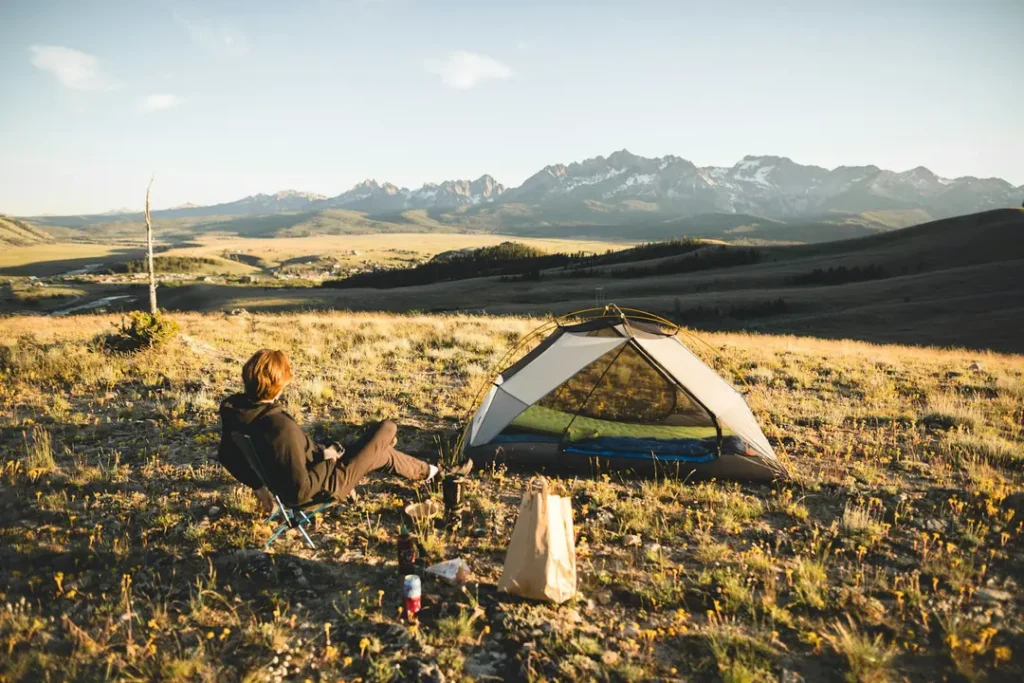
The real moments on a trail are usually the ones you did not plan for. Sitting on a rock with a thermos while fog rolls through the valley. Watching light move across a meadow. Lying on your back and listening to nothing at all. These pauses are not wasted time. They are the point.
In a culture that rewards speed and output, stillness is the most radical thing you can do in the wilderness. It forces you to be present. To notice. To stop performing adventure and just live it.
The Dao calls this xu, emptiness. Not the emptiness of lack, but the emptiness of potential. An empty cup can hold tea. An empty room can hold light. An empty mind can receive the world as it is rather than as you wish it to be. When you sit still on the trail and let your thoughts settle, you are practicing xu. You are making space for something real to enter.
This is what stillness in nature actually does for you. It is not a pause button you press — it is the moment the trail becomes legible.
I once spent an afternoon in a meadow at ten thousand feet doing absolutely nothing. No hiking. No photography. No journaling. Just sitting on a rock, eating an apple, and watching the clouds shift. My companion thought I was wasting the day. I knew I was spending it. Those are very different things, and the difference matters more than you think until you have made it.
Stillness is not the opposite of movement. It is the ground that movement grows from. You cannot appreciate the valley if you have never stood still enough to notice it. You cannot hear the stream if you keep talking over it. The wilderness offers its best lessons to people who are willing to sit down and receive them rather than chase them. This is why the most exhausted hikers are sometimes the ones who have walked the least — because exhaustion from rushing is a different kind of tired than exhaustion from presence. One drains you. The other fills you.
The Weight You Carry
There are two kinds of weight on the trail. One is physical. It lives in your pack, in the water bottle, in the tent, in the food. You can measure it in ounces and pounds. The other kind is invisible. It lives in your expectations, your schedule, your need to prove something to yourself or someone else. You cannot weigh it, but you feel it in your shoulders, in your jaw, in the way your breathing changes when you realize you have been holding it for miles.
The physical weight is easier to deal with. You can drop it. You can redistribute it. You can leave it behind. The invisible weight requires more work. It requires you to notice that you are carrying it in the first place, which is harder than it sounds when you have been carrying it since you woke up that morning.
The best gear supports both kinds of lightness. Good tools fade into the background so you stay present. They do not demand attention. They do not require constant adjustment or troubleshooting. They simply work, quietly and reliably, while you focus on what matters. If you want to explore how intentional gear choices support this kind of mindful wandering, our guide to mindful roaming gear systems goes deeper into the philosophy behind selecting equipment that disappears into your experience rather than drawing attention to itself.
The worst gear is the kind that reminds you it exists every ten minutes. A zipper that catches. A strap that chafes. A tent that collapses the moment the wind picks up. Each small frustration is a tiny tear in your attention, pulling you out of the present and into the mechanics of your own discomfort. Over the course of a day, those tears add up. You are no longer on the trail. You are managing your gear. And the trail keeps moving without you.
This is what effortless exploration protects you from — the constant small noise that pulls you out of the moment and into the mechanics of the day.
There is a Chinese character that captures this idea: wu, nothingness, emptiness, the space between things. In pottery, the usefulness of a bowl comes not from the clay but from the empty space inside it. The bowl holds water because it has room to hold nothing. Your pack works the same way. Its value is not in what it is made of but in what it allows you to carry less. The best shelter is the one that keeps you dry so well that you forget you are under it. The best boots are the ones that feel like your feet rather than something attached to them. When gear reaches this level of invisibility, it stops being equipment and starts being an extension of your body. That is the standard we hold every recommendation to.
Where This Comes From
None of this is new. For thousands of years, people in the East have lived by these ideas. The word is Dao, “The Way.” It describes a philosophy of balance, simplicity, and moving with the natural order of things.
This is the dao outdoor philosophy in its purest form: not a set of rules to follow on the trail, but a way of arriving there with an open mind and quiet feet.
The Dao is not a religion. It is not a set of commandments. It is a way of paying attention. It teaches that the best journeys are not the ones you plan to death but the ones you approach with openness. The wilderness is not a backdrop for your achievements. It is a teacher. Walk it with that in mind and it will give you back more than you put in.
Laozi wrote:
道常无为而无不为。
“The Dao never does anything, yet nothing is left undone.” — Tao Te Ching, Chapter 37
That line has stayed with me on trails where I overpacked, overplanned, and overthought my way into misery. And on trails where I took less, moved slower, and came home lighter than when I left. The difference between those two trips was not the mountain. It was the person walking it.
The Modern Trail vs. The Ancient Way
There is something strange about modern hiking culture. We have more technology, more information, and more safety equipment than any generation before us. And yet we seem more anxious, more exhausted, and less satisfied than ever. We treat the wilderness like a gym with better lighting. We count steps instead of counting moments. We share our routes online to prove we were there rather than staying quiet about them because being there was enough.
This is not what the Dao intended. Laozi understood that civilization builds layers of noise between people and the world. Each layer makes life slightly easier and slightly less real. The smartphone in your pocket is one such layer. The fitness tracker on your wrist is another. The itinerary in your head is perhaps the thickest layer of all. None of these things are evil. They are tools. But tools become cages when you forget that you hold the key.
The ancient Chinese understood this distinction between tool and master. They called it yong versus wu — use versus being. A hammer is useful for driving nails. But if you carry a hammer everywhere and start treating every problem like a nail, you have stopped using the hammer and started serving it. Your GPS device is useful for finding your way. But if you stare at it every ten minutes and miss the stream crossing right in front of you, you have stopped using the GPS and started serving it.
The trail does not need your data. It needs your presence.
I have stood at trailheads where groups of ten or fifteen people gathered, checking watches and adjusting straps and talking about how many miles they planned to cover. I have also stood alone at dawn on a ridge where the fog was so thick I could not see ten feet in front of me and felt more connected to this planet than I have in any crowded room. The difference was not the number of people. It was the quality of attention each group brought to the place. One group arrived with bodies but left their minds at home — trapped in traffic, arguing about directions, worrying about parking. The other arrived with everything that mattered.
This is the choice you make every time you step onto a trail. Not between right and wrong. Between presence and absence. The Dao does not judge either choice. It simply asks: which one are you making right now?
There is no shame in arriving distracted. We all carry the weight of our lives into the woods sometimes. The point is not to arrive perfect but to arrive willing — willing to put down what you do not need, willing to slow down when your body wants to rush, willing to sit still when your mind insists on doing something. Each of these small surrenders is an act of trust. Trust that the trail will meet you where you are. Trust that the wilderness does not require you to earn your place there. Trust that you belong here simply because you showed up. The trail has been waiting for you, not as a test to pass but as a conversation to join.
How This Shapes What We Write
This philosophy is how we look at everything we write about. We do not chase popular products or recommend gear that shouts for attention. We look for tools that support quiet, intentional exploration — items that feel like extensions of yourself rather than burdens.
We prioritize gear that is lightweight, durable, and unobtrusive. Tools that fade into the background so you stay present. Products made with care, because exploring nature means caring for it. And equipment that supports your ability to pause. A good mug for morning tea, a simple seat pad for watching clouds, a blanket for wrapping around yourself while the forest goes quiet around you.
The gear we write about tends to be the kind that does not make you think about gear. You put it on and forget it is there. You unpack it and wonder how you ever carried anything else. This is not a marketing claim. It is a standard we apply to every product we discuss, because we believe that the best equipment disappears into your experience rather than drawing attention to itself.
When we write about hiking, we are not writing about fitness. We are not writing about achievement. We are writing about attention. The difference matters more than most people realize until they read something that gets it right and suddenly recognize a feeling they have had on the trail but could never name. That feeling is effortless exploration. It is the moment when the boundary between hiker and landscape softens and you realize you have been walking without thinking about walking. Your legs moved because they knew where to go. Your eyes saw because they were looking. Your breath found its rhythm without you telling it to. That is what we are writing about. That is what we are trying to help you find.
If you want to see how these ideas play out in practice, read our piece on Daoist simplicity and minimalist hiking, or explore the essay on wu wei flow hiking and why the best plan might be no plan at all.
An Invitation
Next time you step outside, try leaving the watch at home. Forget the mileage target. Slow down. Look longer at the things that catch your eye. Notice how the light shifts, how the wind smells different before rain, how your breathing changes when you stop rushing.
It is not about doing less. It is about being more: more present, more connected, more awake to the world around you.
You do not need a new trail. You do not need better gear. You do not need to go somewhere farther or higher or harder. You need only to arrive at the place you are already standing and open your eyes properly. The mountains have been there. The trees have been there. The quiet has been there. What has been missing is not the wilderness but your willingness to meet it without an agenda.
Welcome to the trail.
Further Reading
On Daoist Philosophy The Daoist philosophy that shapes this essay traces back to Laozi and Zhuangzi. For a deeper introduction to the core ideas of wu wei, the Tao Te Ching, and how these ancient texts frame our relationship with the natural world, see the Wikipedia entry on Wu Wei.
On Practical Practice To deepen your understanding of the Dao as a living practice—not just a hiking philosophy—explore our broader philosophy essay on mindful movement through the world.
On Gear That Supports Presence To explore how intentional equipment choices back this whole philosophy, see the essay on minimalist hiking and gear for a practical introduction to mindful packing.