
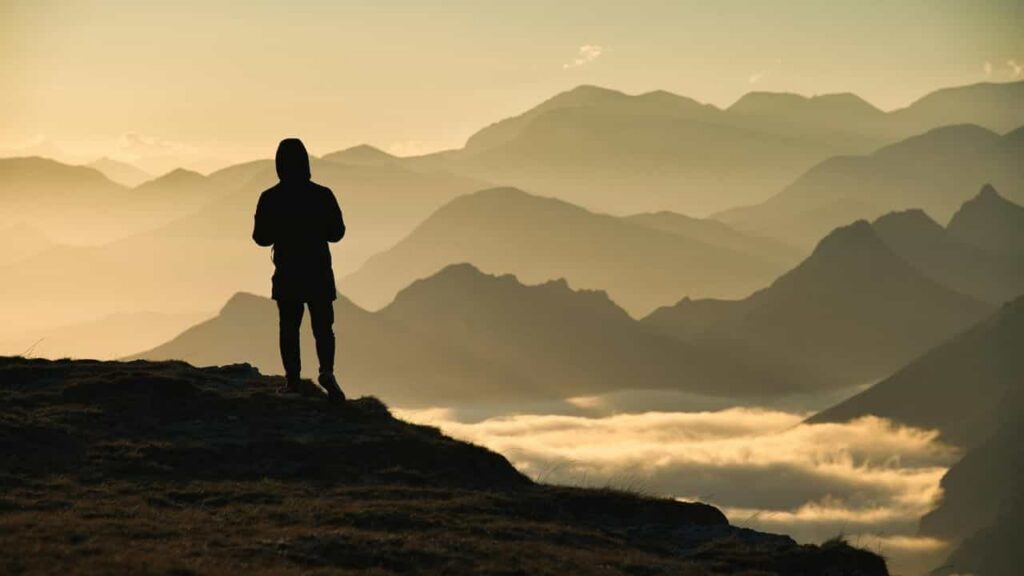
There is a moment every backcountry traveler knows, even if they have never found words for it.
You have been climbing for two hours. The trail rises steeply through pine forest, switchback after switchback, and your body has found its rhythm , that steady, warm, almost meditative state of sustained effort where the world narrows to the next step and the next breath. You are generating heat faster than the cold air can take it. You are sweating. Your base layer is damp against your skin. You feel, despite the effort, remarkably alive.
And then you reach the ridge.
The wind arrives before you see the view. It comes from the west, sharp and direct, and in the space of thirty seconds your body’s entire thermal equation inverts. The sweat that was keeping you warm is now a conductor for cold. The base layer that felt like a second skin is now a wet compress pressed against your core. Your temperature begins to drop faster than you expect. The aliveness of the climb drains away, replaced by a creeping, seeping chill that seems to come from inside rather than outside — as if the cold is not attacking you from without, but rising from within.
This is the central challenge of thermoregulation for hiking: the wilderness does not hold a steady temperature, and neither does the body. We move between states of intense heat generation and sudden stillness. We climb and descend, exert and rest, sweat and shiver, sometimes within minutes of each other. The body is not a machine with a fixed output. It is a dynamic, self-regulating system that must constantly negotiate with its environment. A true backcountry layering strategy , one that accounts for the full range of conditions a single day can throw at you , begins with this understanding, because the clothes you wear must be as fluid as the weather itself.
The base layer, that first, most intimate layer of clothing, is the site where this negotiation happens. It is, in the deepest sense, a philosophy made textile — and a technical garment in service of that philosophy. And to understand what makes a great base layer great, we need to go somewhere the gear reviews rarely venture: into the territory of Daoist balance, and the ancient wisdom of the moving and the still.
The Yin and Yang of the Moving Body
The concept of Yin and Yang is perhaps the most widely recognized and most widely misunderstood idea to emerge from Chinese philosophy. Most people understand it as a symbol of opposites , dark and light, cold and hot, passive and active. But the deeper teaching is not about opposition. It is about dynamic balance. Yin and Yang are not two separate forces at war with each other. They are two aspects of a single, continuous movement, each containing the seed of the other, each transforming constantly into its opposite, each requiring the other to be meaningful at all.
In the body of a backcountry traveler, this dynamic plays out in the most immediate and physical terms.
On the ascent, the body is in a state of Yang excess , high metabolic heat, active circulation, rapid perspiration, the body generating more energy than it needs to simply maintain warmth. This is not a problem. This is the body doing exactly what it is designed to do. But Yang excess generates a specific vulnerability: the accumulation of moisture against the skin, which becomes a liability the moment the body transitions from active exertion to relative stillness.
At the summit, the body enters a phase of Yin dominance , reduced movement, falling core temperature, the cold wind conducting heat away from the skin faster than the body can replace it. And if the base layer has allowed moisture to accumulate during the Yang phase, that moisture now accelerates the Yin cooling to a dangerous degree. Wet clothing conducts heat away from the body up to twenty-five times faster than dry clothing. The transition from summit exhilaration to summit hypothermia can happen in under ten minutes in serious alpine conditions.
This is not a gear failure. It is a failure of balance, the failure to honor the rhythm of the body’s own Yin-Yang cycle.
The Daoist response to this challenge is not to eliminate one phase or the other. It is not to suppress the sweat of the ascent, or to armor the body against the cold of the summit. It is to find the material that can move with both , that can manage the Yang excess of exertion without trapping its moisture, and support the Yin descent of stillness without abandoning its warmth.
The breath of base layers is the art of that movement. And it begins with understanding that the skin itself is our model.
The Skin as Teacher: What Our Body Already Knows
The skin of the entire body is no less remarkable than the foot. The average adult carries approximately 1.7 square meters of skin, containing three to four million sweat glands, a network of capillaries that can dilate or constrict to move heat toward or away from the surface, and a dynamic barrier function that adjusts its permeability in response to temperature, humidity, and exertion.
Your skin is already practicing Daoist thermoregulation. It already knows when to release heat and when to conserve it. It already responds, in real time, to the exact conditions you are moving through. The base layer’s job is not to override this intelligence , it is to extend it. To be, as we say at QuietRoam, a tool that disappears: present enough to protect, transparent enough to let the body’s own wisdom continue to function.
When a base layer fails, it is almost always because it has interrupted rather than extended this conversation. It has trapped moisture when the body needed to release it, or allowed heat loss when the body needed to conserve it, or , most commonly , done the right thing at the wrong time, because it was optimized for one phase of the Yin-Yang cycle at the expense of the other.
This is the central question of choosing a base layer: not which material is “better,” but which material can move with you through both phases of the cycle, honoring the intelligence your body already possesses.
Merino Wool: The Warmth That Breathes With Life
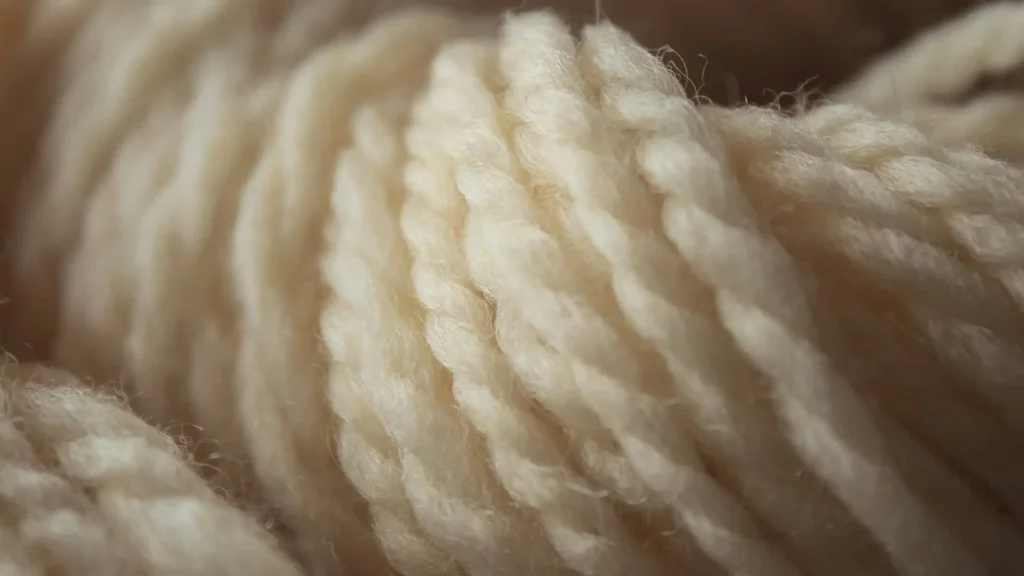
Under a microscope, a single merino wool fiber looks nothing like what you might expect. It is not smooth. It is not straight. It coils in a continuous helix , a natural crimp structure that creates thousands of tiny air pockets along the length of every fiber. These air pockets are the wool’s thermal intelligence: they trap warm air against the skin during the Yin phase of stillness, and they allow that trapped air to release gradually as the body heats during the Yang phase of exertion.
But the more remarkable property of merino wool is what happens when it gets wet. Unlike synthetic fibers, which simply hold water in their structure until it evaporates, wool fibers can absorb up to thirty percent of their own weight in moisture vapor within the fiber itself, without feeling wet against the skin. The fiber chemically binds water molecules in its cortex, releasing a small amount of heat in the process , a phenomenon called the heat of sorption. In practical terms, this means that a merino wool base layer can manage significant moisture before it ever feels wet against your skin, and that even when fully saturated, it continues to provide measurable insulation.
This is why experienced cold-weather travelers have trusted wool for millennia, long before anyone understood the chemistry. A Mongolian herder on the steppe, a Norse sailor in the North Atlantic, a shepherd in the Welsh mountains in November , they did not have access to moisture-wicking percentage charts or fabric weight specifications. They had generations of embodied knowledge that told them: when it is truly cold and truly wet, wool keeps you alive.
Merino wool is the material expression of Yin wisdom. It is patient, adaptive, and deeply connected to the body’s own rhythms. It does not force moisture away with industrial urgency. It absorbs and transforms it, the way the body’s own skin does, in a gradual and unhurried conversation with the environment.
Synthetics chase efficiency; wool preserves life. One is a machine that expels moisture; the other is a forest that breathes with you.
The trade-off is real and should be named honestly. Merino wool dries slowly compared to synthetics. In sustained high-output activity in warm conditions , trail running at altitude, fast-and-light alpine starts in summer , a fully saturated merino shirt takes significantly longer to dry than its synthetic counterpart. And for travelers who are pushing hard for extended periods and need their moisture management to keep pace with their output, this slowness can tip from a virtue into a liability.
Synthetic Base Layers: The Speed of Pure Function
If merino wool is the Yin intelligence of the base layer world , patient, adaptive, life-connected , then synthetic fabrics are its Yang counterpart: fast, decisive, and relentlessly efficient.
Synthetic base layers — polyester, nylon, polypropylene and their various proprietary blends — work through a different mechanism than wool. Rather than absorbing moisture, they repel it. The fibers themselves are hydrophobic; they push water away from their surface and toward the outer face of the fabric, where it can evaporate quickly. This is the wicking action that every gear manufacturer advertises, and it is genuine: in high-output conditions, a well-engineered synthetic base layer moves perspiration away from the skin and into the air with remarkable speed, keeping the skin surface drier and reducing the evaporative cooling effect during the Yang phase of exertion.
Synthetics dry fast. In warm, breezy conditions, a fully saturated synthetic shirt can return to functional dryness within twenty to thirty minutes of reduced exertion , a recovery time that matters enormously on a long mountain day with multiple weather transitions. They are also durable, inexpensive relative to merino, and resistant to the kind of fiber breakdown that makes wool vulnerable to heavy abrasion over time.
But synthetics carry a Yin vulnerability that should not be overlooked. When the body transitions into stillness and the Yang phase ends, a synthetic base layer that is holding moisture against the skin provides very little buffer. The evaporative cooling continues aggressively, and without the insulative reserve that wool’s absorbed-moisture mechanism provides, the chill can arrive with startling speed. This is the summit moment described at the opening of this essay, and it is disproportionately a synthetic-wearer’s experience.
There is also the matter of odor. Synthetic fibers, unlike wool, do not possess natural antimicrobial properties. The hydrophobic surface that makes them so effective at repelling water also makes them hospitable to the bacteria that cause perspiration odor. On a multi-day backcountry trip, a synthetic base layer worn for more than forty-eight hours begins to announce itself. Merino wool, by contrast, can be worn for days, sometimes a week or more in mild conditions, without developing significant odor. This is not a small consideration on long wilderness trips where laundry is not an option. For that reason, the base layer breathability of a garment does not exist in isolation from how it behaves over the course of a trip: a shirt that wicks well but smells badly by day three is not truly breathable in the way a backcountry traveler needs it to be.
A Lesson Learned on a Cold Summer Ridge
I once had to learn this the hard way.
I was on a day hike in late August, chasing a high point I had been meaning to visit for months. The forecast called for sunny and warm, so I loaded out in a thin synthetic base layer , light, fast-drying, and perfectly suited, I thought, to a warm-climate ascent at a comfortable pace.
I was wrong about the ridge.
I reached the summit just as a front moved in from the east. The wind picked up in a way that made no sense on a forecast that had not mentioned clouds, let alone wind. Within three minutes of stopping to take a picture, I was cold. Not mildly cold , the kind of cold that makes your fingers stop working and your breath feel thin. My synthetic shirt was damp from the climb and still damp now, and it was doing exactly what synthetics do best: moving moisture away from my skin. Unfortunately, “away from my skin” in cold wind meant “into the air, taking heat with it.”
I reached into my pack, pulled on a merino mid-layer I carried for emergencies, and within five minutes my body stopped shivering. The merino absorbed the moisture the synthetic had been channeling, and held it without getting cold. I had been wearing the wrong tool for the wrong half of the day.
That was the first time I stopped thinking of the base layer as the first step in a layering system and started thinking of it as the body’s partner in the conversation. You can have the warmest mid-layer and the most technically advanced shell in the world, but if your base layer is doing the wrong thing against your skin, the whole system is negotiating from a deficit. The merino vs synthetic question is not a binary you settle once and forget. It is a question you keep asking, every season, on every route, as your body changes and your routes change with it.
What that day taught me about hiking comfort in particular is that comfort is the absence of surprise, not the absence of cold. A good base layer tells you what is happening to your body before it matters, by giving you a stable, predictable feeling against your skin. When the garment and the body are in conversation, the trail becomes quieter. You stop watching your clothes and start watching the landscape again.
Temperature Zones: Matching Fabric to the Day’s Arc
Most hikers make their base layer decision once, at the gear store, and treat it as settled. They buy a shirt that is “good” and wear it everywhere, from July forest trails to January alpine starts. But a base layer that serves you well on a ten-hour climb in the low fifties can leave you cold on a five-mile day at twelve thousand feet, and vice versa. The fabric that moves moisture fastest is not always the fabric that keeps you warmest at rest. The question is not which material wins in a vacuum, but which material wins in the sequence of conditions you walk through.
A useful way to think about it is to divide a single day on the trail into three thermal zones. In the output zone, the sustained climb, the push over a pass, the afternoon scramble when the body is running hot, the base layer is asked to move sweat away from the skin as fast as it can be produced. Here, synthetics are hard to beat. In the transition zone, the short break on a rock, the brief pause at a viewpoint, the slow descent where exertion drops but the wind has not, the base layer is asked to absorb what the body has already released and hold it without getting cold. Here, merino holds an advantage that no synthetic replicate has fully closed. In the still zone, the summit view, the overnight camp, the cold morning before breakfast, the base layer is asked to provide passive warmth while the body is at rest. Here, thickness and insulative reserve matter more than wicking speed, and the right base layer is the one that keeps the next layer honest.
A base layer is only one thread in the gear system, and it works in concert with everything else you are wearing. The insulation you sleep in overnight, the pants you choose for an exposed ridge, the jacket you pull on when the wind picks up at a summit pause — all of them shape what your base layer is asked to do, and vice versa. A base layer selected without thinking about the rest of the kit is a piece chosen in isolation, and a piece chosen in isolation is unlikely to serve you well when the temperature drops and the day lengthens.
This is true of every element of the gear system, not just the base layer. The cold weather sleeping bag you reach for at the summit shelter decides how much insulation your base layer needs to provide during the hours of rest. The right hiking pants on a variable-temperature route change how quickly the whole body warms and cools between exertion and stillness. The pack you carry determines whether you can bring the spare layer that makes the difference between comfort and exposure, or whether you have to choose between warmth and weight.
The Daoist approach to gear is the same as the Daoist approach to the body: do not treat any single element as sovereign. Each item exists in relation to the others, and the system as a whole is what keeps you safe, warm, and present on the trail.
A single base layer cannot optimize for all three zones equally. That is the trade-off, and it is the reason the choice is never abstract. You read your body, you read your route, and you pick the material whose strengths match the zones your day spends the most time in. If your days are mostly output with short pauses, synthetics will serve you. If your days are long and broken by many still points — summit attempts, ridge work, high-country traverses — merino’s thermal reserve will feel less like a luxury and more like a quiet form of safety.
Reading Your Own Body: The Art of Choosing Well
Just as The Power of Flow taught us that the best plan is the one you are willing to let go of, the most important insight about the breath of base layers is this: there is no universally correct answer. There is only the answer that is correct for your body, in your conditions, on your specific journey.
And arriving at that answer requires the same quality of attention that Sensory Roaming asks of your feet and that our backcountry hydration philosophy asks of your thirst: honest, curious, unhurried observation of your own body’s patterns. This is what thermoregulation for hiking really amounts to: not a set of technical rules memorized before the trip, but a practiced attention to what your body is telling you, mile by mile.
Some questions worth sitting with, before your next gear decision:
What is your natural sweat rate? Some people generate enormous amounts of perspiration even at moderate exertion levels. Others barely dampen a shirt during a full day of hard hiking. If you are a high-output sweater , if your shirts are soaked after an hour on trail , synthetic fabrics’ speed advantage is most meaningful for you. If you sweat moderately, wool’s slower evaporation is less of a liability, and its thermal reserve at rest becomes more worth having.
What is the temperature differential on your typical routes? If you regularly move between vigorous ascents and cold, exposed ridges or summits, the wet-warmth property of wool becomes a genuine safety consideration, not just a comfort preference. If your hikes stay relatively warm throughout , summer forest trails at moderate elevation , synthetics’ fast-dry advantage matters more.
How many days are you out? For day hikes and overnight trips where you can refresh your kit, the odor question is largely irrelevant. For five-day or ten-day deep wilderness routes, wearing a synthetic base layer without washing it is a different experience than wearing merino for the same duration.
What does your body tell you at the summit? If you regularly arrive at high points feeling chilled within minutes of stopping, and you are wearing synthetics, this is information. Your body is asking for a different kind of buffer. If you arrive overheated and stay warm at rest, you may be wearing too much insulation for your output level, regardless of material.
This is the practice of dynamic harmony , the Daoist principle of finding the middle path not as a fixed compromise but as a living, responsive attunement to the conditions at hand. The body is always speaking. The question is whether we are listening carefully enough to hear what it is asking for.
The Yin-Yang of Layering: Beyond the Base
Understanding the base layer’s role also requires understanding what it is part of. The layering system , base, mid, shell , is itself a Yin-Yang architecture, and the base layer only performs its function correctly when the layers above it honor the same principles of dynamic balance.
A high-performance merino base layer worn under a poorly ventilated hardshell that traps moisture from both directions is a system in conflict with itself. The wool’s capacity to manage vapor is overwhelmed by the shell’s impermeability, and the result is the worst of both worlds: a saturated inner environment with no path for moisture to escape. Conversely, a fast-drying synthetic base layer worn under a highly breathable softshell in mild, active conditions creates a system of extraordinary efficiency , the layers working together in Yang harmony, moving heat and moisture away from the body with coordinated speed.
The principle here is the same one we apply to gear selection throughout the QuietRoam philosophy: each element must be chosen in relation to the whole. A base layer is not a standalone object. It is a participant in a conversation between your body, your clothing, and your environment, a conversation that shifts with every change in terrain, weather, and exertion. Choosing a base layer is not a problem to be solved once at the gear shop and forgotten. It is a practice of ongoing attunement, to be revisited at every trailhead, on every new route, in every new season.
The Layering Wisdom: A Practical Summary
For those navigating this choice for the first time, or revisiting it with fresh eyes, here is the Yin-Yang framework distilled into practical guidance:
Choose merino wool when:
- Your route involves significant temperature differentials: long climbs followed by cold, exposed terrain
- You are planning multi-day trips where laundry is not possible and odor management matters
- You run cold at rest and value the thermal reserve of a still-wet layer
- You are moving at moderate pace and your moisture output is manageable
- You want a material that responds to the body’s own rhythms rather than overriding them
Choose synthetic when:
- Your output is very high and you generate substantial perspiration that needs to move quickly
- Your route stays primarily warm and the wet-cold transition risk is low
- You are on a budget: quality synthetics perform excellently at a significantly lower price point than equivalent merino
- You are running or moving at race pace, where fast-dry speed is essential
- Durability under heavy, repetitive use is a priority
Consider a merino-synthetic blend when:
- You want the odor resistance and thermal reserve of wool with improved dry time
- You are uncertain about your output level and want a balanced starting point
- You value the feel of natural fiber against the skin without sacrificing all of synthetic’s speed
For a deep technical comparison of specific products across all three categories , weight, warmth ratings, dry times, and price-to-performance ratios , the equipment reviews on this site break down the numbers in detail.
When the Second Skin Disappears
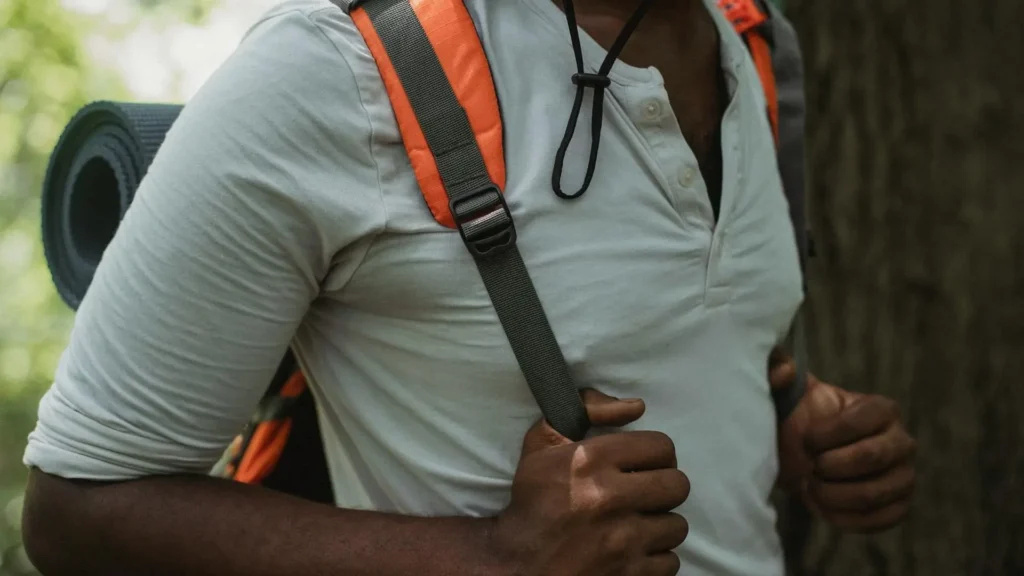
There is a particular state that experienced backcountry travelers describe, a point on a long day in the mountains when the gear stops being something you think about and becomes something you simply inhabit. The boots have been forgotten. The pack has settled into the body’s natural architecture. And the base layer, that first, most intimate layer, has become indistinguishable from skin.
You are warm when you are moving. You are not cold when you stop. The moisture of your effort moves through the system and away, as naturally as breath. You are not thinking about thermoregulation. You are just moving through the wilderness, fully present, fully alive to where you are.
This is the moment the Great Skill Looks Like Clumsiness philosophy describes as its highest expression: when the tool disappears into the task. When the second skin becomes indistinguishable from the first. When the garment stops performing and starts being , a seamless extension of the body’s own intelligence, honoring the breath of base layers in its purest, most invisible form.
This is what we are selecting for when we choose a base layer thoughtfully. Not the best moisture-wicking percentage. Not the highest warmth-to-weight ratio. Not the most impressive technical specification on the hang tag. We are selecting for the garment that will disappear most completely — that will move with us through Yang exertion and Yin stillness, through heat and cold, through the full arc of a long day in the mountains, without ever asking to be noticed.
Thermoregulation for hiking is, in the end, not about managing the body. It is about trusting it , and choosing the second skin that honors that trust.
This is the Yin-Yang of backcountry comfort. This is the breath of base layers. This is the QuietRoam way.
大巧若拙 — Great skill looks like clumsiness. From Chapter 45 of the Dao De Jing: the highest form of design is invisible. The best base layer is the one you stop thinking about.
神散 — The scattering of spirit. When awareness and vitality thin under cold stress, the mind withdraws from the present. A well-chosen base layer is, in this sense, a protection of presence itself.